

* * *
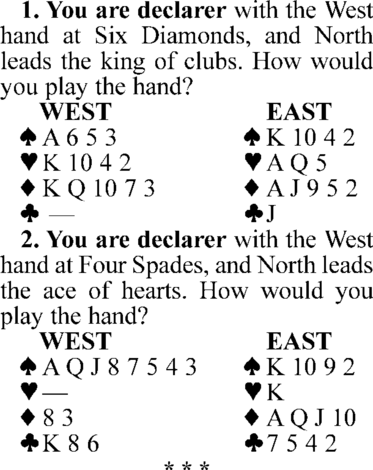
1. The slam is a sure thing regardless of how the cards are divided. Ruff the club, draw trumps, then play the ace and another spade. If North follows low, finesse the ten. If North produces the jack or queen you win with the king and again can be sure of losing only one spade trick.
If North shows out on the first or second spade lead, the slam remains certain even though there seem to be two spade losers. After cashing both top spades, you next play the A-Q-5 of hearts.
First, let's suppose South shows out on the second or third round of hearts. In that case, you take the king and return the ten, discarding a spade from dummy. North wins the trick with the jack, but whatever he returns, you discard dummy's last spade as you ruff in your hand. All you lose is a heart trick.
Second, now let's say South follows low when you lead dummy's third heart. This time you finesse the ten. If it wins, you have 12 tricks; if it loses, you also have 12 tricks, because North must return a club, which you ruff after discarding a spade from dummy. You then cash the heart king, discarding dummy's last spade to make the slam.
People are also reading…
2. The only danger is that South has the king of diamonds and North the ace of clubs. In that case, if you ruffed the heart, cashed a trump and took a diamond finesse, you could go down one with a club return from South.
The best play is to discard a diamond on the ace of hearts! This ensures the contract against any lie of the opposing cards.
Let's say North shifts to a trump at trick two. You win and play the A-Q of diamonds. If South produces the king, you ruff and have 11 tricks. If South follows low, you discard a club, assuring 10 tricks even if North wins the trick with the king.
The diamond discard at trick one creates a position where you are able to take a diamond finesse that can lose only to North, the non-dangerous opponent.


