

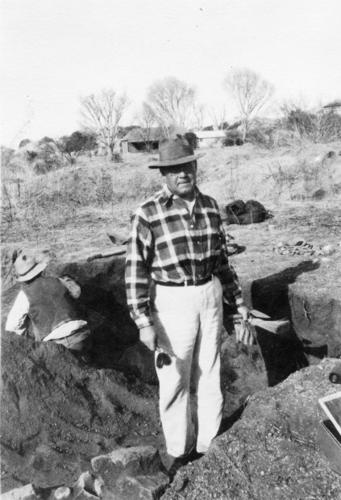
When retired businessman and amateur archeologist William Shirley Fulton established the Amerind Foundation in 1937, he envisioned it as a way to study the vibrant history and culture of the indigenous populations of the Americas.
Today, on the eve of its 75th anniversary, the nonprofit organization is known far and wide for its impressive collection of artifacts - about 25,000 pieces gathered from Alaska to Argentina - as well its avid support of research in the fields of anthropology and archeology.
The foundation has two main facilities, both open to the public, on its 1,600-acre campus in Dragoon, an hour from Tucson's downtown amid the giant granite boulders of Texas Canyon.
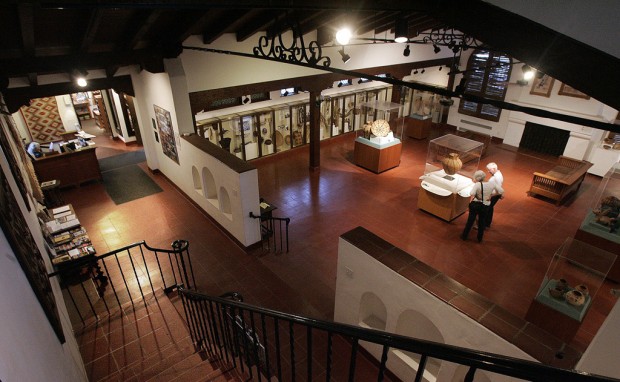
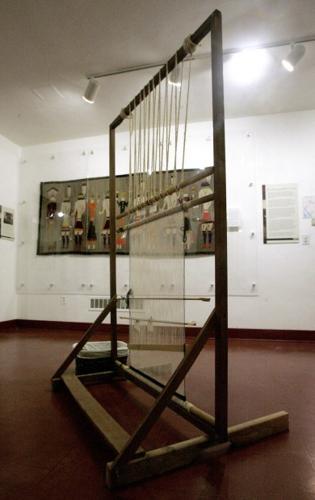
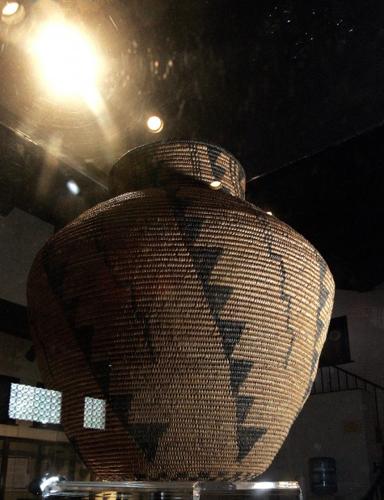
One, the Amerind's main museum, showcases an array of ancient and contemporary tribal items, from stone pipes and Apache playing cards to intricately woven textiles and handmade baskets.
People are also reading…
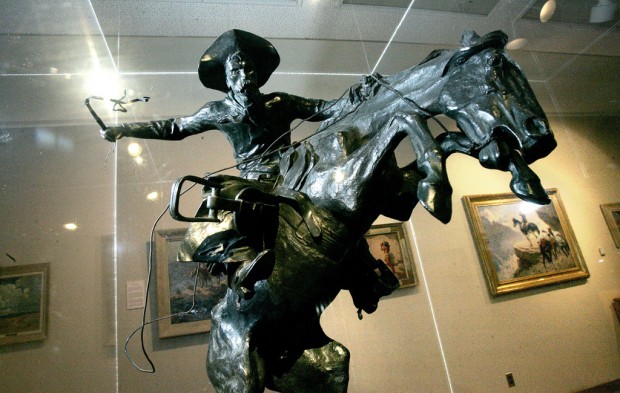
The other, the Fulton-Hayden Memorial Art Gallery and Library, features Western paintings and other media by prominent names such as Frederic Remington and William R. Leigh, as well as more than 20,000 research books on the greater Southwest and beyond.
When other museums need specific items, the Amerind provides. Two of its Apache dolls and a bow signed by Geronimo, perhaps the most famous Apache, are on loan to the Heard Museum in Phoenix for its "Beyond Geronimo" exhibit.
"The cool thing about the Amerind is, because of their location, a lot of their collection specifically relates to the Chiricahua Apache," said Janet Cantley, curator and manager of the Heard Museum North in Scottsdale. "We borrow things from them. They borrow things from us. It is a nice working relationship."
Founder's work trailblazing
The Amerind's history and stellar reputation is what attracted chief curator Eric Kaldahl to his position in 2007.
"The Amerind is one of the more famous old archeology institutions in the Southwest," said Kaldahl, who came to the foundation from the Tohono O'odham Nation Cultural Center & Museum in Topawa. "When you study these types of subjects in school, you learn about this place."
The Amerind was what Kaldahl described as "an encore career" for founder Fulton. The CEO of the Waterbury Farrel Foundry and Machine Company in Connecticut retired to the west in 1930 at age 50.
His wife, Rose Fulton, had family with business ties to Arizona. Her father, Edward Hayden, owned a copper mine in Verde Valley and had invited William to come out years earlier to learn the ropes.
Fulton's first discovery in 1913, a pottery jar he happened upon while looking for water in the nearby mountains, sparked a lifelong interest for the history buff.
By the time he settled in Dragoon in the 1930s, Fulton was deeply in love with the culture and artifacts of the Southwest.
"He took a lot of side trips," Kaldahl said. "He visited the Navajo Nation, the Hopi mesas. He was fascinated with the landscape and the people."
William and Rose initially stayed at the Triangle T Guest Ranch in Dragoon, which still operates just up the road from the Amerind. They eventually bought the land where the Amerind sits today and commissioned architect Merritt Starkweather, the man behind the Arizona Inn in Tucson, to build them a home.
In the years that followed, Fulton set up several archeological dig sites on the property, turning up thousands of items, including pottery, chipped stone tools and even shells.
His work was trailblazing.
"When he started in the 1930s, Southeastern Arizona had not been the focus of much research," Kaldahl said. "He really wrote our first chapters on the ancient history of the area."
Down-to-earth people
From Texas Canyon, Fulton spread his wings, hiring archeologists to dig in other parts of Southern Arizona, New Mexico and Northern Mexico.
One of the Amerind's biggest projects was its Joint Casas Grandes excavation, which took place in Chihuahua, Mexico, from 1958 to 1961. Casas Grandes was one of the largest ancient communities in Northern Mexico, flourishing from the 1200s to the late 1400s A.D.
Amerind Foundation board member Marilyn Fulton - who joined the family in 1956 by marrying William's grandson William Duncan Fulton - remembered the sheer magnitude of the project.
"It was unbelievable," said Fulton, 75. "We were there for three years and only excavated about a third of it."
Despite William Shirley Fulton's wealth and reputation, he and Rose were down to earth, Marilyn Fulton said. Friends and family called the couple "Ma" and "Pa."
Rose raised quarter horses on the property. When Marilyn and her husband came from Tucson to stay at their second home in Dragoon, they would often spend evenings with William and Rose.
"Pa had an absolutely wicked sense of humor," Marilyn said. "He would have me in stitches. He'd say something at dinner and have me falling under the table, I was laughing so hard."
In addition to his home, Fulton commissioned Starkweather to design and build a private museum space for acquired pieces in 1936.
Most wings and galleries were completed by 1960, just four years before Fulton's death. The museum didn't open fully to the public until the 1980s. Before that, the collection was shown strictly by appointment.
"Quite often, Pa was the one who led people through," Marilyn Fulton said.
Continued growth
Thanks to an endowment left by Fulton as well as private donations, grants and money generated from the museum's gift shop and admission fees, the Amerind has lived on long after Fulton's death.
There are no more digs, but the foundation, under the guidance of a board of directors, provides regular seminars on global archeological and anthropological topics for visiting scholars from around the world.
It hosts members of American Indian tribes and gives tours to local school groups in Southern Arizona, particularly those from Cochise County.
The evolution has been inspiring to Marilyn Fulton. "It is amazing to me how much it has grown," she said. "We are blessed with a good director, a good curator and volunteer staff members that seem to be able to do anything and everything."
If you go
• What: The Amerind Museum & Research Center 75th anniversary celebration.
• Details: The event will feature access to the museums, live performances, artisans and historical presentations.
• When: 9 a.m.-4 p.m. Oct. 21
• Where: The Amerind, 2100 N. Amerind Road, Dragoon.
• Cost: Free; $2 parking.
• Et cetera: The Amerind's museum and Fulton-Hayden Memorial Art Gallery are open 10 a.m.-4 p.m. Tuesdays-Sundays. Admission is $8 with discounts available.
• Info: Visit amerind.org or call 1-520-586-3666.
• Online: Find a video overview of the Amerind Foundation and its museum at azstarnet.com/video and a slideshow of themuseum at azstarnet.com/gallery
Contact reporter Gerald M. Gay at ggay@azstarnet.com or 807-8430.


