Photography was Benn Mitchell’s passion and his craft, and he wanted all the money he made in the arts to go back into the arts, says his widow, Esther Mitchell.
She recently donated the archives of the internationally recognized photographer to the University of Arizona’s Center for Creative Photography in Tucson.
She learned about the center’s strong reputation for preserving archives when she started looking for “the right home for Benn’s work.”
“They don’t just store photographs,” she said. “They study them, teach with them and share them with the public. That combination really made me feel it was the right place.”
Esther Mitchell’s donation also included a $1 million gift to the center to establish the “Benn and Esther Mitchell Endowed Collection Fund.” She noted that while it is definitely expensive to maintain an archive, it was his wish for his work to be preserved and carried forward.
People are also reading…

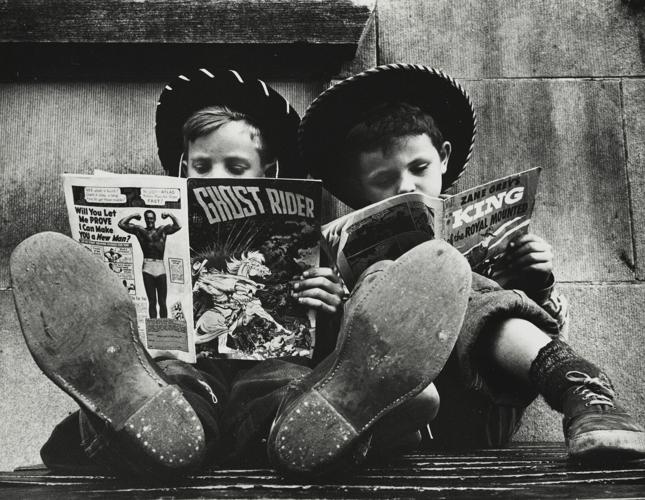
Two Cowboys Reading Comic Books, 1951 Gelatin silver print, gift in honor of Benn Mitchell.
The Center for Creative Photography, co-founded by renowned nature photographer Ansel Adams in 1975, is known as the premier research collection of American photographic fine art and archives. It holds more than 120,000 works by more than 2,200 photographers.
Located at 1030 N. Olive Road on the UA campus, it also serves as the permanent home for archival collections of some 300 masters of the medium, including Adams, W. Eugene Smith, Lola Álvarez Bravo, Edward Weston and Garry Winogrand.
Rebecca Senf, the center’s chief curator, said that as curators think about bringing new material into the UA collection, their focus is on the research value and potential of any particular archive or individual artworks.
“As we think about the collection as a whole, we’re thinking about the way in which each archive represents something unique and complimentary to the other materials that we already have at the Center for Creative Photography,” she said. “So, in the case of Benn Mitchell, what’s valuable about this particular archive is that it represents a different kind of arc and trajectory than archives that we already have.”
Life and journey
Benn Mitchell sold his first picture to “Life” magazine at the age of 16.
“He started at 16, photographing his little brother during a heat wave, sitting on a block of ice eating ice cream,” Esther Mitchell said. “‘Life’ magazine published it, and he got $25. He thought he was a rich, successful photographer right then. From that point on, he was always looking for the next picture.”
So, he left New York City at 17 to go to Hollywood, where he got permission from Warner Brothers to frequently visit the studios and photograph Hollywood stars.

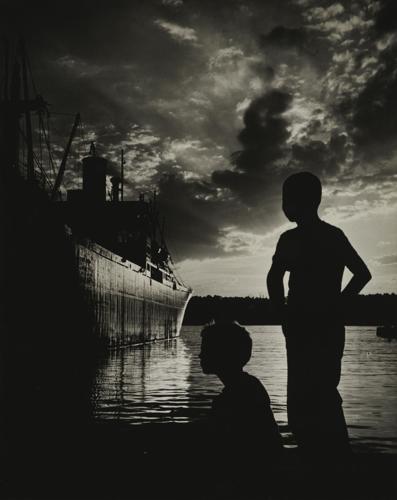
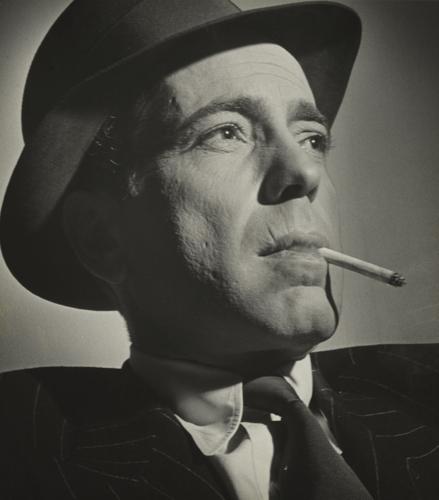
TOP: This untitled gelatin silver print was a gift honor of Benn Mitchell. RIGHT: Humphrey Bogart, 1943 Gelatin silver print, Gift in Honor of Benn Mitchell / Benn Mitchell Archive.
Then, after two years as a U.S. Navy photographer, he came back to New York City and worked at a large commercial studio before starting his own in 1951 with his wife.
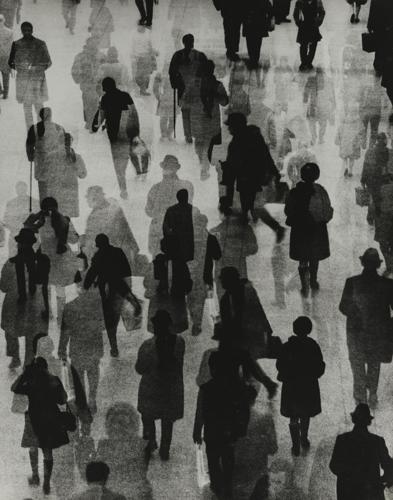
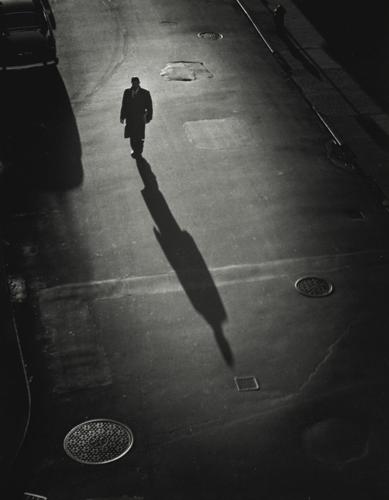
Street photography in New York City was definitely his favorite kind, Esther Mitchell told the Arizona Daily Star, describing how he had lived in the city as a child and grown up there. He always walked around with his camera and loved photographing kids on the street while they were playing games, she said.
UA’s Senf said the Mitchell collection’s largest representation of photographic prints is from his early New York City street photography. They are powerful and enticing images, she said.
“Sometimes they’re at night, sometimes they’re during the day. He’s documenting what the place looks like, how the people move around in it, what the light looks like — he’s making art in these spaces, so thinking about composition and graphic elements and line and shape.”
The multiple facets of his photographic career can teach students a lot, Senf added, saying that watching someone move through different aspects and elements is the most compelling thing for a researcher.
“And then, he goes on to a commercial career … he has this very long and prolific and very profitable commercial career, but he continues to make work that satisfies his own artistic exploration, his own personal interests, his own ethical questions and explorations,” she said.

Untitled print. Gelatin silver print, Gift in Honor of Benn Mitchell / Benn Mitchell Archive.
In 2023, Boca Magazine described Benn Mitchell as a true egalitarian who exhibited a boundless curiosity for people and places. It said his Hollywood photography shed light on his backstage access and was most notable for its inclusion of everyone involved in the picture-making apparatus — from A-list actors to sound technicians, projectionists, chorus girls, camera operators and extras.
“He captured plenty of stars both camera-ready and in repose, from his iconic image of Humphrey Bogart squinting while taking a drag off a cigarette to Carmen Miranda in full fruity regalia,” the magazine article said. “There’s even a shot, later on, of Marilyn Monroe riding an elephant in Madison Square Garden, an image that is not perfectly in focus but indelible nonetheless, as it proves this surreal event actually happened.”
Senf said Mitchell’s collection also includes photographs of Indigenous Americans.

RIGHT: Humphrey Bogart, 1943 Gelatin silver print, Gift in Honor of Benn Mitchell / Benn Mitchell Archive.
“He was really interested in the experience of Indigenous Americans and the ways in which they had been disadvantaged by dominant culture, and so, he sought out a powwow and made photographs and portraits of the people that he met at this powwow as part of his own artistic exploration,” said Senf. “That’s another way in which this archive teaches us — how do people who have a commercial career simultaneously investigate things using the same medium of photography for their own personal development, evolution, expression?”
Esther Mitchell said her husband had the patience to wait for “the right day, right light and the right moment” for the perfect picture. He could spend hours or sometimes all night in the darkroom making sure the print matched the image he had envisioned.
The archive
With Benn Mitchell’s archive — which includes his photographs and prints, clippings and publications featuring his work, and some of his photographic equipment — being donated to the UA, the Center for Creative Photography will hold the copyright to his photographs, which are available for education, exhibition and scholarly study as part of the larger archive.

BELOW: Shadow of Man in Street, 1952 Gelatin silver print, Gift in Honor of Benn Mitchell / Benn Mitchell Archive.
The director’s center, Todd Tubutis, said the endowment will support collections care, including shelving, archival boxing, paid student internships and other expenses required to preserve the archive.
“Esther understands the critical importance of collections care, and her endowment gift will help ensure we are able to maintain best practices in preserving our collection and making it accessible to everyone,” Tubutis said.
Hasan Elahi, dean of the College of Fine Arts, said the photographs are “an extraordinary teaching resource,” since they demonstrate “an evolution of career and talent in a range of genres.”
Esther Mitchell said such photography archives are “a wonderful tool for the younger generation, adding, “The generation of today is benefitting from quite a long period of centuries of experimenting and working in a creative world.”
Students will learn from his experimental work, his creative work, and his work in the darkroom, as he mastered black-and-white photography, she said.
In the past, “there were several stages to the photograph itself. At that time when he took the picture, there was a time between photographing, developing, doing a contact sheet and then printing it out,” she said, noting that by contrast today, “The younger generation has an instant gratification, and they immediately see the results of their photographs.”
The UA center has already posted many of Benn Mitchell’s photographs online, and Esther hopes viewers will “experience the beauty, humor and history” in his work.
The top stories from Sunday's Home+Life section in the Arizona Daily Star.
Reporter Prerana Sannappanavar covers higher education for the Arizona Daily Star and Tucson.com. Contact her at psannappa1@tucson.com or DM her on Twitter.

Prerana Sannappanavar
Higher Education Reporter