WEST YELLOWSTONE, Mont. — Dancing, drumming, singing and the retelling of how a mysterious woman brought a message of reassurance during hard times featured in Native American religious ceremonies that commemorated a recent rare event in Yellowstone National Park.
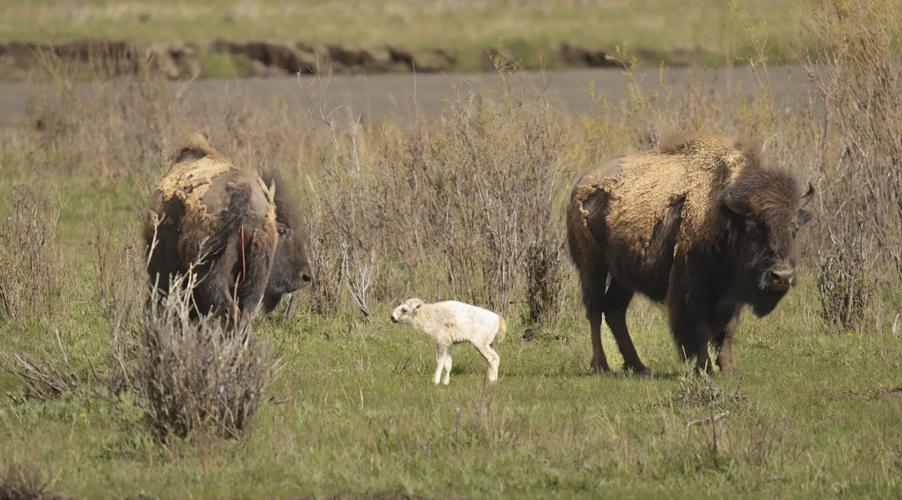
Earlier this month, a white buffalo calf was born in the park's vast and lush Lamar Valley, where huge, lumbering bison graze by the hundreds in scenes reminiscent of the old American West.

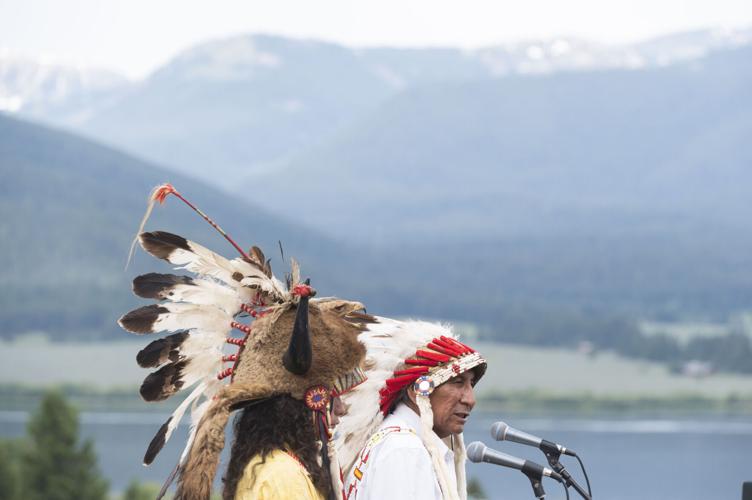
Arvol Looking Horse, a spiritual leader of the Lakota, Dakota and Nakota Oyate peoples in South Dakota, closes out a naming ceremony Wednesday for a white buffalo calf at the headquarters of the Buffalo Field Campaign in West Yellowstone, Mont. The reported birth of the sacred calf in Yellowstone National Park fulfills a Lakota prophecy that portends better times.
To the several tribes who revere American bison — they call them “buffalo” — the calf's appearance was both the fulfillment of sacred prophecy and a message to take better care of the Earth.
People are also reading…
“It’s up to each and every one of you to make it happen for the future of our children. We must come together and bring that good energy back,” Chief Arvol Looking Horse said at the ceremonies Wednesday a few miles west of Yellowstone, in far southern Montana.
Looking Horse is spiritual leader of the Lakota, Dakota and the Nakota Oyate in South Dakota and the 19th keeper of the sacred White Buffalo Calf Woman Pipe and Bundle. He describes the white buffalo calf's appearance as both a blessing and a warning about the natural environment.
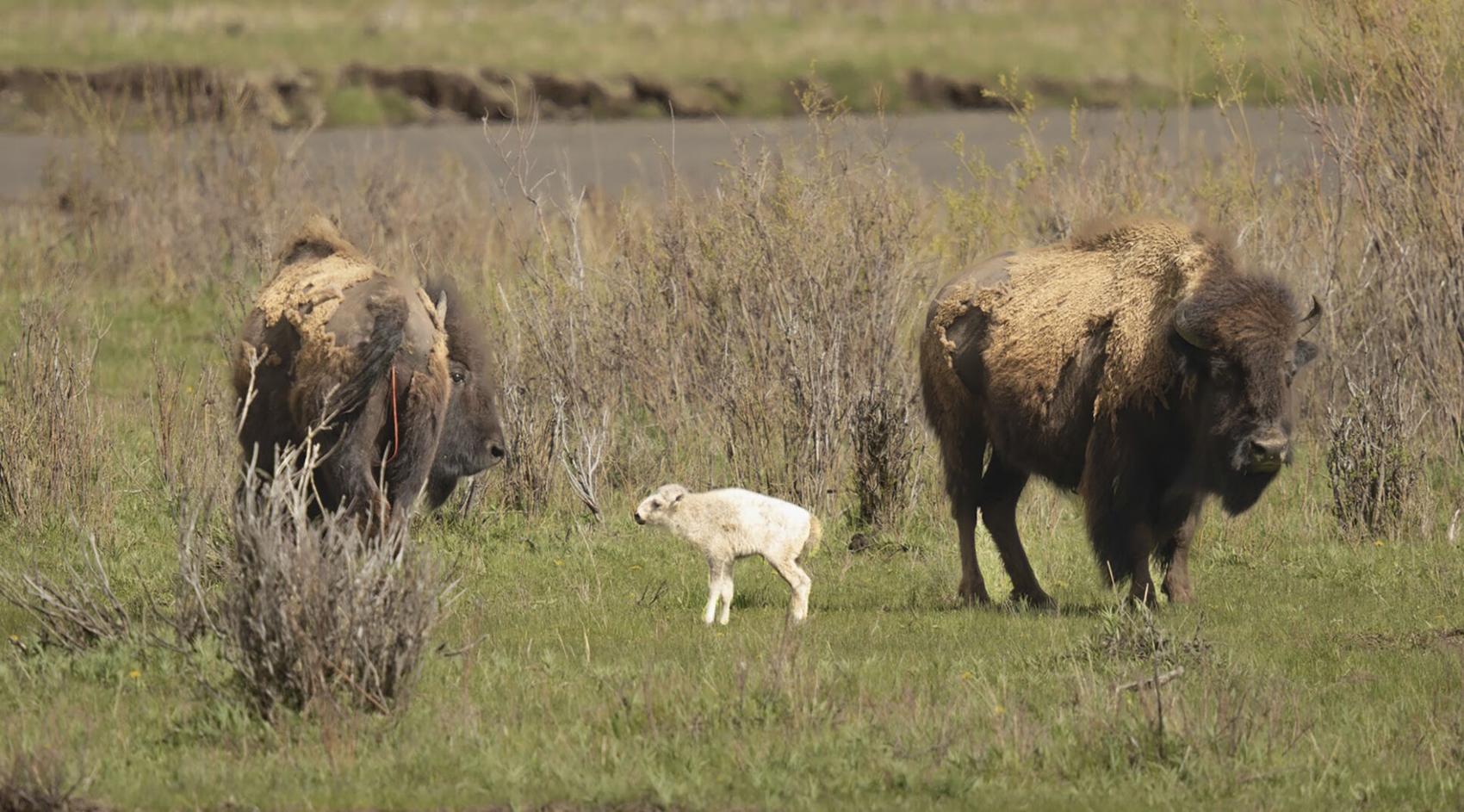
Jordan Creech, who guides in Yellowstone and Grand Teton national parks, was one of a few people who captured images of the white buffalo calf.

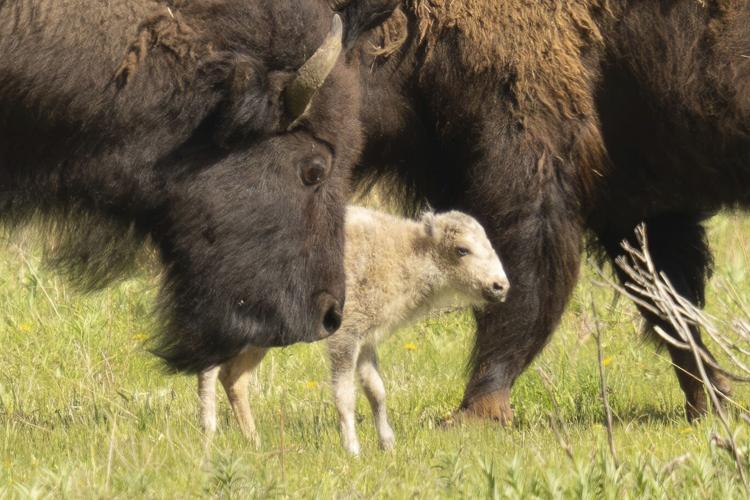
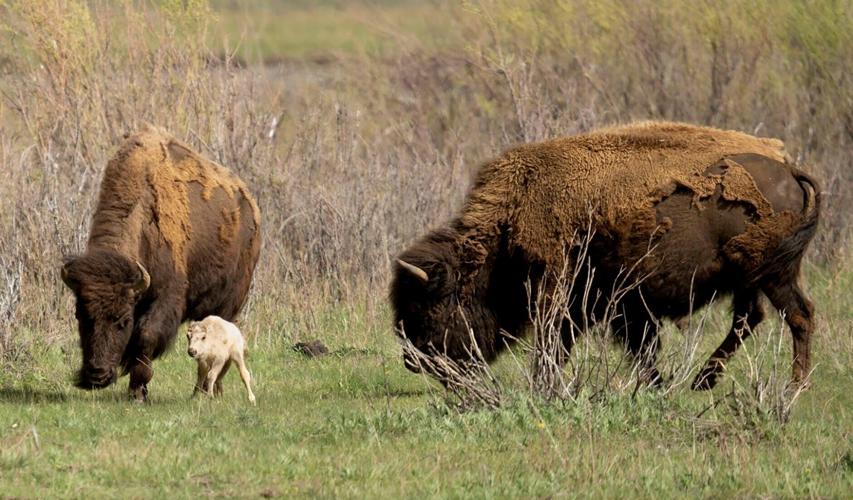
A white buffalo calf born on June 4 in the Lamar Valley in Yellowstone National Park, a spiritually significant event for many Native American tribes. The calf's birth fulfills a prophecy for the Lakota people that portends better times but also signals that more must be done to protect the earth and its animals.
The calf will be known as Wakan Gli, or “Return Sacred” in Lakota, he announced.
About 500 people — including representatives of the Colville Tribes in Washington, Lakota and Sioux in the Dakotas, Northern Arapaho in Wyoming, and Shoshone-Bannock in Idaho — attended the ceremonies at the headquarters of Buffalo Field Campaign between Hebgen Lake and the southern reach of the Madison Range. The conservation group works with tribes to protect and honor wild buffalo.
At most, only a handful of people got a look at the calf soon after its birth June 4. Fewer still got photos to prove its existence. The calf has not been seen since.
Each passing week without a sighting adds to suspicions the calf has fallen victim to predators, river currents, illness or any number of hazards for young buffalo. Regardless, it was an auspicious sign with deep roots in Lakota legend and spiritual belief.
Some 2,000 years ago — when nothing was good, food was running out and bison were disappearing — White Buffalo Calf Woman appeared and presented a bowl pipe and a bundle to a tribal member and said the pipe could be used to bring buffalo to the area for food.
As she left, she turned into a white buffalo calf. She promised to return one day, when times are hard again, as a white buffalo calf with black nose, black eyes and black hooves.

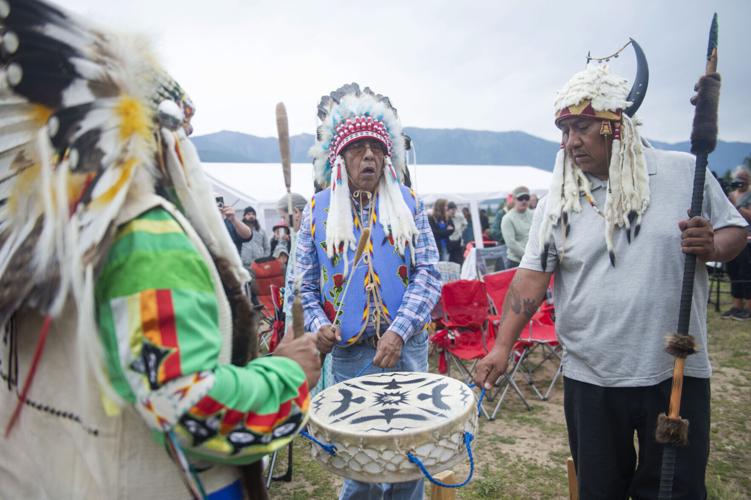
Drummers sing a song at the end of a naming ceremony Wednesday for the rare white buffalo calf.

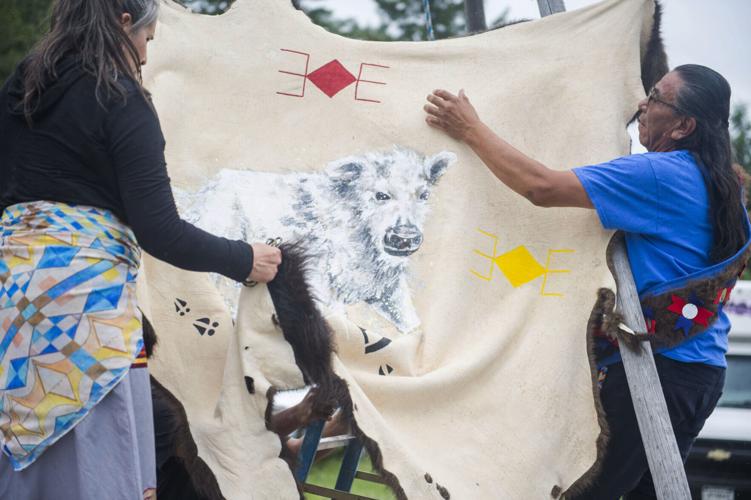
Charlene Hollow Horn Bear and Keith Ryder take down a buffalo hide Wednesday painted with a depiction of a white buffalo calf after a naming ceremony for the recently born calf in Yellowstone.
“This is a very momentous time in our history when this white buffalo calf with black nose, black eyes, black hooves, is born,” Looking Horse said.
White calves are unusual but not unheard of on buffalo ranches, a result of interbreeding between buffalo and cattle. White bison in nature are another level of rare, with none known in Yellowstone — the continent's largest wild reserve of the animals — in recent memory, if ever.

This calf came after a severe winter in 2023 drove thousands of Yellowstone buffalo to lower elevations. More than 1,500 were killed, sent to slaughter or transferred to tribes seeking to reclaim stewardship over an animal their ancestors lived alongside for millennia.
Jordan Creech, who guides in Yellowstone and Grand Teton national parks, was one of a few people who captured images of the white buffalo calf.
Creech was guiding a photography tour when he spotted a cow buffalo about to give birth near the Lamar River. The buffalo disappeared over a hill and the group continued to a place where grizzly bears had been spotted, Creech said.

Jordan Creech was guiding a photography tour June 4 when he spotted a cow buffalo about to give birth near the Lamar River, then later saw the cow with its rare white calf, calling it amazing timing.

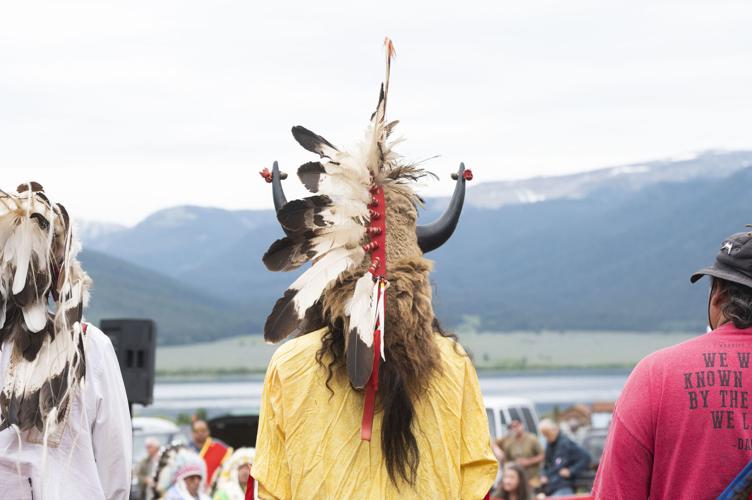
Ota Bluehorse wears a ceremonial headdress adorned with bison horns Wednesday while attending a naming ceremony for a white buffalo calf at the headquarters of the Buffalo Field Campaign in West Yellowstone, Mont.
They returned later and saw the cow with its calf, Creech said. It was clear the calf had just been born, he said, calling it amazing timing.
“And I noted to my guests that it was oddly white, but I didn’t announce that it was a white bison, because, you know, why would I just assume that I just witnessed the very first white bison birth in recorded history in Yellowstone?” he said.
Yellowstone park officials have no record of a white bison being born in the park previously. Park officials have been unable to confirm this month's birth.
Erin Braaten, who also captured images of the white calf, looked for it in the days after its birth but couldn't find it.
“The thing is, we all know that it was born and it’s like a miracle to us,” Looking Horse said.
A look at the largest Native American tribes in the US today
Biggest Native American tribes in the U.S. today
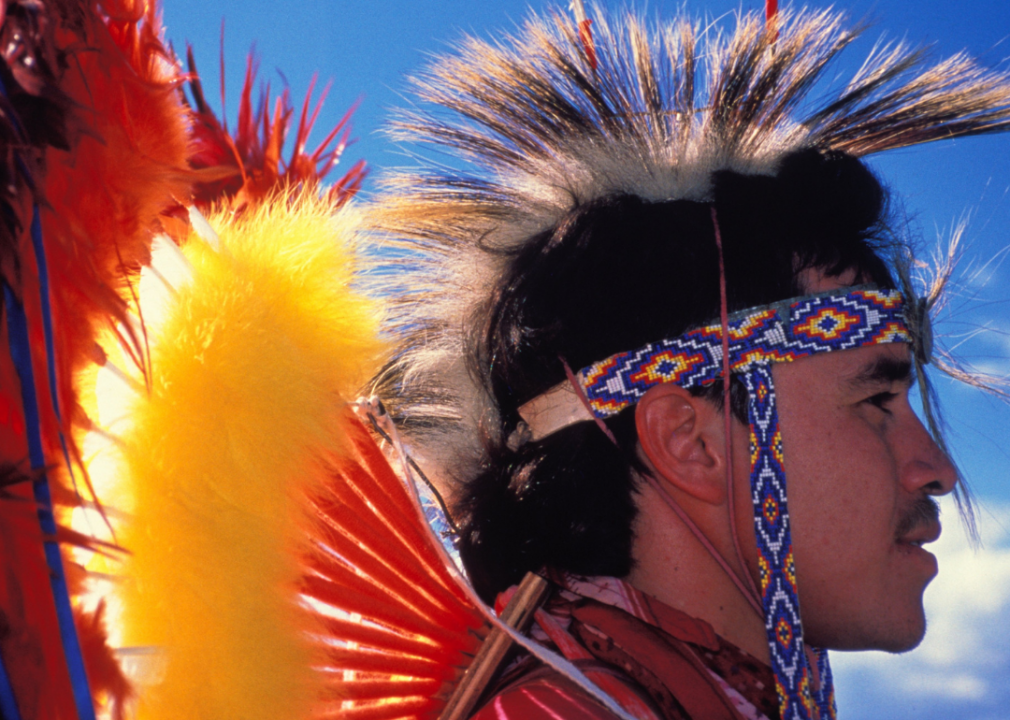
It's commonly believed that Native American origins reach far back to late in the Ice Age when the first humans ventured across the Bering Strait and into what is now North America. Over time, they dispersed across the continent and into South America, establishing distinct tribes, territories, and cultures. Some Native American tribes believe humans were always here, and many researchers are confident waves of people arrived at different times and by different means.
When Christopher Columbus and other explorers sailed to North America, they sought to colonize the Native Americans' territory and claim it as their own. Through decades of wars and treaties, Native Americans have had a complicated, painful history with European colonists. As they were experts of the North American landscape and its resources, Native Americans were able to build a strong economy based on trade with the Europeans. But as colonial presence grew and "Manifest Destiny" rhetoric set in, Native Americans had trouble living on the land they had known for generations in the face of widespread westward expansion. In 1830, President Andrew Jackson passed the Indian Removal Act, leading to many tribes being forced from their ancestral lands and pushed west onto reservations. Though some customs and traditions have been lost to colonization, war, and missionary efforts, many tribes still maintain a unique identity that honors their rich ancestral history.
In celebration of the robust history of North America's ancestral people, Stacker used 2019 estimates from the Census, the most comprehensive recent population report on the United States' Native American population, to compile a list of 42 of the largest Native American tribes in the country today. As of the 2010 Census, there are about 1.6 million Native Americans total living in the United States. The tribes are ranked based on the number of people who identify as a member of this tribe alone or in any combination. For example, someone who is Cherokee and white would be included in the Cherokee population. The list also includes people who identify as each tribe in combination with other Native American groups (e.g., Apache and Navajo) as well as people who identify solely as a member of one Native American tribe. Native American groups unconnected to specific tribes (e.g., Mexican American Indian, Canadian and French American Indian) are not included in this list. Read ahead to dive into the rich culture of the country's most prominent Native American tribes.
You may also like: How America has changed since the first Census in 1790

#42. Tsimshian (Alaska Native)

- Tribe alone or in any combination: 4,728
- Tribe alone: 2,359
The Tsimshians reside in the Northwest coast along the Nass and Skeena Rivers as well as in nearby areas of British Columbia. They were heavily involved in the fur trade with Europeans starting in the 1700s, eventually founding the large trade town of Fort Simpson. Today, the tribe relies on salmon fishing as the main form of sustenance and trade.
#41. Cree
- Tribe alone or in any combination: 10,672
- Tribe alone: 2,414
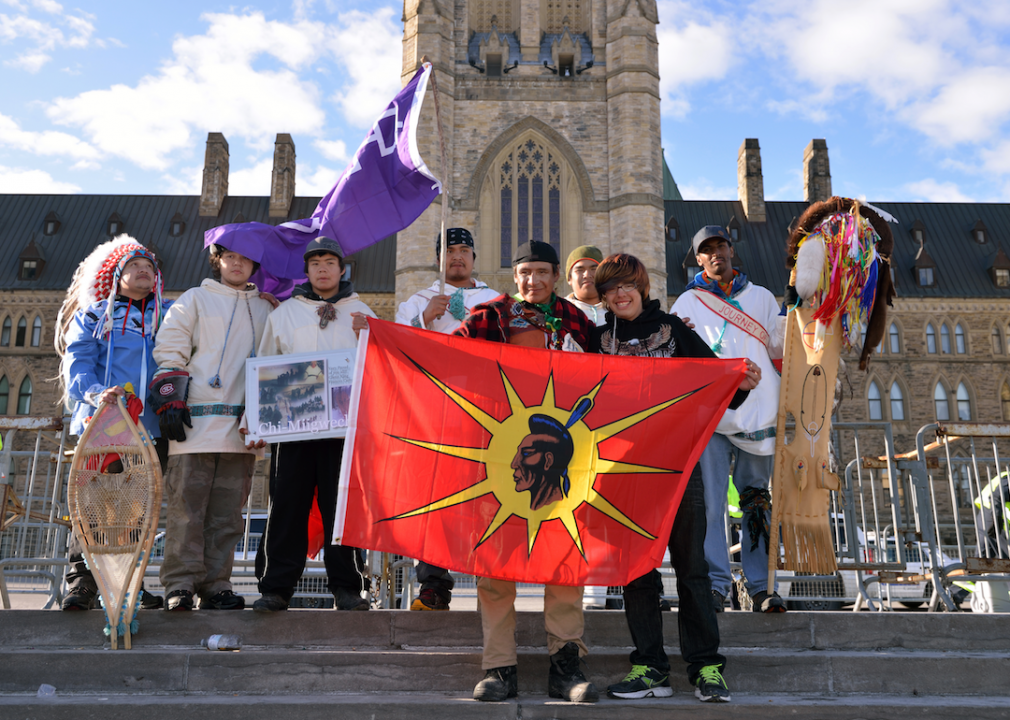
With a wide reach from northern Ontario to Montana, the Cree were also highly successful in the fur trade. They used their influence to gain economic and political influence amongst other tribes. The tribe is much more populous in Canada than in the U.S.
#40. Yuman

- Tribe alone or in any combination: 11,817
- Tribe alone: 8,129
The Yuman live primarily in the Southwest United States and western Mexico, spanning from western Arizona to Southern California and down the Baja Peninsula. The origins of the name of their tribe draw from the name of their tribal language: Hokan. Though it's their common language that unites the Yuman's many tribes, they have a combative history and maintain a separate identity from each other.
#39. Yakama

- Tribe alone or in any combination: 11,978
- Tribe alone: 8,334
Officially named Confederated Tribes and Bands of the Yakama Nation, the Yakama Nation comprises 14 different bands. The Yakama Nation occupies the Columbia Plateau in south-central Washington. The unique location of the Columbia Plateau provided isolation from European influence, resulting in a well-preserved indigenous culture.
#38. Arapaho

- Tribe alone or in any combination: 12,364
- Tribe alone: 8,449
The Arapaho comprise two separate tribes: the Northern Arapaho in Wyoming and the Southern Arapaho in Oklahoma. Their home in the plains became a battlefield of conflict for European settlers moving west seeking to strike it big during the gold rush.
You may also like: States with the biggest Native American populations
#37. Colville

- Tribe alone or in any combination: 12,843
- Tribe alone: 8,957
The Colville are a tribe that make up the Confederated Tribes of the Colville Reservation along with the Lakes, Okanogan, Moses-Columbia, Wenatchi, Entiat, Chelan, Methow, Nespelem, Sanpoil, Chief Joseph Band of Nez Perce, and Palus Indians. The Colville Reservation spans from southwestern Canada to the Idaho/Oregon border. The tribes on this reservation move throughout the land depending on the season in a hunter-gatherer lifestyle.
#36. Ottawa

- Tribe alone or in any combination: 13,866
- Tribe alone: 6,295
The name "Ottawa" originates from the word "adawe," meaning to trade, so it's easy to guess what this tribe's strength was. Originally claiming territory around the coastal areas of the lower peninsula of Michigan, the tribe has since moved to reservations in Kansas and Oklahoma and parts of Ontario. Along with trade, the Ottawa were highly skilled fishermen, primarily using nets in the bodies of water within the Great Lakes region.
#35. Menominee

- Tribe alone or in any combination: 14,290
- Tribe alone: 9,495
Residing in the Midwest in Wisconsin, Michigan, and Illinois, the Menominee have a legacy of being experts in agriculture and trapping. However, in current times, they have come up against many hardships since the reservation period. With the depletion of government funding leading to a lack of vital resources for the community, the tribe struggles to maintain its robust culture.
#34. Kiowa

- Tribe alone or in any combination: 14,603
- Tribe alone: 8,196
The Kiowa where fierce horseback warriors, becoming one of the most prominent tribes in the plains region. Eventually, the Kiowa allied with the Comanche and Apache tribes and their alliance dominated the southwestern plains. They have preserved their native language after which their tribe is named and continue to teach it in their schools.
#33. Ute

- Tribe alone or in any combination: 14,958
- Tribe alone: 9,486
The Ute are masters at adapting to the characteristics of their territory. The Western Ute in Utah retained the traditional Great Basin lifestyle, while the Eastern Ute in Colorado and New Mexico took on the equestrian, trade-based plains lifestyle. The infiltration of the Mormons to the Great Basin in 1849 resulted in two wars—the Walker War and the Black Hawk War—that resulted in the displacement of the Western Ute.
You may also like: 100 years of military history
#32. Houma

- Tribe alone or in any combination: 16,315
- Tribe alone: 10,033
Closely related to the Choctaw, Chickasaw, and Chakchiuma tribes, the Houma reside mostly in Louisiana. During the French Period (1699–1766), the Houma allied themselves with Louisiana, thriving through trade. However, throughout time, the Houma have had to battle with the effects of environmental change, reclaiming their native language, and maintaining a robust population.
#31. Crow

- Tribe alone or in any combination: 18,285
- Tribe alone: 11,812
The Crow people refer to themselves as Absaroka, meaning "Children of the Large Beaked Bird." For 10,000 years they have lived in Bighorn Canyon and gain much of their identity through living in the valley of the Bighorn River and the Bighorn Mountains. During the Indian Wars, the Crow allied with the U.S. government, and in turn, were allowed to keep their sacred lands and live peacefully in Bighorn Canyon.
#30. Shoshone

- Tribe alone or in any combination: 18,581
- Tribe alone: 10,802
The Shoshone have lived primarily by the lifestyle of the plains since their acquisition of horses in the late 1600s. The tribe lives off of hunting both large and small game—from buffalo to fish—and agriculture. As with most plains lifestyle tribes, the Shoshone celebrate the Sun Dance which symbolizes the renewal of the people and the land.
#29. Paiute

- Tribe alone or in any combination: 19,832
- Tribe alone: 12,966
The Paiute live in the Great Basin and are accustomed to frequently moving from season to season following animal migration patterns and harvest seasons in groups of three to five households. This tribe is often associated with Jack Wilson, the Northern Paiute Mystic who began the Ghost Dance movement that hoped to bring peace between settlers and Native Americans.
#28. Cheyenne

- Tribe alone or in any combination: 21,728
- Tribe alone: 11,171
The Cheyenne are a tribe of the Great Plains and are closely related to the Arapaho. Living in both Montana and Oklahoma with inhospitable weather for crops, the tribe adopted a hunter-gatherer lifestyle and moved throughout the plains often. Indigenous musical styles and songs play a large part in Cheyenne culture, and the tribe has maintained the tradition through to current times.
#27. Puget Sound Salish

- Tribe alone or in any combination: 24,206
- Tribe alone: 14,850
The Puget Sound Salish are composed of around 10,000 groups, including the Duwamish, Muckleshoot, and Nisqually. Originally in the northwestern coastal region, their diet mostly comprised shellfish, salmon, and berries. The Salish are accomplished woodworkers, building their dwellings from wood and practicing wood carving.
#26. Osage

- Tribe alone or in any combination: 24,242
- Tribe alone: 9,085
Another great tribe of the plains, the Osage are one tribe of the Dhegiha Sioux including the Kaw, Omaha, Ponca, and Quapaw tribes. They hold the legacy of a strong military force and a skill for making beautiful crafts composed of beadwork, weaving, and silver metalwork.
#25. Aleut (Alaska Native)

- Tribe alone or in any combination: 24,656
- Tribe alone: 13,677
Arriving in the Aleutian Islands from mainland Alaska in 2000 B.C.E., the Aleut are culturally and linguistically related to the Eskimo people. The Aleut were highly creative in living in a harsh climate and created unique semi-subterranean living structures that had roofs of sod supported by rafters made from driftwood and whalebone.
#24. Delaware

- Tribe alone or in any combination: 24,847
- Tribe alone: 8,048
The Lenni Lenape or Delaware people originally lived along the Delaware River in New Jersey. They speak a dialect of the Algonquian language and are related to the Miami, Ottawa, and Shawnee tribes. Upon the arrival of British colonists, the Delaware were forced from their land and have since settled primarily in Oklahoma.
#23. Hopi

- Tribe alone or in any combination: 25,438
- Tribe alone: 17,164
In northeastern Arizona, the Hopi live by the belief in being peaceful and humble farmers, respectful of the land and its resources. The westernmost of the Pueblo Indian tribes, the Hopi are the only tribe to speak a Shoshonean language of the Uzo-Aztecan tribes. Their villages have a distinct design with homes built of native stone and arranged in a circle surrounding a kiva, or building used for traditional ceremonies.
#22. Alaskan Athabascan (Alaska Native)

- Tribe alone or in any combination: 28,720
- Tribe alone: 17,461
The Athabascan of the interior Alaskan and Canadian region faced harsh climate conditions and would sometimes have to battle against famine. They made up for their lack of agricultural sustenance with their hunting prowess that they used to track caribou. The Athabascan then traded the pelts with neighboring tribes along with their much-prized beaded skins.
#21. Comanche

- Tribe alone or in any combination: 29,325
- Tribe alone: 12,268
Allied with the Kiowa in the plains, the Comanche's life was predicated on the movements of great bison herds. Like many nomadic plains tribes, the Comanche lived in tipis they made from bison skins. They also became skilled at breaking wild horses and domesticating them for tribal use.
#20. Tlingit-Haida (Alaska Native)

- Tribe alone or in any combination: 30,878
- Tribe alone: 15,160
The Tlingit Nation and Haida Nation exist as two separate and distinct entities, but both nations live in southeast Alaska. Both the Tlingit and Haida take pride in cultivating and harvesting resources from both land and sea in a responsible, sustainable manner.
#19. Pima

- Tribe alone or in any combination: 30,965
- Tribe alone: 24,121
Originally named "Akimel O'odham," meaning river people, the Pima got their modern name from the Spanish. They live along the Gila and Salt Rivers near Phoenix, Arizona, and speak the Pima language of the Aztecan branch of the Aztec-Tanoan linguistic family.
#18. Tohono O'odham

- Tribe alone or in any combination: 32,910
- Tribe alone: 25,996
The Tohono O'odham have territory spanning from Sonora, Mexico, to central Arizona. Having territory that straddles two countries has proven difficult for modern Tohono O'odham to practice their migratory rituals. It has prevented many from being able to move freely within their land and visit spiritual sites and visit other members.
You may also like: Most and least popular governors in America
#17. Seminole

- Tribe alone or in any combination: 41,411
- Tribe alone: 14,229
The Seminole are descendants of the Creek and Lamar cultures of Alabama and Georgia but eventually migrated to Florida. The name "Seminole" was given to the Florida Native Americans in the 1770s, meaning "runaways."
#16. Potawatomi

- Tribe alone or in any combination: 43,481
- Tribe alone: 21,297
The Potawatomi are an Algonkian-speaking tribe closely related to the Ottawa and the Ojibwa. The tribe lived seasonally, moving between different villages during winter and summer and shifting crops based on the season. Spirituality was very important to the Potawatomi and villages included shamans and other types of diviners.
#15. Iñupiat (Alaska Native)

- Tribe alone or in any combination: 45,131
- Tribe alone: 30,307
The Inupiat reside within the harsh arctic climate of Alaska and have developed expert hunting and fishing skills because of the scarcity of foraging food in the region. They mostly eat whale, caribou, fish, and roots. The Inupiat are also part of the larger Inuit culture in Alaska.
#14. Yup'ik (Alaska Native)

- Tribe alone or in any combination: 46,086
- Tribe alone: 37,350
The Yup'ik are part of the Asiatic Eskimo group who live on the Chukotka Peninsula in northeastern Siberia. They survive mostly on sea mammals, fish, and birds. Their land and its resources provide for a large part of their culture. Its isolated location has allowed them to maintain most of their ancient tribal customs.
#13. Yaqui

- Tribe alone or in any combination: 50,821
- Tribe alone: 28,348
The Yaqui are native to the Sonoran Desert in what is now Mexico. They belong to the Cahita Subgroup along with the Mayo, whom they share a language with. The Yaqui lived primarily off of crops such as maize, beans, and cotton, but also supplemented their crops with hunting and foraging.
You may also like: Worst-run cities in America
#12. Chickasaw

- Tribe alone or in any combination: 72,440
- Tribe alone: 27,699
In 1855, the Chickasaw separated from the Choctaw Nation and created their own autonomous nation. The Chickasaw then migrated to what is now Mississippi, Kentucky, Alabama, and Tennessee and gained the name "Spartans of the Lower Mississippi Valley" until they were forced to move to Oklahoma.
#11. Pueblo

- Tribe alone or in any combination: 81,374
- Tribe alone: 61,221
Named after the iconic houses that they made from stone, adobe, and wood, the Pueblo live in the southwest Mesa Verde region. They have gained a reputation for being a peaceful people who thrive in the arts, making beautiful paintings and pottery that have earned high prices in the global art world.
#10. Lumbee

- Tribe alone or in any combination: 94,755
- Tribe alone: 75,903
The Lumbee Tribe resides near the swamps in the eastern corner of North Carolina and is named for the Lumbee River. The tribe moved to this location in the 1700s to escape war and disease that was manifesting on the Carolina coast. The area became a respite for other tribes, some whites, and free blacks, resulting in a very diverse culture.
#9. Creek

- Tribe alone or in any combination: 108,368
- Tribe alone: 44,041
The Creek, like the Iroquois or the Puget Sound Salish, are a nation composed of many tribes that are held together by a sophisticated political structure. The Creek, or Muscogee, Nation are probably best known for their traditional semi-subterranean pyramid buildings they built along the river in what is now Alabama, Georgia, and South Carolina.
#8. Iroquois

- Tribe alone or in any combination: 114,568
- Tribe alone: 47,230
The Iroquois was originally a confederacy of five North American tribes, including the Mohawk, Oneida, Onondaga, Cayuga, and Seneca, with the sixth tribe, the Tuscarora, joining in 1712. All six tribes are united by languages in the Iroquoian language family. They were known as great farmers, even creating a drying method when there were surplus crop years to preserve food for the winter. Though the modern Iroquois no longer continue their tradition of farming, their traditional festivals and ceremonies associated with planting and harvesting have been preserved.
#7. Apache

- Tribe alone or in any combination: 150,120
- Tribe alone: 74,702
Because of constant conflicts with westward settlers, the Apache became well known for their fierce warriors. They were mostly friendly with neighboring tribes and often spent winter seasons with the Pueblos. It was from this relationship with the Pueblos the Apache were introduced to horses and became known as skilled riders that raided neighboring tribes and lived nomadically.
#6. Blackfeet

- Tribe alone or in any combination: 159,394
- Tribe alone: 29,575
Thought to be one of the first tribes to be pushed from their ancient home in the Great Lakes region, the name "Blackfeet" is thought to be derived from the soles of their moccasins after their relocation to what was to be their new home in Montana. The disappearance of buffalo had a big impact on the tribe's food resources but also on their spiritual culture. Today, the Blackfeet are working alongside neighboring tribes to preserve the buffalo population.
#5. Sioux

- Tribe alone or in any combination: 207,684
- Tribe alone: 118,850
Known for their strong hunting and warrior culture, the Sioux live in North Dakota, South Dakota, Nebraska, Minnesota, and Montana as well as Canada. They are best known in recent times for the protest against the building of the Dakota Access Pipeline at Standing Rock Indian Reservation. The media coverage of the protests mobilized a flood of supporters who made the journey to stand with the Sioux at Standing Rock.
#4. Chippewa

- Tribe alone or in any combination: 214,026
- Tribe alone: 119,229
Also known as the Ojibwa or Anishinaabe people, the Chippewa are closely related to the Ottawa, Potawatomi, and other Algonquian-speaking tribes. Historically, they lived around Lake Superior and, for the most part, have remained. The Chippewa were highly involved in the fur trade with the French and often intermarried with French fur traders.
#3. Choctaw

- Tribe alone or in any combination: 255,677
- Tribe alone: 100,605
The Choctaw are historically from Mississippi and parts of Alabama, but they were one of the first of the five great southern tribes to be relocated to Oklahoma on the Trail of Tears. Though the tribe has come up against many outside influences—including incoming settlers and missionaries—the Choctaw have attempted to maintain their traditions. The Choctaw culture remains unique in that it highly values women and assigns them the head of every family household.
You may also like: How Americans feel about 30 major issues
#2. Navajo

- Tribe alone or in any combination: 399,567
- Tribe alone: 332,389
One of the most widely recognized and the second-largest tribe, the Navajo live in the Southwest across Utah, Arizona, and New Mexico. Close relatives to the Apache, the Navajo created an architecture that resembled the Pueblos' but included multi-room structures that were intended to defend the tribe from outsiders. Because the tribe had a unique language, the U.S. used the Navajo language to create a secret code in World War II.
#1. Cherokee

- Tribe alone or in any combination: 1,116,990
- Tribe alone: 292,555
It's the Cherokee who hold the place as the largest tribe in the United States. Descendents of the Iroquois, the Cherokee eventually took on a lot of European customs and often intermarried with them. This included adopting European clothes, farming methods, and architecture, which has created a melting-pot culture that the tribe maintains today.
You may also like: Can you answer these real 'Jeopardy!' questions about politics?