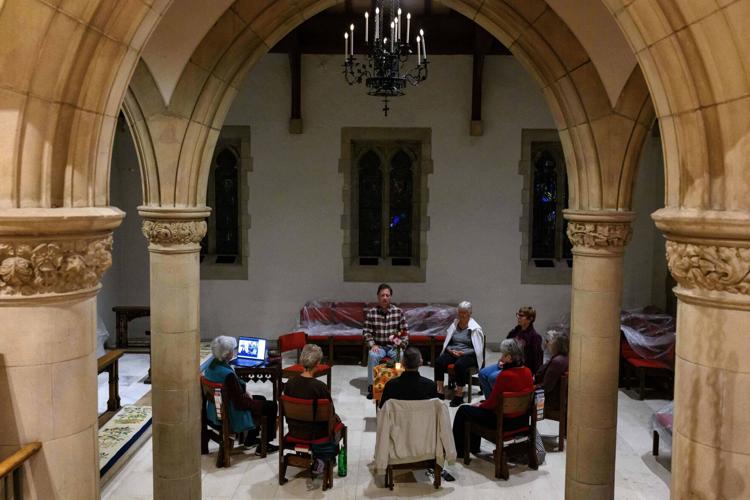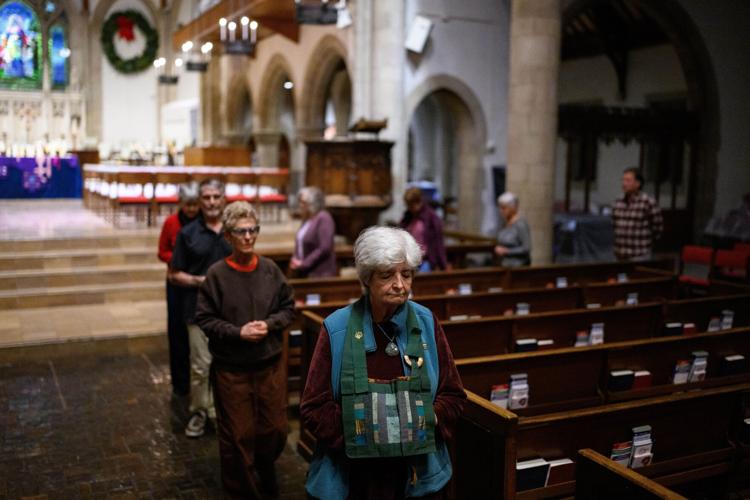
On most Monday nights, the sanctuary of All Saints Episcopal Church — with its vaulted ceilings, stone arches and stained-glass windows — seamlessly transforms into a space of quiet contemplation.
It's in this Gothic Revival church in Pasadena, California, that Betty Cole, a longtime Zen practitioner and "card-carrying Episcopalian," leads a weekly interfaith group in seated and walking meditation. The group has evolved into a "quiet fellowship" since she started it in 2001, Cole said.
"It's mostly people who are really not very inspired by the liturgy, pomp and music of the church, but do enjoy the building, the quiet of the chapel and the sense of encouragement and accountability in that shared quiet," she said.
Christian, Jewish and other religious congregations across America in recent years introduced meditation practices from Eastern religions like Buddhism and Hinduism, or resurfaced ancient contemplative practices in their own religious traditions, now adapted to the needs of a fast-paced, modern world.
People are also reading…

Participants meditate in silence Dec. 15 during an interfaith meditation practice at All Saints Episcopal Church in Pasadena, Calif.
While longtime practitioners like Cole say these contemplative practices are inherently spiritual or religious, they recognize that mental health and social benefits are added attributes.
In some deeply religious spaces, meditation has been disparaged as a gateway to the demonic; in some secular circles, it's debunked as superstition. Skeptics raise concerns over cultural appropriation, particularly in cases where Eastern practices have been marketed as trendy self-improvement.
But nationwide, more people — religious and non-religious — seem to be showing more interest in such practices. Increasingly, houses of worship are encouraging a variety of contemplative practices.

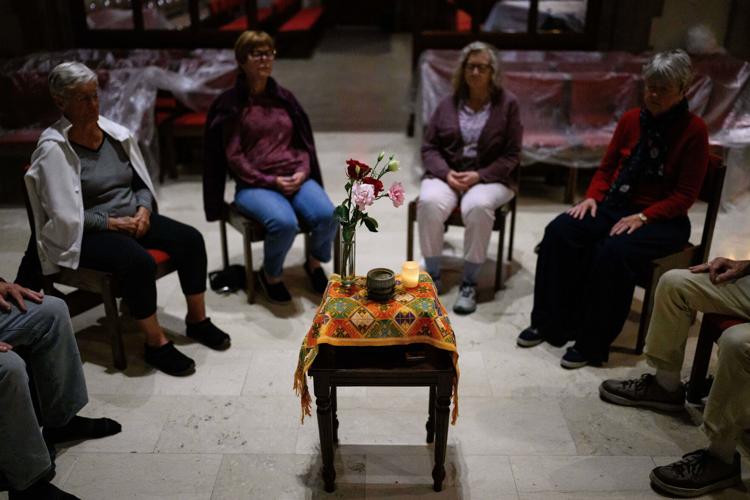
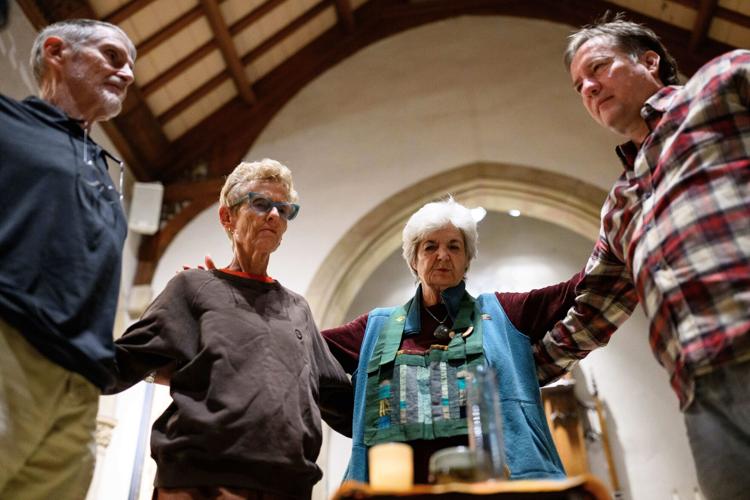
Participants form a circle to end an interfaith meditation practice Dec. 15 at All Saints Episcopal Church in Pasadena, Calif.
Ancient practices
Voices chanting "Om" — a sacred sound in several Eastern religions — blend with sounds of singing bowls, piano and other instruments at meditation held in an Ivy League university chapel. A rabbi leads virtual meditation and breath work while drawing from Jewish scriptures. In the sanctuary of a Unitarian Universalist congregation, a group gathers to study Buddhist dharma and to be enveloped in the meditative practice of a sound bath.
Across centuries, meditation has been common in Buddhism, where the goal is to become enlightened like the Buddha, and Hinduism, in which the ancient spiritual practice of yoga is rooted.
Contemplative and meditative practices in many religions seek to find a direct connection with God. That includes the Desert Fathers and Mothers — early Christian ascetics who followed a form of meditation focused on silence in the Egyptian desert. It also includes Kabbalistic and Hasidic meditation techniques in Jewish tradition, and the whirling dervishes in Sufism, a mystical movement within Islam.
"The next resurgence that we're seeing now, is people moving all the way out from saying, 'I'm going to practice a religious tradition' into 'I'm willing to do some of the practices that exist within those traditions,'" said Lodro Rinzler, a Buddhist teacher and author of "The Buddha Walks into a Bar."
For others, Rinzler said, it has helped rekindle a connection to their own religions and their ancient, lesser-known meditative practices.
"Some of the practices that have been spliced out and stand alone are now coming back under the umbrellas," he said. "People are then being attracted to the traditions from which they've always been a part of."

People sit around a table with an orange tapestry gifted by Himalayan refugees, an incense bowl, flowers and a candle during an interfaith meditation practice at All Saints Episcopal Church in Pasadena, Calif.
Jewish tradition
That's the case of the Or HaLev — Center for Jewish Spirituality and Meditation. Launched in 2011 by Rabbi James Jacobson-Maisels, it seeks to give people access to a meditation practice rooted in Jewish tradition.
"We're bringing Hasidic meditations and understandings to a contemporary audience," said Jacobson-Maisels. "We're also integrating that with Eastern traditions that have come from the West."
These meditative practices, he said, are less known, mainly because of the effects of modernity and the Holocaust, which destroyed many communities and teachers who were preserving these traditions.

Betty Cole leads an interfaith meditation practice at All Saints Episcopal Church on Dec. 15 in Pasadena, Calif.
"As part of Jews' assimilation to the modern world, many parts of the mystical tradition got rejected or cast aside because they were related to as unacceptable, irrational, not fitting to the modern world," he said.
"Kabbalah was the most dominant theological paradigm in Judaism. But after modernity, it really was pushed to the side," he said. "Now it's experiencing, once again, a resurgence."

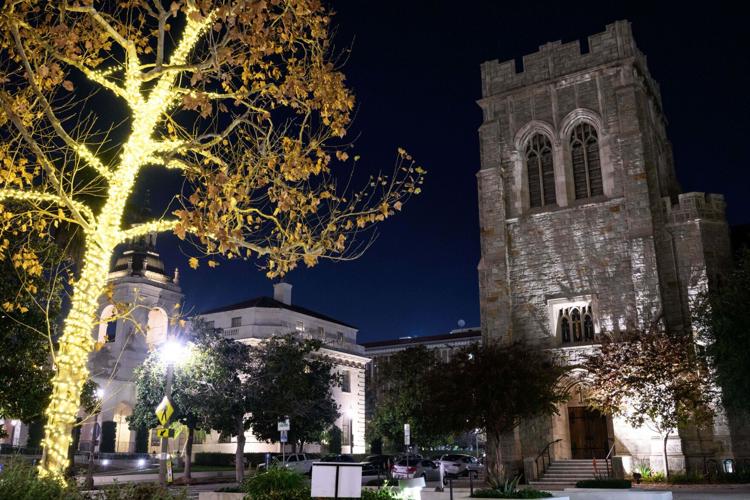
The All Saints Episcopal Church is seen Dec. 15 in Pasadena, Calif.
Music meditation
Many have gathered at the Princeton University Chapel to attend meditation events that include chamber music, breathwork and the chanting of mantras.
"The feedback I've mostly gotten is that people say, 'I want to do that again. I don't know what happened, but I feel like whatever happened, I need more of it,'" said Hope Littwin, a composer who facilitates musical rituals for the meditations.
"People notice the mysterious quality and people feel changed by it," said Littwin, who is pursuing her PhD in music composition at Princeton.
The university's Gothic nondenominational chapel hosts concerts, weddings and interfaith services throughout the academic year.
"People from different religions, and even people with no religion at all … connect to meditation because meditation taps us into something universal, something deeper than belief systems or doctrines," said A.J. Alvarez, a meditation teacher.

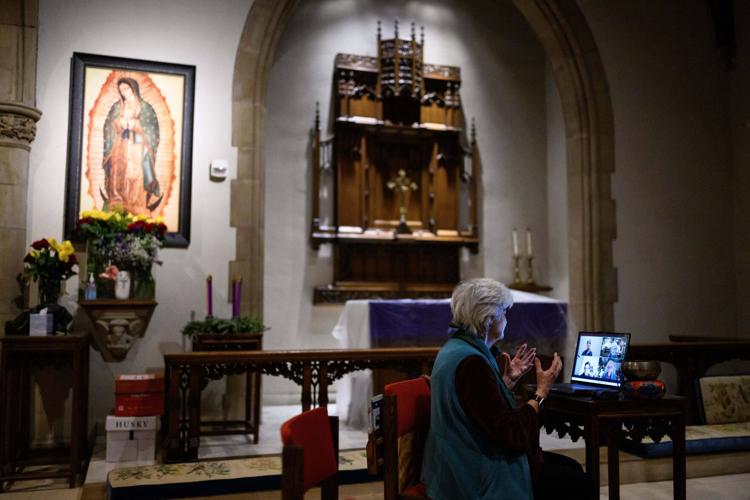
Betty Cole, right, connects with some participants through video call for an interfaith meditation practice Dec. 15 at All Saints Episcopal Church in Pasadena, Calif.
Buddhist meditation
Meditation also has become a crucial part of spiritual life at All Souls NYC, a Unitarian Universalist congregation.
When the Rev. Pamela Patton, a Universalist and Buddhist, began the Mindfulness, Meditation, Buddhism program in 2016, she was unsure how it would be received.
In a decade, though, it grew into a community of about 800 members learning from teachers of different Buddhist lineages.
The Universalist religious movement welcomes people with diverse spiritual beliefs. Regarding her program, Patton said, "It's brought a lot to our community."
10 different types of meditation—and which one is right for you
10 different types of meditation—and which one is right for you

Self-care can be a key strategy for getting through tough times, such as a global pandemic. Meditation is one practice that has been relied upon by people for centuries and across various cultures.
Sunday Citizen compiled a list of 10 different types of meditation, using information from health and wellness sites, research studies, and more. One thing to remember when beginning to practice meditation is that mastery is not necessary right away. If you don’t meditate, or only do so sporadically, any increase in frequency or duration could have a positive impact. Keep in mind, there is no one way to meditate.
Those who are a bit type A may have trouble slowing down—for them, a meditation practice like kundalini or tai chi that integrates movement may be the ticket. Other types demand quiet and sitting still. All forms of meditation have benefits for mental and physical health. For those who need guidance, there’s likely an app for that. Some are 100% free, while others may be subscription-based. Some apps don’t stop at meditation, but also offer tips and tools for other ways of self-care. You can even connect with a Japanese monk via Zoom for a meditation session.
Meditation may have started as early as 5000 B.C., but no matter how long, the practice has become more popular as people look for non-pharmaceutical ways to boost their mental health. Different variations on the practice have been developed throughout the world, including India, China, and Japan. Some are associated with spiritual practices including Hinduism, Taoism, and Buddhism, while others are secular.
Over time, more people were exposed to the practice via the publishing of books including “Siddhartha,” “The Tibetan Book of the Dead,” and “The Dharma Bums.” Researchers started exploring the impact of meditation on the brain in the ’50s. Beginning in the late ’70s, researchers noted that mindfulness meditation was an effective practice to help manage chronic disease. By the time Deepak Chopra opened his Center for Wellbeing in 1996, meditation was becoming mainstream.
Continue reading to find the type of meditation that’s suited to your personality, energy levels, and goals.
Mindfulness

Jon Kabat-Zinn created his Mindfulness-Based Stress Reduction program in 1979, making this type of meditation one of the newer options available. Because the tactics of the program were adopted outside of the meditation world by therapists and medical professionals, it is one of the more well-known options. By focusing on the present, instead of spiraling into thoughts about the past or future, people who utilize this technique can manage anxiety and concentration virtually anywhere, anytime.
Loving-kindness aka Metta

Anyone who’s ever dealt with anger or resentment may benefit from this practice, which focuses on compassion for and acceptance of self, and then people and/or situations outside of ourselves, including (and sometimes especially) those that aggravate or hurt us. The idea is that until we love ourselves, we can’t extend love to others. This type of meditation can also help with anxiety and PTSD.
Guided

Even though this practice necessitates a guide, apps and the advent of video calls have made guided meditation available to almost anyone, anytime, via both live sessions and recordings. Anxiety, depression, pain, and insomnia are just a few of the conditions that can be helped via this practice.
Movement

Perfect for those who struggle to sit still, this type of meditation uses movement—yoga, tai chi, gi gong, kundalini, and others—to calm the mind. The practice doesn’t require being solitary, and it is often experienced in a group setting. With the recent popularity of Zoom classes, people can join others from their own homes or a community space.
Kundalini

Because there are poses and mantras to learn for this practice, you’ll want training at first, but once you know the basics, you can use kundalini to manage stress and boost body awareness, in addition to getting stronger and minimizing pain.
Body scan

Those who struggle with sleep might want to try this practice, which involves scanning the body for areas of stress or pain. Intentionally tensing those parts, then releasing the stress, is often part of the experience.
Focused

Because this practice asks that we focus on something external—breath, sounds, mala beads, or something else—rather than trying to empty our minds, this can be an effective option for those experiencing “monkey mind,” a Buddhist term that describes restlessness or confusion. Success begins with short sessions whenever you have time, making this type of meditation perfect for busy lives.
Visualization

Picturing an intended result—peaceful scenes to create calm or success in a specific situation—is one possible focus of visualization. Beyond visuals, this practice can include integrating all five senses.
Mantra

Who hasn’t heard the word “om,” even if you don’t meditate? This practice, which has Hindu and Buddhist origins, uses words or phrases to focus attention. Because of the auditory component, this is likely a type of meditation you’ll do in privacy (though it is done in classes, too), making it a practice you can commit to daily at no cost.
Vipassana

Because this type of meditation requires participants to remain silent for 10 days, using body scans to stay focused and ignore pain, it requires a much higher level of commitment than others. The benefits of the practice were explored in the documentary “The Dhamma Brothers.” The film shows how this practice helped incarcerated men at a high-security facility in Alabama face their trauma and past actions. Others have used the practice to help with recovery from substance abuse.
Associated Press religion coverage receives support through the AP's collaboration with The Conversation US, with funding from Lilly Endowment Inc. The AP is solely responsible for this content.