
So you want to write the Great American Novel but none of the publishers you've queried are answering your phone calls and e-mails?
Who needs 'em.
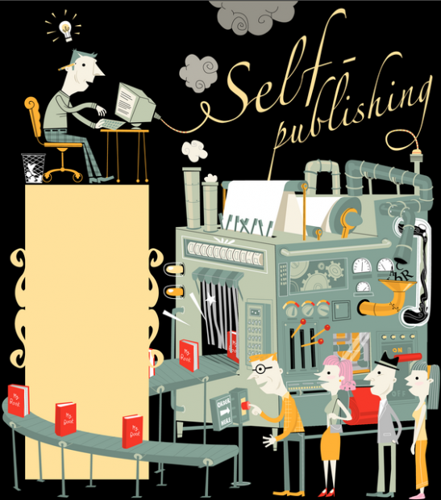
In today's globally connected, DIY, click-of-a-mouse world, becoming a published author is no longer a fantasy.
Sometimes called "vanity press," the world of self-publishing presents an overwhelming maze of options that can cost as little as a few hundred dollars up to thousands. You can do it entirely on your own from your desktop or hire a company to do it for you.
Getting published is often the easy part; marketing and selling your finished book to readers is where things get tricky.
Inside today's ¡Vamos! is a road map of sorts to help would-be authors realize their dreams of being published. — Cathalena E. Burch
People are also reading…
"In the end, the author who is self-publishing can do everything themselves by putting out a shingle," says Sam Henrie, president and founder of Tucson self-publisher Wheatmark Inc. "Now there are a range of service companies that can do it all for you."
"We have a fair number of people who are approaching this in a business way," says Mike White, who operates the small publishing house Ghost River Images in Tucson. "They know it's a business with money at risk. Of course ego is involved, but they are uniquely balanced by their business sense."
Networking
• The Society of Southwestern Authors (www.ssa-az.org) — Open to published and non-published writers. Hosts writing contests and puts authors in touch with one another through luncheons and other events.
• The Tucson Writers Workshop & Meetup Group (www.meetup.com/tucsonwriters) — Open to all writers with no cost to join. Online forums and monthly meetings. The next meeting will be held at Black Rose Caffe, 1800 N. Stone Ave., at 7 p.m. Jan. 27.
• "Self-Publishing in the Electronic Age" — Tucson publisher Mike White will lead this Pima Community College session from 9 a.m. to 1 p.m. Saturday at the Community Campus, 401 N. Bonita Ave. To register, call 206-6468.
It used to be that would-be authors paid to publish their books when they couldn't get a mainstream publishing house to give them a second thought.
Today, though, writers are turning to self-publishing for many of the reasons that musicians are turning to self-recording: They get to keep a bigger piece of the pie and they get complete control over their creative property.
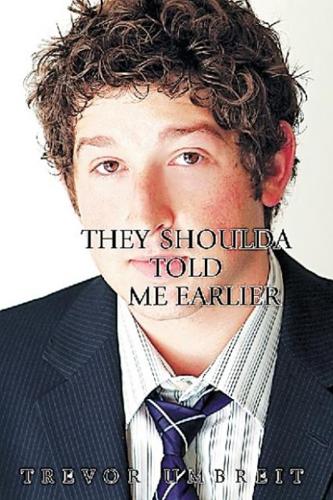
That's why aspiring screenwriter Trevor Umbreit says he rejected an offer from a big publishing house for his first novel, "They Shoulda Told Me Earlier." He says a mainstream publisher wanted the book, but only if he recast his 2007 coming-of-age satirical collection of essays into a dating guidebook.
"It didn't matter if it was self-published or published by a major house. My voice got out there," said the 25-year-old Tucson native and University of Arizona graduate who self-published with Amazon.com affiliate BookSurge Publishing.
"I think the whole industry is shifting away from traditional publishing to self-publishing," says Sam Henrie, president and founder of Tucson self-publishing company Wheatmark Inc. "This day and age, it's about 1 percent chance of getting a positive response (from a mainstream publisher). All of the major publishers in the United States right now have a policy that they don't accept unsolicited manuscripts."
Of the roughly 300,000 titles published in 2007 in the U.S., about 100,000 were self-published, according to Sara Nelson, editor in chief of industry tracker Publishers Weekly.
"As the traditional publishing business contracts, more people are turning to self-publishing," Nelson said in an e-mail interview. "The most successful are people with a 'platform' in place in advance: a one-time celebrity, somebody who runs a business and can drum up sales, etc."
Henrie, who had worked in the computer industry, began dabbling in self-publishing in 1999, then launched Wheatmark in 2000 in his living room. The operation today employs 11 full-timers at offices on the North Side. The company has published 1,200 books whose authors are from throughout the United States and as far away as Japan, Albania and Zimbabwe. About 15 percent of its authors are from Arizona, and Henrie estimates his company is the largest self-publishing company in the state.
Henrie, 48, said most of the authors he works with turn to self-publishing not out of vanity, but out of an acceptance of the realities of today's high-tech, Internet-driven world.
"Authors are increasingly saying they won't even bother with the traditional route anymore. Part of it is the Internet has really changed everything," he says. "Before, an author sold their rights to the publisher, who owned it and created the book. Now we have this more technologically advanced system where the book is actually digitally stored and then put directly on Amazon.com and as it's ordered it's printed. You have eliminated this whole (middleman) section. Books are right behind music where people are essentially bypassing the whole distribution channel that publishers had because the thing can be distributed electronically."
"Self-publishing isn't exactly for everybody," adds Mike White, who runs the 16-year-old Ghost River Images self-publishing company on Tucson's East Side with his wife and business partner, Tama. "It has marketing requirements. It requires a bare minimum investment."
The Whites launched Ghost River after Tama White had searched in vain for a publisher for her own book. At the time, Mike White was entertaining his second career; he had left the corporate world and, after traveling the country for several years with his wife and then-12-year-old daughter in tow, had come home with no specific plans.
Since opening Ghost River in 1993, the couple has published more than 250 titles, from children's books to memoirs and novels.
"We get a surprisingly big number of really good books, but every so often we get a book that the Quakers would call bread for home," he said, referring to books that aren't quite worthy of being published, even at the author's expense. "We have to talk to them honestly because we don't want them to spend the money for something that's not ready for press."
White said he has several authors who are posting impressive sales, including Betty Barr, who writes history guides on Cochise County; and attorney Ben Williams, who writes humorous stories about colorful ranching characters. Both authors are selling more than 1,000 copies a year, he said.
"We have a fair number of people who are approaching this in a business way," he said. "They know it's a business with money at risk. Of course, ego is involved, but they are uniquely balanced by their business sense."
Henrie said most self-published authors will not make their money back.
"Self-publishing is still not a guarantee of financial success. What it does is open the door for you to publish so if you have good contacts and good marketing you will have success," he said.
"You don't decide to self-publish because you want to make money; you do it because you are committed," he added. "The great thing is that a larger percentage of people succeed going this route than the other because they have control over how it gets published, how it gets marketed."
Henrie said there are success stories. In December, one of his authors, William R. Daniel, sold 3,176 copies of his just-released book, "Shootout at Miracle Valley."
"I couldn't get them in fast enough," said Willcox rancher Larry Dempster, a retired Chevron executive who put up the $60,000 to hire author Daniels and publish the book about the deadly 1982 shootout with Cochise County Sheriff's officers and members of a fundamentalist black Christian church.
They sold the books at public appearances and book signings that included Daniel and some of the officers involved in the shootout. He has ordered another 2,000 copies of the book.
"We've been doing it privately and fumbling around and having a ball. If we make anything, great. If not, we've gotten one objective passed — getting the story out," Dempster said.
Trevor Umbreit is on adrenaline overload.
The 25-year-old Tucson native and University of Arizona graduate speaks at a rapid clip as if he's constantly on the move, with places to get to and people to see. He has a larger-than-life plan for his future, and he will happily tell you about it, dropping names of famous people he's brushed against in his few years in Los Angeles pursuing his dream of becoming a successful screenwriter.
His confidence was bolstered in 2007 when he self-published his first book, "They Shoulda Told Me Earlier," on Amazon.com affiliate BookSurge Publishing. He turned to self-publishing, he said, after he rejected an offer from a mainstream publisher that wanted him to recast his satirical collection of college life essays into a dating guidebook.
"It didn't matter if it was self-published or published by a major house. My voice got out there," he said.
Umbreit began writing the book when he was 20 and still attending the UA. The book recounts how he suffered a heart attack at age 18, which gave him a whole new outlook on life, his future and his generation.
"I wrote it for me; I wrote it for fun," said the Salpointe Catholic High School graduate whose parents and sister still live in Tucson.
But somewhere along the way, he decided he wanted to get his book published. He said he decided to do it himself primarily to preserve his creative control and ownership of the project.
Umbreit said he researched dozens of companies before going with BookSurge. He said he paid next-to-nothing to get the book published.
"There's ways to spend a ton of money, and I think when people initially go in, there are ways (the publisher) can market it. I didn't buy into any of that. I wanted to get it into book form," he said, adding that he marketed and sold the book at signing parties around the country.
The book has sold about 900 copies, Umbreit said, describing his cut of the proceeds as "quite a bit" of money.
"The book helped me in the screenwriting career. People loved the voice of the character I created and that got me a bunch of initial meetings and a lot of attention at a young age," he said. "Initially, I had a couple interesting essays. Now I have a book that's sold well."
Larry Dempster admits he's not a writer.
But when a friend, former Cochise County Sheriff Jimmy Judd, asked him to help write a book about the deadly 1982 shootout at the Christ Miracle Healing Center and Church in Cochise County, he promised to find a writer. And he pledged to help shepherd the project through the research and publication.
Judd wanted to tell his deputies' side of the story. The sheriff and his office took the brunt of criticism for the altercation, which led to the deaths of two church members and the injuries of several deputies and parishioners.
Not long after Dempster made that promise, Judd died.
"The last thing he said to his daughter was tell Dempster to get the book written," the retired Chevron executive and gentleman Willcox rancher said.
Dempster hired writer William R. Daniel, who painstakingly researched court, police and government documents about the Oct. 23, 1982, shootout. The melee was the culmination of years of confrontation between deputies and the African-American church over traffic warrants.
"There were many stories about the shootout that were not true, that were very, very one-sided and shaded by the political correctness of the day," said Daniel, a freelance writer and screenwriter who retired to SaddleBrooke in 2001 after selling his media company.
"Sheriff Jimmy Judd wanted to make sure the story of Miracle Valley was told. The media maligned his officers and there was very little reported about what led up to the shootout and the aftermath."
It took three years before the book, "Shootout at Miracle Valley," was published by Tucson-based imprint Wheatmark Inc. It was released late last year; in December, buyers snagged 3,176 copies at bookstore and community book signings the authors hosted with surviving deputies. Dempster has ordered 2,000 additional copies, which he plans to market with more public appearances.
Daniel said they never sought out a traditional publisher primarily because they wanted to get the book published sooner rather than later.
"A lot of these people involved in this story are getting older and passing away. In one sense it was a race against time . . . to make sure their stories got told," he explained.
Dempster said he invested $60,000 in the project. He hopes to recoup his investment, but he is not entirely confident he will. He views it as money well spent.
"They (Judd and the deputies) finally got their side told after 27 years. Unfortunately, Jimmy's not around to know," he said.
Book signings
The author and some of the sheriff's deputies involved in the shootout will sign copies of the "Shootout at Miracle Valley" during the following public appearances:
• 5-7 p.m. Friday at B. Dalton Booksellers at Sierra Vista Mall in Sierra Vista.
• 12:30-2:30 p.m. Saturday at Wendy's Hallmark, 1320 San Antonio Ave., Douglas.
• 3-4:30 p.m. Saturday at Atalanta Music and Books, 38 Main St., Bisbee..
• 2-4 p.m. Jan. 31 at the Elsie S. Hogan Community Library, 207 W. Maley, in Willcox.
• 1-2:30 p.m. Feb. 7 at Mostly Books, 6208 E. Speedway.
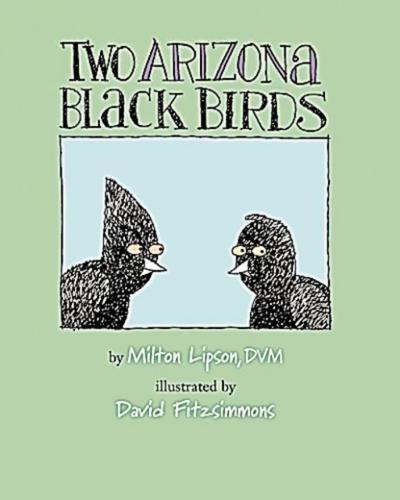
Retired veterinarian Milton Lipson came to his wife in 2002 with a yellow legal pad where he had sketched out a children's story about two Arizona blackbirds.
"He had drawn balloons like a comic where he wanted the illustrations to go. He laid it all out; it was an adorable little story," Dr. Marilyn Heins recalled.
When Lipson died in April 2007, Heins, a pediatrician and widely published parenting expert, wanted to see her husband's story become a book.
Heins, who was born in Boston and spent 20 years in Michigan before settling in Tucson in 1979, felt uniquely qualified to shop her husband's book to traditional publishers. She had published her own book, a parenting guide, with New York publisher Doubleday in 1987.
"Nobody wanted it," she said. "And then I got the bright idea of asking Fitz (Arizona Daily Star editorial cartoonist David Fitzsimmons)" to illustrate the book.
With her husband's story and Fitzsimmons' drawings, Heins decided to publish "Two Arizona Blackbirds" on her own.
"Everybody recommended Wheatmark; everybody had good things to say about them," she said of settling on Tucson-based publisher Wheatmark Inc., which released the book last September.
Heins said sales are slow-going; she bought 500 copies at the reduced author's rate — about $4,000 — and plans to sell them when she does public appearances like one she and Fitzsimmons did at the Park Place Borders before Christmas. The book also is available through online sellers including Wheatmark (www.wheatmark.com).
Heins said her self-publishing experience has been so good that she's contemplating doing it again.
"My husband wrote another book, sort of his memoirs, and I do want to bring that out," she said. "I have about eight more chapters to edit. I have some ideas about some other books, but I'm not sure."
Boston native and Tucson transplant Barbara Peabody was racing against time when she shopped her 1986 book, "The Screaming Room," to several major publishers.
The book recounted her painful journey with her son Peter during his final year battling AIDS. He died in 1984 when not much was known about the disease from a victim's standpoint.
Peabody culled entries from diaries and notes jotted on calendars to write her book, which was soundly rejected by several publishers before San Diego's Oak Tree Publications picked it up.
"They took it right away," recalled Peabody, 75.
A year later, Avon Books published the paperback version. In all, it sold about 60,000 copies, she said, a respectable number for a first-time author. Peabody said she made less than $20,000 in royalties.
"That was fine for me. I just really wanted that to be made," said Peabody, who moved from New Mexico to Tucson six years ago to be near her two other children.
Her first book turned out to be her only published book, but Peabody is considering changing that. Five years ago, she started writing poetry in between painting. She's been an artist most of her adult life, and her paintings are shown in galleries throughout Southern Arizona and Albuquerque.
Last year, she snagged her second consecutive second-place finish in the poetry category of the Society of Southwestern Authors Writing Contest, which attracts about 500 to 600 entrants.
Her poetry is "kind of very eclectic. It's hard to pull it together. That's the problem," she said.
She has considered getting an agent to shop her poetry to a traditional publisher, "but at my age, do I want to wait around to go through all that stuff?
"So I'm thinking I'll try and do it myself," she said. "My kids really want me to get it out. It sounds good if I can pull it off."
Peabody said she is researching self-publishing companies and taking advice from her brother, who self-published a book of photographs from his worldwide travels.
UA grad wrote book after heart attack at 18
Book about shootout 'a race against time'
'Adorable little story' of birds now a book
She chronicled her son's battle with AIDs
Need some inspiration?
Prominent authors who self-published their works and went on to achieve literary success might surprise you. Consider these:
• Charles Dickens didn't have a publisher in 1843 when he penned "A Christmas Carol," so he did it himself. It is largely regarded as one of the world's most-beloved books.
• Cornell University professor William Strunk Jr. self-published his grammatical bible "The Elements of Style" in 1918; his former student E. B. White updated it in 1959 for textbook publishing giant Macmillan and Co. Today it has sold millions of copies and remains one of the most widely circulated texts on modern grammar.
• E. Lynn Harris couldn't find a publisher for his first novel, "Invisible Life," so he published it on his own in 1991. He reportedly sold 10,000 copies through African-American bookstores, beauty salons and impromptu book signings before New York publishing house Anchor Books, the oldest trade paperback publisher in America, picked him up in 1994.
• M.J. Rose struck out with mainstream publishing houses when she pitched her first novel, "Lip Service," in 1998. So she published it on her Web site, charging readers $9.95 to download the book — one of the first-ever e-books. She sold 2,500 copies in both electronic and trade paper format, propelling "Lip Service" to became the first self-published novel chosen by the Literary Guild/Doubleday Book Club. It also was the first e-book to be published by a mainstream New York publishing house.
• Oregon salesman William P. Young self-published his first novel, the spiritually centered "The Shack," with the help of two friends in 2007. The trio formed their own publishing house after being rejected by Christian and secular publishers. The book has topped most paperback bestsellers lists and has sold millions of copies.