


Vehicles for sale at a Ford Motor Co. dealership in Colma, California, U.S., on Wednesday, June 30. With dwindling inventory over the last three months, U.S. auto sales has taken a sharp turn for the worse.
(CNN) — Maybe America's key inflation metric, the Consumer Price Index, should be redubbed the Car Price Index.
CPI climbed to a 13-year high in May, with prices up 5% compared to a year earlier. But about one third of that increase was due solely to the price of used cars.
Used car prices shot up 30% in the 12 months leading up to May, just below the record one-year increase for used car prices reported in 1975.
According to Edmunds, a go-to resource for car information, the average used car price hit $26,500 in June, up 27% from a year ago, while the average new car transaction price is $41,000, up 5%, virtually the same as the average sticker price of $41,500.
People are also reading…
Record high prices for both used and new cars is more than an annoyance: It's an economic problem that weighs heavily on household budgets. About 40% of U.S. households make a car purchase of some sort every year, and this year there could be even more due to pent-up demand from purchases delayed in 2020.
Why used car prices are rising
Car prices have risen for a variety of reasons, but they all boil down to two factors: high demand and limited supplies.
Used car prices are particularly hard hit because rental car companies, facing a near halt in demand last year, sold off about a third of their fleets to raise enough cash to survive the pandemic. That rush of sales last spring pushed used car prices slightly lower, which accounts for the large percentage increases in the 12-month comparison.
But with the current rebound in travel, rental car companies are suddenly facing a shortage of cars to rent and aren't selling what they have even as demand for cars has soared. Millions have gotten jobs this year, and millions more who were working from home are returning to the office, feeding the need for vehicles.
And many buyers are making purchases that they planned to make last year but delayed because of uncertainty about the pandemic. New car sales to American consumers set a record by topping 7 million vehicles in the first half of the year, according to JD Power.
Record high prices for new car are also a factor pushing some buyers who would prefer new cars to look at used cars instead.
5 top-end cars worth the price jump
Kia Soul

This photo from Kia shows the 2021 Kia Soul Turbo, a small SUV with a punchy turbocharged engine and lots of technology features. (Courtesy of Kia Motors America via AP)
The 2021 Kia Soul is a strong choice in the extra-small SUV category thanks to its roomy interior and long list of standard features, but upgrading to the top-end Soul Turbo comes with even more benefits.
As the name suggests, the Soul Turbo is powered by a turbocharged four-cylinder engine with 201 horsepower — more than 50 horsepower over other Soul models. You’ll also find LED headlights and foglights, a head-up display and upgraded Harman Kardon stereo system to make the interior feel upscale. Finally, adaptive cruise control is added to the Soul’s set of safety technology.
2021 Kia Soul Turbo MSRP: $28,825
Mazda 3

This photo from Mazda shows the 2021 Mazda 3 2.5 Turbo, a compact sedan with upgraded power and advanced safety equipment to assist the driver in certain situations. (Courtesy of Mazda North American Operations via AP)
In any trim, the Mazda 3 is definitely a good buy for a small sedan. But it is especially attractive at the top end of its range. Compared with base models, the Mazda 3 2.5 Turbo Premium Plus gains a turbocharged four-cylinder engine with 227 horsepower — a big improvement over the base engine. All-wheel drive and 18-inch wheels are also included.
The included safety equipment is what makes this trim really stand out. There’s a surround-view camera and front and rear parking sensors, plus rear automatic braking if a collision with an object is detected. On top of that, Traffic Jam Assist combines adaptive cruise control and steering assist to help reduce fatigue when you’re driving.
2021 Mazda 3 2.5T Premium Plus MSRP: $33,395
Honda Ridgeline

This photo from Honda shows the 2021 Honda Ridgeline RTL-E, a midsize pickup with innovative features such as a stereo system inside the truck bed. (Courtesy of American Honda Motor Co. via AP)
It seems fitting that the Swiss Army knife of midsize trucks is jam-packed with features. Every Ridgeline, for example, has an in-bed storage trunk and a tailgate that can open one of two ways. Upgrading to the top-trim Ridgeline RTL-E gets you even more useful and clever features.
The Ridgeline RTL-E starts by including standard navigation, ambient interior lighting and a heated steering wheel. Add to that a wireless smartphone charging station, USB ports for rear passengers, and a power outlet in the bed. There’s an eight-speaker stereo system, and there’s even a stereo system within the bed walls that pumps out sound from concealed speakers so they don’t get wet.
2021 Honda Ridgeline RTL-E MSRP: $43,595
Hyundai Palisade

This photo from Hyundai shows the 2021 Hyundai Palisade Calligraphy, a midsize three-row SUV that includes features normally found on luxury vehicles such as quilted leather and puddle lamps. (Courtesy of Hyundai Motor America via AP)
One of the champions of modern value is the Hyundai Palisade, a three-row SUV with a surprising amount of luxury for the price. That trend is only intensified on the Calligraphy trim. It includes a number of premium items from the lower Limited trim — including classy interior ambient lighting and two rows of ventilated seats — and turns up the splendor a notch.
Throughout the interior you will find a suede-like headliner and quilted-leather door panels, materials normally found in much more expensive vehicles. In addition, there are puddle lamps that illuminate the ground at night, plus wheels and exterior design that are exclusive to the Calligraphy trim.
2021 Hyundai Palisade Calligraphy MSRP: $47,385
Lexus ES

This photo from Lexus shows the 2021 Lexus ES 350, a midsize luxury sedan outfitted with a premium interior and special suspension parts in its Ultra Luxury trim to smooth out the ride over bumps in the road. (Courtesy of Lexus USA via AP)
The Lexus ES is the brand’s entry-level luxury sedan and shares a mechanical relationship with the more plebeian Toyota Camry. But if you option the latest ES sedan to its top trim, the Ultra Luxury, it begins to feel like a higher-tier vehicle. Sure, there’s standard navigation, an upgraded stereo and a surround-view camera. But there is also a special suspension setup to reduce vibrations on the road.
The ES Ultra Luxury adds interior accoutrements you will notice right away too. The steering wheel is heated to make cold mornings more bearable, and the leather upholstery is a step up from the leather in other ES models. Finally, rear passengers can pull up their window sunshades in the name of privacy.
2021 Lexus ES 350 Ultra Luxury MSRP: $50,025
Why new car prices are rising
New car prices are also up because of a major shortage of computer chips. Dealer inventory has fallen to historically low levels.
The lack of new car inventory is another reason rental car companies can't buy the replacement cars they want and are hanging onto their existing fleets.
Another factor lifting the average car price: Car buyers' desire for more expensive trucks and SUVs, rather than less expensive sedans. Consumers also want more expensive features, such as automatic braking and lane departure warnings, which boost prices, too.
Surging inflation
New and used car prices normally account for about 7% of the CPI, but they generally don't move the headline number very much because they don't experience wild swings in prices, said Jonathan Smoke, chief economist for Cox Automotive.
"Used car prices typically rise about 1% annually," he said. "It's definitely contributing far more to inflation right now."
The rising price of new and used cars is an important part of the inflation reading, given how much Americans spend every year on cars — more than $600 billion annually, Smoke said.
He and other economists believe this is a temporary spike, and that as prices plateau the cost of used cars will start to decline later this year.
"I'm not saying there is going to be a correction," he said. "But we seem to be moving past the imbalance that created the frenzy this spring."
That's why the Federal Reserve shouldn't slam on the brakes to combat high inflation: It will start to retreat on its own, said Mark Zandi, chief economist with Moody's Analytics.
"It would be a policy error if the Federal Reserve took its foot off the monetary accelerator because of these inflation readings," he said. "It's transitory. It's not going to last. It'll fall back to earth pretty quickly."
___
10 car-buying trends during COVID-19
10 car-buying trends during COVID-19

If you want proof that the COVID-19 pandemic didn’t affect everyone equally, look no further than car-buying trends. While overall car sales in 2020 were down 14.6% year-over-year, dealer profits ballooned by 48%, according to 2020 survey results from the National Automobile Dealers Association. Tighter inventories, reduced workforces, and less—if any—need for dealer incentives all contributed to the spike in dealer profits.
Profits were also aided by the kinds of cars being sold off the lot. Sales of vehicles priced between $80,000 and $90,000 in 2020 grew 91% year-over-year, according to data from J.D. Power, while sales of vehicles priced below $20,000 dropped 30% year-over-year. This is largely because wealthier Americans, whose jobs were more likely to weather the economic storm, didn’t see income levels drop, while poorer Americans, whose service industry jobs were cut early on, lost some or all of their wages.
An increase in luxury car sales isn’t the only car-buying trend we’ve seen spring up over the last year. CoPilot analyzed its data of more than 30 million car sales via the car-buying app between January and December 2020 to highlight 10 key car-buying trends during COVID-19. The analysis looks at different car makes, models, production years, months of purchase, fuel types, and car body types to determine which cars people were most interested in over the past year. Datapoints in the forthcoming list show trends drawn from CoPilot data but do not cover all national vehicle sales.
Keep reading to explore highlights of our findings, from the state with the most vehicle sales to which motor vehicle company sold the most cars in 2020.
Texas residents bought the most cars in 2020, 1 car per 10 residents

- Cars bought in 2020: 2,937,889 (10.1% of the state's population)
- Population of Texas in 2020: 29,145,505
The pandemic caused thousands of Americans to relocate, fleeing overcrowded cities where community spread was more prevalent or capitalizing on new job flexibility and moving to areas with easier access to nature and lower costs of living. Texas was among the states with the highest number of transplants, welcoming thousands of folks from as far away as California and New York. With no public transport system to speak of, these new residents—many of whom came from public transit hubs like San Francisco—needed to buy cars, which likely contributed to the Lone Star State leading in auto sales last year.
Chicago metro area led the sales of cars made between 1989-2009

- 1989 cars bought in Chicago: 277
- 1999 cars bought in Chicago: 3,918
- 2009 cars bought in Chicago: 46,055
The jump in used car sales in 2020 correlated to commuters growing leery of using buses, trains, and ride-hailing services during the pandemic. Chicago, home to the second-largest public transportation system in the country behind New York City, saw the biggest jump in used car sales for model years 1989 to 2000. Why used over new? For some, swapping out a metro card for a vehicle represented the second or third family car; others sought to save some cash during a tumultuous economic year with significant job insecurity. In July 2020, the average value of a used car spiked by more than 16%, according to data from Edmunds.
Cars made in 2017 were among the most popular cars sold in 2020
- 2017 cars sold: 64,187,574
- 2020 cars sold: 173,916,451
- 2021 cars sold: 81,473,898
Stay-at-home orders forced many automakers to shut their doors temporarily, bringing production to a halt while driving up prices. The supply shortage and outsized price hikes drove demand for used cars, which are generally more affordable and abundant, resulting in older models being among the top-sellers of 2020.
11 car makes sold over 1,000,000 cars

- Ford: 3,859,157 cars sold
- Chevrolet: 3,636,660 cars sold
- Toyota: 3,250,499 cars sold
- Honda: 2,280,636 cars sold
- Nissan: 1,878,230 cars sold
- Jeep: 1,663,198 cars sold
- Hyundai: 1,237,576 cars sold
- GMC: 1,139,611 cars sold
- Kia: 1,068,344 cars sold
- Subaru: 1,059,733 cars sold
- Ram: 1,015,563 cars sold
Overall car sales were down for much of 2020 compared with previous years. However, as economies and cities began re-opening in the latter part of the year, many people elected to buy cars and travel that way instead of using public transport or commercial planes and trains. This trend contributed to the sale of more than 1 million cars from each of these brands.
Ford sold the most vehicles in 2020

- Ford cars sold: 3,859,157
- Bestselling months for Ford: December (444,696 cars sold), June (342,603 cars sold)
- #2 bestselling car make: Chevrolet (3,636,660 cars sold)
- #3 bestselling car make: Toyota (3,250,499 cars sold)
Despite Ford's U.S. auto sales slipping 15.6% in 2020 compared to 2019 amid the pandemic, the auto giant managed to come out on top in terms of vehicle sales last year. Ford has transitioned away from passenger cars in the last several years, focusing instead on the production of its increasingly popular SUVs and bestselling trucks that offer higher profit margins for the company.
The Ford F-150 was the bestselling car model of 2020
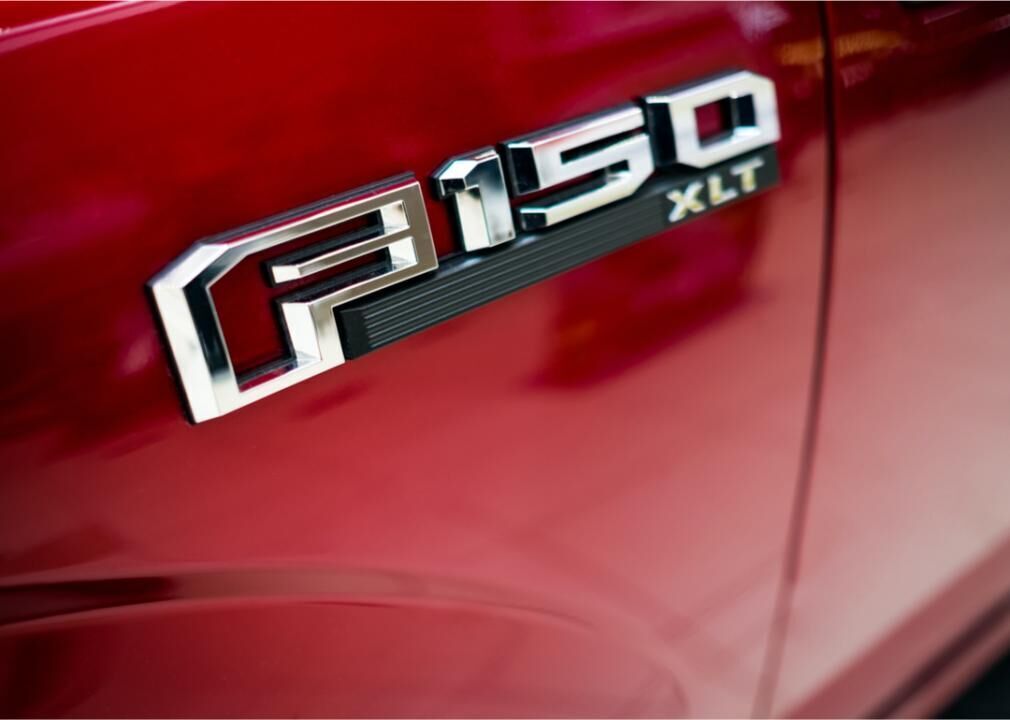
- Ford F-150 cars sold in 2020: 1,007,664
- Bestselling months for F-150: December (102,788 cars sold), May (96,430 cars sold)
- #2 bestselling car model: Chevrolet Silverado 1500 (841,331 cars sold)
- #3 bestselling car model: Toyota RAV4 (617,065 cars sold)
The Ford F-Series in 2020, which includes the F-150, enjoyed its 39th year in a row as the bestselling vehicle in the U.S. The series held onto its title despite tighter inventories and a new redesign that incorporated lighter aluminum in production. The F-Series is lauded for its towing strength, engine power, gas mileage, and luxury design.
SUVs vastly outperformed other vehicle types in sales

- #1 car type sold in 2020: SUVs (13,757,221)
- #2 car type sold in 2020: four-door cars (8,199,331)
- #3 car type sold in 2020: crew cab pickup - short bed (2,846,424)
SUVs outsold sedans nearly 2-to-1 in 2019, a trend that continued throughout 2020 and into 2021. Of the 20 bestselling vehicles in 2020, 11 were crossovers or SUVs. The growing popularity of SUVs underscores the demand for comfort, passenger space, and safety features.
Gasoline is still the most popular fuel type, but hybrid cars are on the rise

- Gasoline cars sold in 2020: 25,632,625
- Hybrid cars sold in 2020: 1,293,767
Gas-powered cars still reign supreme even as more climate-friendly options become available. But consumer interest in EVs and hybrids has grown as fuel costs rise, production costs of electric vehicles (EVs) drop, and people can travel further on a charge. Many popular hybrid models, from Teslas to Toyota Priuses, enjoyed rising popularity in 2020. That's expected to continue: Bloomberg New Energy Finance predicts EVs may be cheaper than gas-powered vehicles as soon as 2025.
The most cars were bought and sold during December 2020

- Cars sold in December 2020: 3,424,804 (only month over 3 million cars)
Year after year, December has proven to be the best month to buy a car. The month marks both the end of the quarter and year, meaning salesmen and automakers are especially motivated to make sales. As a result, buyers can often negotiate great deals, something that didn’t change even in the midst of a global pandemic.
The fewest cars were bought and sold in April 2020

- Cars sold in April 2020: 1,402,300 (only month under 2 million cars)
As mandatory stay-at-home orders began in the U.S. in late March 2020, a general sense of uncertainty took hold. Business closures sent unemployment rates skyrocketing and many Americans grew wary of making significant purchases. April 2020 auto sales were roughly half that of the same month in 2019 for automakers Toyota and Honda.
This story was produced and distributed in partnership with Stacker Studio.
