

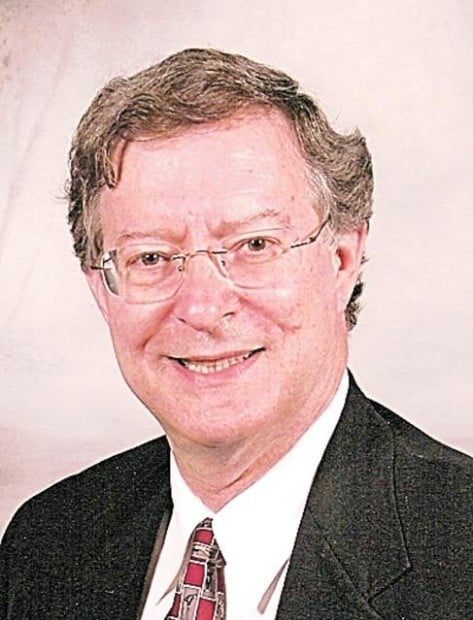
A Tucson doctor so strongly believes the world would be better off without religion that he's reaching out to share his ideas and challenge believers.
Dr. Gilbert Shapiro, a 60-year-old podiatrist and atheist, is hosting a series on secular humanism entitled, "No God. Now What?" The next class, the third in a series, is Sunday.
In the Bronx neighborhood where Shapiro grew up, there was a mix of Irish, Italian, Spanish and Jewish cultures.
"While I loved the diversity and richness of the various religious and ethnic traditions with which I was in daily contact, I couldn't help but feel that God-belief was based on emotion, family tradition, and wishful thinking," he said.
He became convinced early in life that his parents' religious beliefs were irrational.
"I grew up in a conservative Jewish home with wonderful parents who always respected my questioning of their deeply held faith," he said.
People are also reading…
Here are excerpts from an interview with Shapiro:
Q: Have you ever viewed religion and faith in God differently than you do now?
A: "No. God-based religions have always troubled me. The current major religions all rest on supposed God-inspired dogmas, written two to four thousand years ago, and codified, if not fossilized, into scriptures over centuries. Sidestepping the question of certifying divine inspiration, these endlessly copied, error-filled documents were undoubtedly written for cultures far distant and shockingly different from our own. That these writings are relied upon and revered in today's world is inexplicable."
Q: You were raised in a family where you were taught certain religious beliefs. What made you reject those beliefs?
A: "My childhood home reflected conservative Jewish customs and values. For example, we ate kosher. Foods were specially prepared. Milk and meat products were eaten at different times, and separate plates and utensils were used. The solemnity of the Sabbath and multiple other holidays were respected. Social customs and traditions were upheld. But I rejected all of those restrictions. I found the rules to be capricious, arbitrary and often just plain weird. What's wrong with eating milk and meat together?"
Q: What if you are wrong?
A: "Fair question. But it is one that should be asked of every believer, too. For example, if Allah turns out to be the true God, then Christians, Jews, atheists and everyone else better look out. Indeed, aren't all believers atheistic to all gods but their own? We atheists take that position just one step, one God further."
Q: What do you hope to convey during this Sunday's session?
A: "Secular humanism is predicated on the rejection of gods, faiths and religions. The purpose of my lecture is to justify those rejections. The contention that investigation into this dogma should be off limits because it is sacred, holy, or that inquiry offends the claimant, is silly and arrogant. Any idea, regardless of its source, merits investigation."
Q: How do you see the role of religion in this country?
A: "On balance, religion in the United States has not served the public interest. With an overwhelming percentage of Americans claiming to be Christian, and in light of their scriptural directive to practice, proselytize and place their faith into the public domain, there exists a conflict between our secular Constitution and the faith-based intentions of a majority of Americans. This mentality was troubling to those of us who thought we were governed by a secular Constitution and its Bill of Rights, by which decisions are to be based solely on common sense for the common good."
Q: What do you believe are common misconceptions about atheism?
A: "By far the most common misconception is that atheists have no moral compass. The reality is that atheists are as good and as bad as anyone else. Morality is determined by our biology and culture. Were murder, stealing, adultery, lying, etc., not known as bad behaviors prior to the Ten Commandments?
"Another misconception is that atheists are angry and militant. Speaking for me, yes, I am angry because I am paying attention to the carnage that is happening in the world. And much of it can be placed at religion's doorstep. I am angry that a significant percentage of our Third World's population suffers from disease, famine and overpopulation because of the Catholic Church's preference for religious dogma over science on issues such as sex education, contraception and AIDS."
Q: What do you envision the world would be like without religion?
A: "People of the world would regard each other as brothers, sisters and cousins, which genetically we are. … Perhaps if faith-based thinking were challenged in other countries, condoms to control birth rates and slow the progression of sexually transmitted diseases would no longer be banned; horrifying female genital mutilations and the outlawing of vaccinations against preventable diseases would cease; and many parts of the world would no longer be mired in conflicts between religionists with competing, conflicting and non-negotiable theological claims."
"On balance, religion in the United States has not served the public interest."
Dr. Gilbert Shapiro