

The experts
Murray Hicks, director of athletic performance, and Conor Johnson, head athletic performance trainer at Desert Speed School, in Desert Sports & Fitness, 2480 N. Pantano Road.
Call 731-0276 or go to www.desertsportsandfitness.com.
The exercise
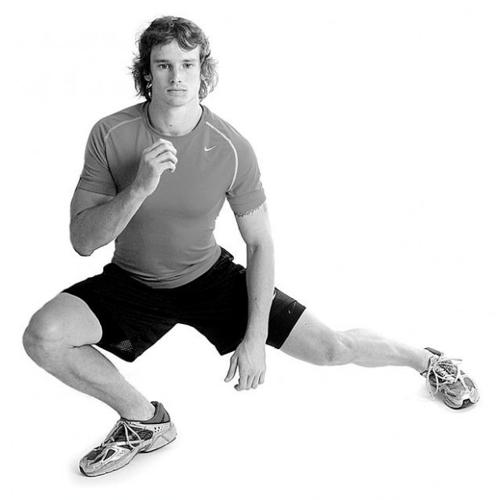
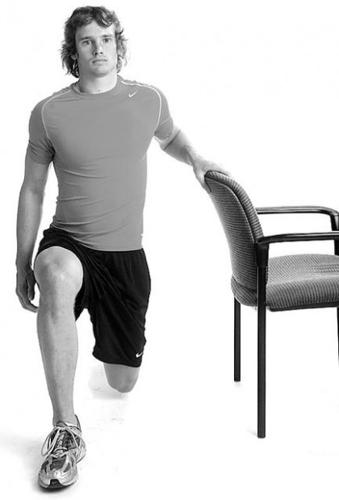
The lunge.
The explanation
The lunge is a common exercise that's commonly done wrong, said Johnson, a nationally certified personal trainer.
"Typically, unless they've had a personal trainer or have read up on it, everyone will make one of the major mistakes," he said. "If it's done incorrectly it can lead to problems. Knee and back problems are most common."
People are also reading…
Errors involve allowing the back to bend or lean forward and allowing the front knee to come over the toe and bend past 90 degrees. Both put strain on the body that can lead to injury, said Hicks, also a nationally certified personal trainer.
That being said, lunges are an excellent exercise if done correctly, he stressed. They can strengthen leg, hip, glute and core muscles all at the same time.
"It's one of those exercises that will make you stronger but it will also help you do things like run faster, jump higher, ride a bike longer and everyday things like picking something up off the ground," Johnson said.
Hicks recommended that people start with a stationary lunge done with engaged arms, "because that's the motion you use when you walk or run," he said.
"We're into teaching technique and mechanics and doing things correctly to learn better movement patterns," he said.
Exercisers should move on to the more challenging weighted lunges and walking lunges only after they have perfected stationary lunges.
"That will expose all your weakness," Hicks said. "Do stationary lunges before walking lunges."
Start position:
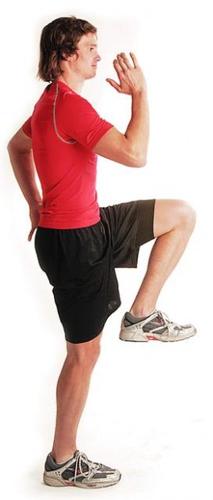
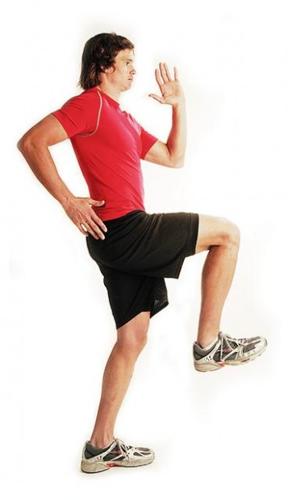
From a standing position, lift one knee to hip height, putting that knee at a 90-degree angle and point the toes up.
Arms are bent 90 degrees, one in front and one in back. Hands are close to the "hip pocket and eye socket, because that's the motion you make when you walk or run," Hicks said.
Take a large step forward with the lifted leg, landing squarely on the foot, and lunge forward.
End position:
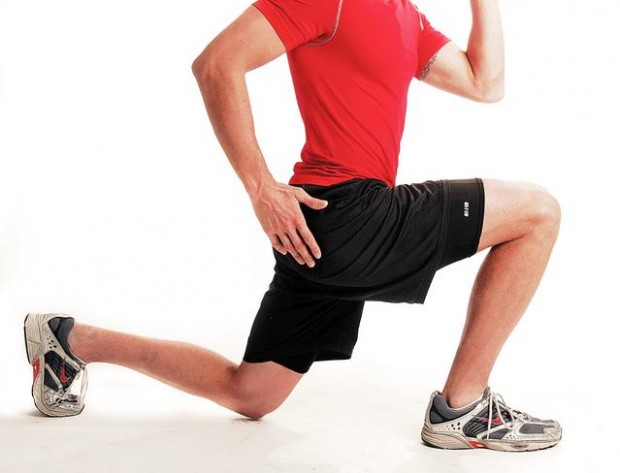
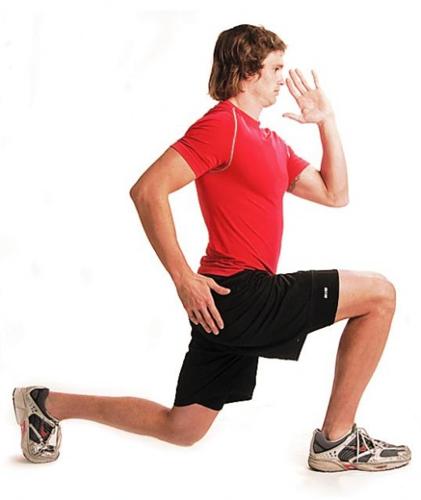
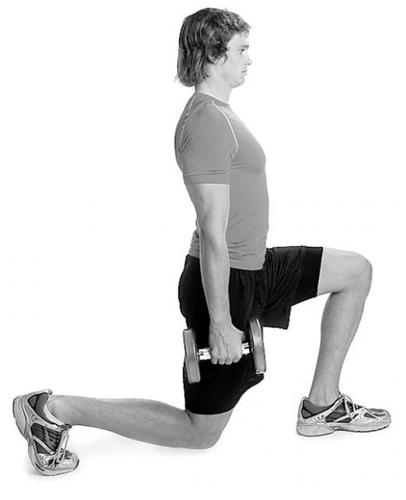
The forward knee is at a 90-degree angle and is in a vertical line with the ankle. The tip of the forward toes is just visible over the knee.
The lower knee approaches, but does not touch, the ground.
The torso is in a vertical position with the lower knee, hip and shoulder in line.
Arms are still bent 90 degrees, one in front and one in back.
Use front leg to push up and back to end in the starting position.
Switch legs and repeat 20 times, alternating each time which leg is in front.