

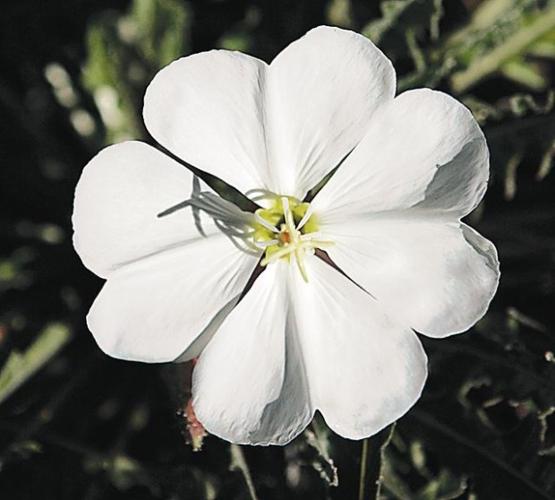
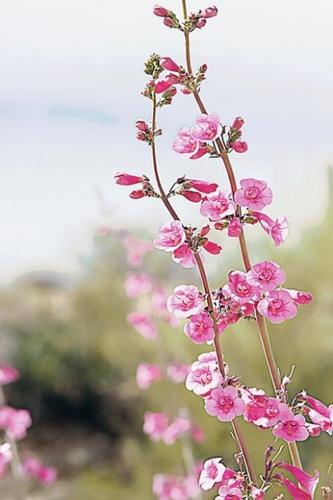
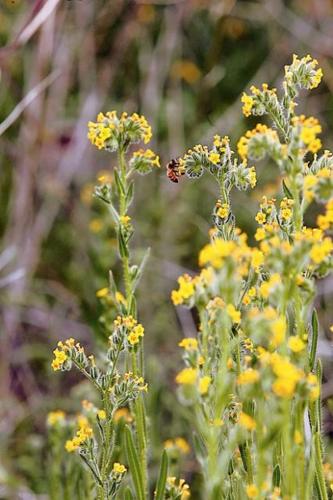
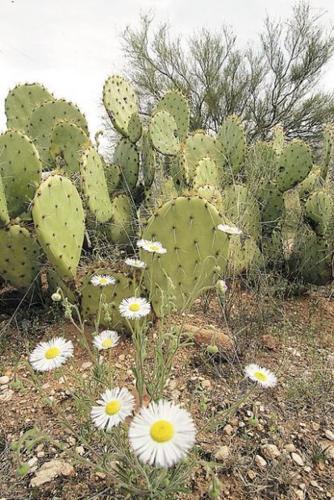
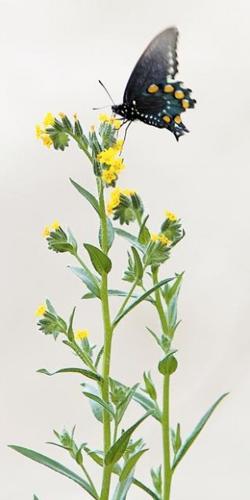
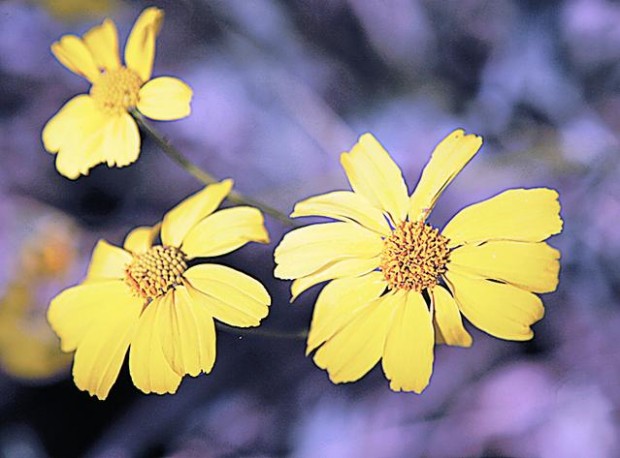
Here's a wonderful thing about wildflowers: They're wild. • Even in a year such as this one — when weather conditions haven't set the stage for a banner bloom — countless untamed, unpredictable wildflowers will go ahead and bloom their little floral hearts out anyway. • "This won't be a season of vast carpets of color, but if you like wildflowers, you're going to find them," said Russ Buhrow, curator of plants at Tohono Chul Park. "It's a matter of knowing where to look." • We asked Buhrow and other wildflower experts for advice on where to look — and what species we might find. • See the cover story inside for a guide to some spots where you might observe at least a few flowers behaving quite wildly — and bursting into brilliant bloom.
Doug Kreutz
Here is this year's wildflower outlook in a nutshell: bloom or bust, depending on the location. • "It's very spotty. Some places will have next to nothing in the way of blooms, and there are other places where the wildflowers are going to be pretty good," said Russ Buhrow, curator of plants at Tohono Chul Park. • The irregularity of this year's bloom stems largely from the fact that autumn rainfall — a critical factor in the germination of wildflowers — varied widely around Southern Arizona.
People are also reading…
"Tucson seems to have been on the edge of the winter storm track," said Mark Dimmitt, director of natural history at the Arizona-Sonora Desert Museum. "We never received a germination-triggering soak last fall.
"But there have been several well-spaced rains" since then, Dimmitt added. "The few annuals that did come up are doing well and will begin to flower."
Some sites known for exceptional blooms in wet years — such as Picacho Peak State Park northwest of Tucson — aren't expected to produce dazzling displays this year.
But others — including the Boyce Thompson Arboretum and surrounding areas near Superior — received plentiful rainfall and already are showing good wildflower color.
The experts emphasize that this won't be a year when colorful carpets of wildflowers are common. Instead, it's a time to seek out those little nooks and crannies where flowers flourish — and take pleasure in even a small wild bouquet in brilliant bloom.
Glance around this page for a guide to some sites that might show color even in this less-than-outstanding year.
Saguaro National Park
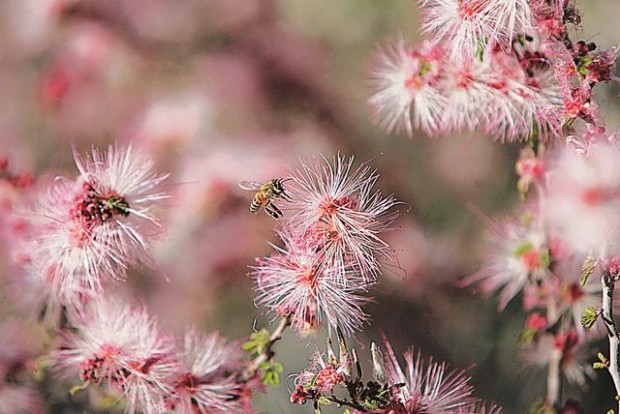
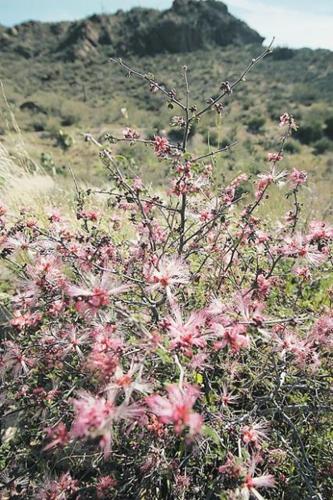
• King Canyon, in the park's district west of Tucson, began sporting wildflower color in late February with such perennials as fairy duster, said Bob Love, chief ranger for the park.
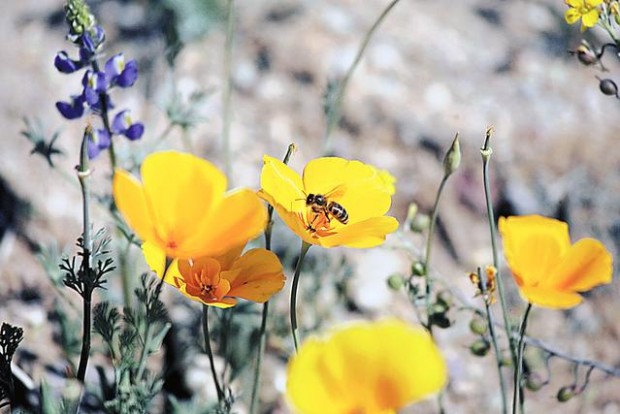
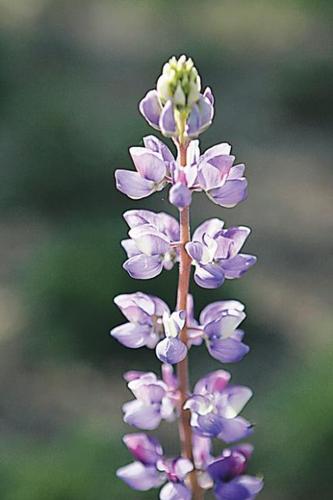
Wildflower watchers, including Dimmitt of the Desert Museum, note that the canyon typically gives rise to a fair number of blooms even in average or not-so-good wildflower years. Mexican gold poppies, purple-blue lupines and several other species usually brighten the first miles of the King Canyon Trail by early or mid-March. Don't expect lavish displays this year, but — chances are you'll find pleasing patches of color here and there.
To reach the trailhead, go west on Speedway, which becomes Gates Pass Road. Drive over the pass to Kinney Road and follow Kinney northwest toward the Arizona-Sonora Desert Museum. Just after you pass the museum entrance, which is on the left side of the road, watch for a turnoff on the right for a parking area. The trailhead is at the end of the parking lot.
For updated information, call the park's west district at 733-5158.
• Several trails at Saguaro National Park's district east of Tucson also were showing wildflower color at the end of February, with more blooms expected in March.
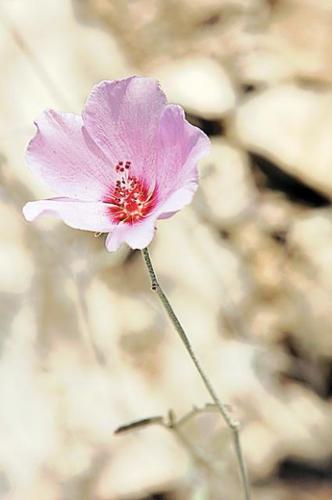
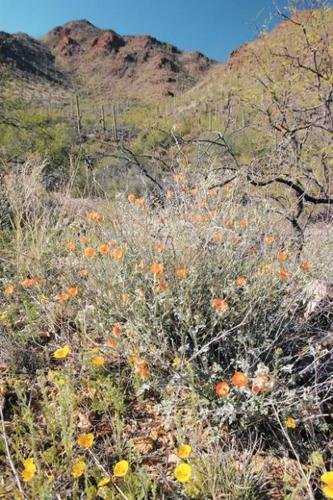
"The Freeman Homestead Trail, Garwood Loop and Tanque Verde Ridge Trail are all starting to see some flowers," Love said. "Some of these include fairy dusters, cryptantha, rattlesnake weed/snake eyes, globemallow and dogweed."
The entrance to the park's east district is at 3693 S. Old Spanish Trail. Visitors at Saguaro Park pay a fee of $10 per vehicle.
For updated information, call the park's east district at 733-5153.
Roads around Tucson
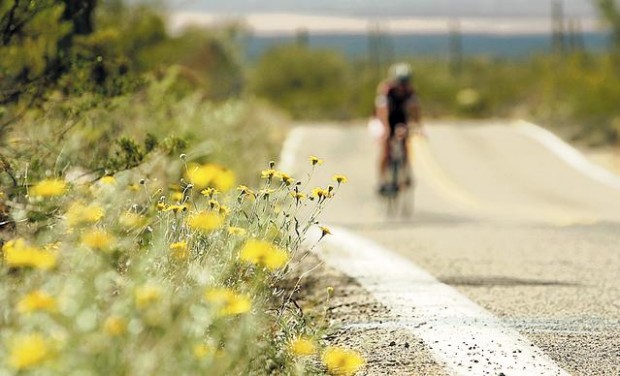
Roadside areas, benefiting from water that flows off the pavement during rainstorms, sometimes produce excellent linear gardens of wildflowers.
Commuters almost certainly will come across their own favorite patches of roadside color, but here are two spots where wildflowers were turning up early in the season:
• Tangerine Road west of Oracle Road
"I saw poppies, lupines and brittlebush blooming along that stretch of Tangerine Road," said Buhrow of Tohono Chul Park.
• Gates Pass Road
Poppies were blooming in some spots along Gates Pass Road west of Tucson and should continue to show up in March, said Dimmitt of the Desert Museum, who travels the route on the way to work.
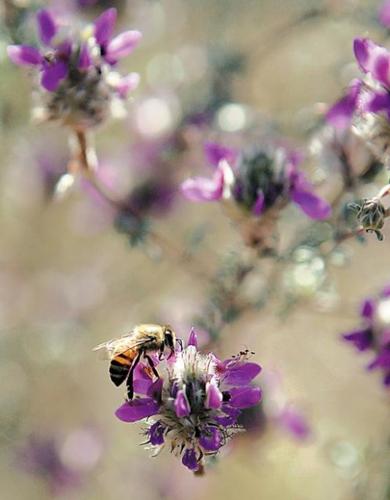
"Even though I don't expect carpets of color, macro photographers should be pleased with what they will find this spring," Dimmitt said.
A colorful corridor
Some highway drives in Southeastern Arizona pass through nice stands of wildflowers, even in average years. Buhrow, of Tohono Chul Park, said a drive on Arizona 77 from the town of Catalina north of Tucson, past Oracle, to the town of Mammoth could take drivers through some patches of color.
"Usually, it's a lot of different stuff along that drive — lupines here and there, globemallow and some poppies, especially at the Mammoth end," Buhrow said.
Catalina State Park
Roads and trails at this popular park north of Tucson should lead visitors to a sort of sampler of blooms, said Neil Donkersley, park manager.
"In a year with a typical bloom, we're not known for big shows of any particular flower, but we get a lot of variety," Donkersley said. "People can expect poppies, globemallow, fairy duster, lupines, desert marigolds, filaree and other species."
Most years, drivers on the park's main road will see "some nice patches of poppies," Donkersley said.
"Another good place to go is the first mile of the 50-Year Trail, where you might see some poppies, mariposa lilies, lupines, desert marigolds and a lot of brittlebush," he said.
Other trails likely to have at least some flowers are the 2.3-mile Canyon Loop Trail and mile-long Nature Trail, Donkersley said.
He recommended going to the State Parks Web site — www.azstateparks.com — and clicking on the "Ranger Cam" icon. The Ranger Cam provides updated information and photos of wildflowers currently in bloom at state parks.
To reach Catalina State Park, drive north on Oracle Road out of Tucson to the park entrance at Milepost 81. Admission is $6 per vehicle.
Call the park at 628-5798 for current information on blooms.
Boyce Thompson Arboretum State Park
The arboretum, near Superior north of Tucson, has cultivated-flower displays, but visitors to the area also are likely to see wildflowers along nearby roads and canyons.
Along U.S. 60 near the arboretum, "you'll see lupines bordering the highway with blue, and lovely yellow poppies along the lowest flanks" of a pass, said Paul Wolterbeek, coordinator of Boyce Thompson's volunteer program and public event series.
"Generous rains over the past five months have assured spring color here at the arboretum," Wolterbeek said. "Our director of horticulture told me we've been blessed with nearly seven inches of rain during the past five months, and that these relatively evenly spaced, gently soaking storms were good for wildflower seedlings."
Wolterbeek said the arboretum offers daily wildflower walks at noon in March — included in the park admission of $7.50 for visitors 13 or older and $3 for those 5 to 12. Kids 4 or younger get in free.
To reach the arboretum from Tucson, drive north on Oracle Road, which becomes Arizona 77, and continue to Oracle Junction. Turn onto Arizona 79 and continue, past Florence, to U.S. 60. Turn east and follow U.S. 60 for 12 miles to the arboretum entrance.
Information: 1-520-689-2811.
Catalina canyons
Trails leading into canyons of the Front Range of the Catalina Mountains north of Tucson are likely to take hikers past at least modest displays of wildflowers in March and early April.
Among the canyons are Pima, Finger Rock, Pontatoc, Ventana, Sabino and Bear.
Did you know
Tohono Chul Park, at 7366 N. Paseo del Norte, has extensive displays of cultivated wildflowers. Plants in bloom include about 20 kinds of penstemons, lupines, poppies, owl clover, brittlebush and many other species.
Call 742-6455 for information, hours and admission fees.