

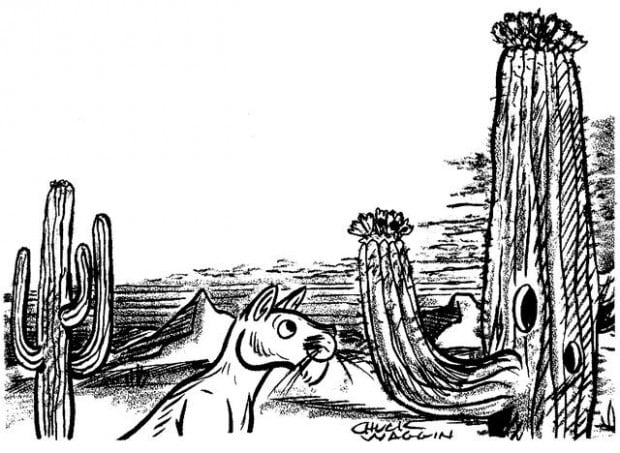


The saguaro cacti around my museum home look like they are celebrating! Flowers and fruits ring their crowns and the tips of their arms. Soon after the white flowers close, the bright red, open fruits replace them.
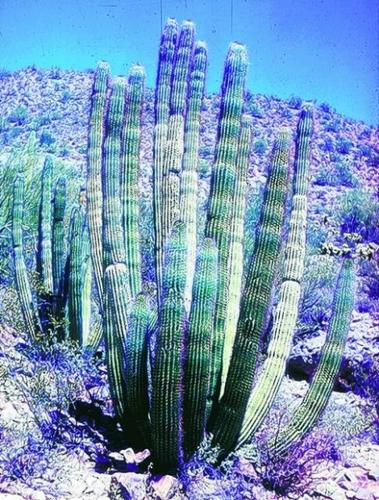
You can find saguaros no place on Earth except here in the Sonoran Desert. They are called columnar cacti for their shape. Our desert is home to other columnar cacti. including organ pipe, senita and cardón. All share common characteristics such as:
● Pleated stems that expand or shrink with water availability.
● Woody ribs or cores for support.
● Prickly spines for protection.
● Waxy coverings on their stems that limit water loss.
Fabulous facts
People are also reading…
Columnar cacti are special plants for many reasons.
They are important sources of food for many animals of the desert. Their flowers produce nectar and pollen for bees, moths, birds and bats to eat. The fruits provide valuable moisture, sugars and protein for animals, from ants to coyotes. People eat them, too! American Indians traditionally use the fruit to make jellies, syrups and wine.
Other animals use the columnar cacti for their home. Birds such as Gila woodpeckers make holes in saguaros that other birds, such as screech owls, kestrels and purple martins, also use. Great horned owls and red-tailed hawks often build nests in the cacti's branching arms.
Did you know that it takes a saguaro about 30 years to grow 2 feet? And saguaros don't begin to flower until they are about 8 feet tall and about 55 years old. They may begin to grow arms when the plant is 50 to 100 years old, and may live to be 150 to 200!
Word search
Can you find the hidden words listed above right in the columnar cactus drawing?
columnar
saguaro
organ pipe
senita
cardón
stem
spine
arm
Solution below
Answers
Find these words