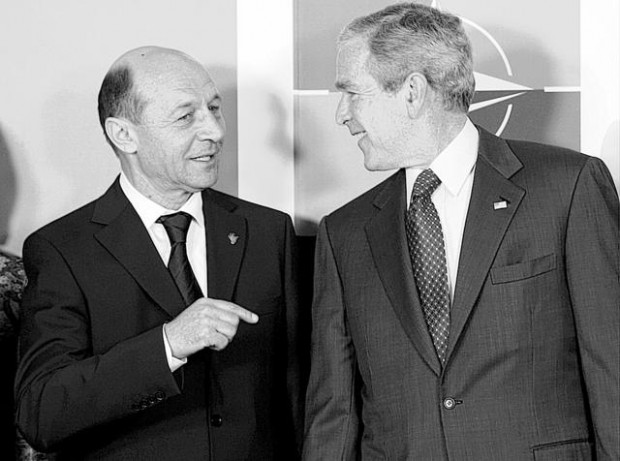
BUCHAREST, Romania — President Bush suffered a painful diplomatic setback Wednesday when NATO allies rebuffed his passionate pleas to put former Soviet republics Ukraine and Georgia on the path toward membership in the Western military alliance.
The decision, to be made final today, was sure to be cheered by Moscow, which heatedly opposes NATO's eastward expansion.
In another sign of discord, Greece blocked Macedonia's request to join the 26-nation alliance because of a dispute over its name. Only Croatia and Albania will be invited as new members.
It was a sour outcome for Bush at his final NATO summit as he sought to polish his foreign policy legacy. Instead he wound up sidetracked by opposition and splits among European allies.
It was a result that was foreshadowed by public statements from France and Germany, but Bush nevertheless put his prestige on the line and even made a stop in Ukraine on Monday to argue his case.
People are also reading…
"We are convinced that it is too early to grant both states the (pre-membership) status," German Chancellor Angela Merkel said as she arrived for the summit. It takes only one NATO member to block a decision, because policy-making is reached by consensus.
Bush was counting on the summit to strongly endorse plans for an anti-missile shield in Europe despite once-heated objections from Moscow.
The summit's opening dinner ran two hours longer than scheduled as the discussion went around the table, with each leader making his or her case. The White House expressed confidence that NATO would give a strong statement of support for its mission in Afghanistan and that a number of countries would pledge additional troops.
Going into the talks, Bush said he was "optimistic that this is going to be a very successful summit."
Diplomats said the alliance would offer a statement saying NATO's door will remain open if Ukraine and Georgia move ahead with political and military reforms and build support for NATO among their citizens.
Afghanistan loomed as the summit's No. 1 topic, a point of contention between some Europeans who see the NATO mission as largely a humanitarian effort and the Bush administration and others who see it as a central front in the fight against terrorism.
Canada had threatened to pull its troops from the front lines in southern Afghanistan unless other allies sent another 1,000 combat troops to help.
NATO has about 47,000 troops in Afghanistan, but commanders are pleading for more troops in the south, where Taliban insurgents are wreaking the most havoc.
The U.S. supplies the largest contingent, about 14,000 for NATO, and has 13,000 operating separately in eastern Af-ghanistan hunting terrorists and training Afghan forces.

 Lake Mead's drops raise prospect of unaffordable Hoover Dam electricity