

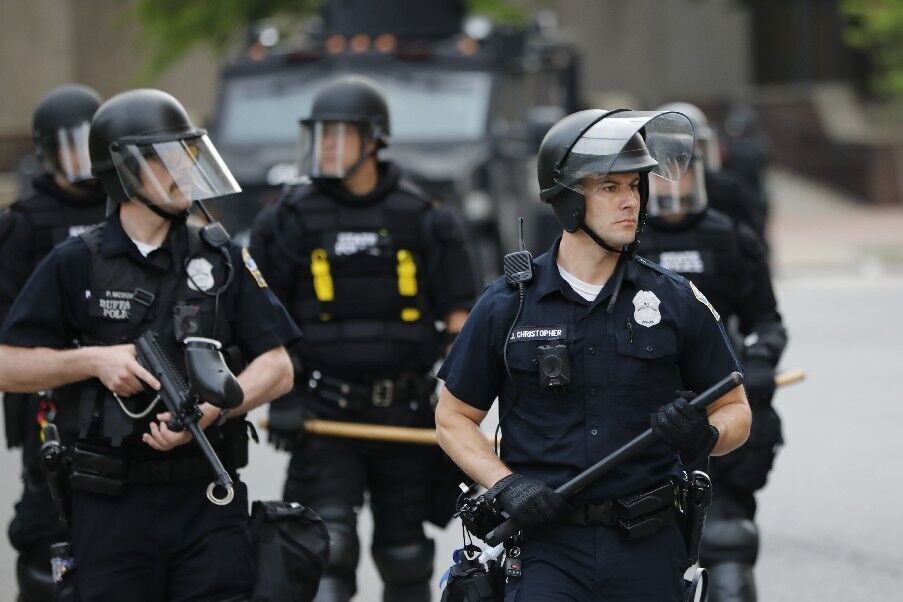
Buffalo has three panels charged with monitoring police interactions with the community.
The Police Oversight Committee, which consists of Common Council members, was re-established in 2014 to address police misconduct in the city. It provides a process for residents to voice concerns to the police department and to the Council.
The Police Advisory Board – an 11-member independent body of city residents formed by the Council in March 2018 – holds public meetings and makes recommendations to the Buffalo Police Department and the Oversight Committee.
The Commission on Citizens' Rights and Community Relations helps citizens file and pursue police misconduct complaints, review the police department’s community relations training programs and monitor procedures for investigating and resolving police misconduct complaints. The Commission also can review police files after a misconduct investigation has been completed.
People are also reading…
But even with three panels, city lawmakers are looking into forming another one: a citizens review board. But one major difference is the citizens review board would be more independent.
"The other boards were put together as an overview. This board has the level of authority to do what the citizens are calling for in terms of independence," said University Council Member Rasheed N.C. Wyatt.
The Advisory Board is one of the community voices calling for the creation of a civilian review board in the wake of protests in Buffalo and across the country over the Minneapolis police killing of George Floyd, police brutality and institutionalized racism.
The new civilian review board proposed by the Advisory Board would not only have subpoena power, it would also have its own independent counsel and investigators, who are not members of the Buffalo Police Department, to look into complaints. The new board would also have the ability to bring a police officer before a panel for appropriate discipline – including removal from the police force – if the officer is believed to have been "substantially accused," said Advisory Board Member De'Jon Hall during a board meeting on Thursday.
"We think this new structure would be more in line with what community members have expressed," he said.
Wyatt, who has proposed a resolution to create a citizens review board, invited the administrator and chairman of Syracuse's citizens advisory board to speak during the Council's Legislation Committee recently about how it is set up and functions.
The Syracuse Citizens Review Board was re-established in 2011 and has subpoena power and outside counsel.
The 11 volunteer board members are chosen by the mayor, who makes three appointments. The Common Council appoints eight, including five from Council districts and three at-large districts.
"So there was real intention there to make sure that there's wide representation. The councilors have done a pretty good job at choosing people who will be careful, thoughtful and reasonable in their decisions," said Syracuse CRB Chairperson Peter McCarthy during the meeting.
The board is half Black and half white with a variety of ages and backgrounds, including one retired police officer, McCarthy said.
"It's critical when the CRB members are chosen that there's an effort to choose people who will take the responsibility seriously," McCarthy said.
There is one vacancy on the board, said Ranette L. Releford, administrator of Syracuse's board.
The complaints filed with the board are related to "police misconduct," including failure to act, conduct unbecoming, excessive force, harassment, racial profiling and racial bias, Releford said. Complainants can also allege improper search, improper seizure and property destruction.
The CRB receives on average about 100 complaints per year, Releford said.
If the CRB members decide after receiving Releford's recommendation that they want the case to go to a hearing, a panel is established that includes a representative appointed from the mayor's office, a district council appointee and an at-large council appointee.
"So there's some built-in guidelines to make sure we have wide representation," McCarthy said.
At the hearings, the panel listens to the testimony of the complainants and invites the police officers to attend. In "egregious situations" the hearing panel can subpoena an officer to testify.
"The reason why we subpoena them is because when we invite them by letter only, they do not attend," Releford said.
Police officers typically bring an attorney with them when they are subpoenaed, and the attorney typically recommends that they not testify, "and they don't even provide their name," Releford said.
"What we've typically been doing is when they come in we will still state that these would be the questions that we would have ... if they were to provide any answers to those questions, so they are aware of what questions we still have that are outstanding," Releford said. "But they typically still let us know that they are not going to testify."
The hearing panel can make recommendations involving policy, training and discipline in instances where the panel substantiates cases. The discipline decision is up to the chief of police, Releford said. "And if he disagrees with our findings, he is supposed to advise us at that point in time why he disagrees."


