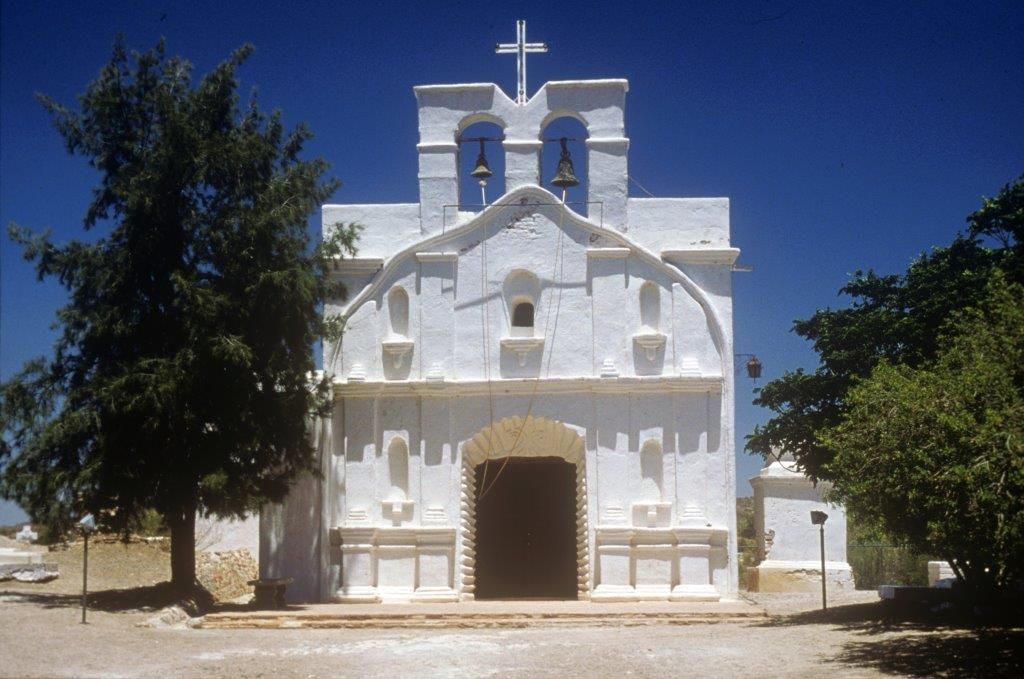
Nowadays it’s rare to hear a story that has lived by word of mouth in a community for more than 200 years, but such stories are still told in the little town of Oquitoa, Sonora. They concern a Franciscan missionary priest named Joaquín Olizarra, who served Oquitoa from 1806 till his death, aged thirty-eight, in 1812. He is remembered locally under the name of “Padre de las Arras,” not a surprising transformation for those who remember the childhood game of “Telephone.”
According to the stories, the good father was a bilocator — he was one of those people who could be in two places at the same time. The tale is still told how Father de las Arras received a message that he was needed in Tubutama, several miles upstream from Oquitoa. A dying man needed the last rites of the church. However, when the priest reached the Río Altar, the river was in flood and impassible. The Indians who accompanied the father told how he went to his knees and prayed for several hours without moving from the spot. And the people in Tubutama told how they saw him arrive in their village, minister to the dying man, and leave.
People are also reading…
Father Olizarra, it is also told, could dissipate a potentially deadly funnel cloud — una culebra de agua — by making the Sign of the Cross and saying a prayer.
Word of this surprising behavior eventually reached the ecclesiastical authorities, and Father de las Arras was summoned to give an account of himself. It was raining hard, and his clothes were sodden. He walked into the room, hung his cloak to dry on a sunbeam that came through the window, and awaited the interview. No reprimand was issued that day.
These stories are not unique to our region; saints have been said to have bilocated and hung their wet clothes on sunbeams in many other years and places. But these stories are ours — a part of this place we live in. And miracles or no miracles, Father Joaquín Olizarra must have been a remarkable man to have lived in the Oquitoan memory for so long!