

Popular in veggie bins this time of year, spaghetti squash — named for its tendency to separate into pastalike strands — can be intimidating. It’s big and it's tough.
A hard yellow rind hides delicate strands of mildly flavored squash that are an excellent substitute for pasta and a perfect accompaniment sauces. It is a carbohydrate-counter’s dream food.
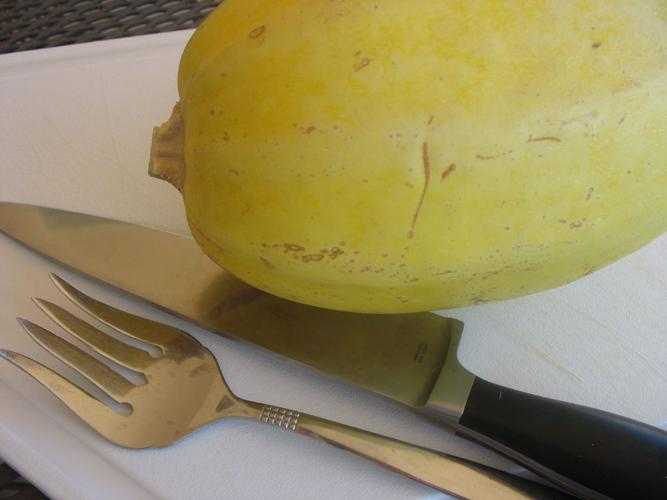
However, getting inside that rind can be treacherous. I have a scar from the six stitches required to after a mishap with a hard spaghetti squash and a large knife.
Here are some prep tips for a that should spare some bloodshed.
Cut before cooking
The advantages to this method are that the squash cooks faster and that the seeds can be roasted for a yummy treat.
People are also reading…
Disadvantage is a slipping knife can mean a trip to the ER. (See above.) It is also harder work to scrape out the seeds and flesh from the rind.
If you are brave and can handle knives well, after washing the squash (about 2 pounds or so), cut it in half lengthwise and discard (or save for roasting) the seeds. Don’t cut it too small or you’ll end up with short, stubby pieces, rather that long spaghetti-like strands.
Place squash, cut-side up in 1 inch boiling water in large skillet and heat to boiling. Simmer squash, covered, 35 minutes or until squash is fork-tender.
Cook it whole
Wash squash that's about 2 pounds. Pierce several times with a sharp knife to avoid explosions and bake in the oven, rind side up for about an hour at 375 degrees.
Or after washing and piercing, microwave the squash for 10 to 12 minutes and let it stand for a few minutes afterwards to finish steaming.
Smaller squash may require less cooking time.
When baking by conventional or microwave oven, turn the squash frequently to avoid uneven cooking or brown spots.
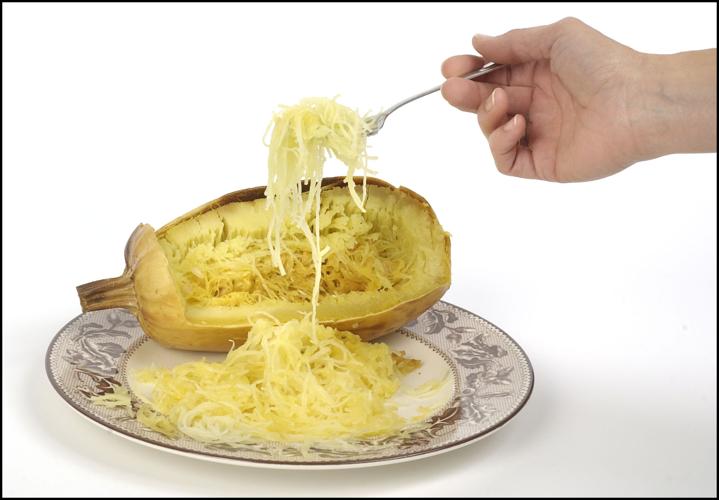
When baked — you will be able to press the shell and feel it give — slice in half. Hold it with a potholder, as it will be hot, and remove seeds and separate flesh strands with a fork. The seeds and pulp are easy to remove when cooked. I prefer a large serving fork and use a large serving spoon to scoop out the last few strands.
Slow-cooker method
Pierce the squash, put it in with a cup of water and let it cook on low all day (8 to 10 hours). I haven’t tried this method because the squash I buy is always too big from my slow cooker.
Mix it up
I combine the cooking methods. I like the convenience of microwave and the texture of the squash after it's baked.
Microwave the squash for 5 minutes or so. The rind should be soft enough to cut fairly easily. Slice in half lengthwise with a sharp knife. Carefully. It is hot and still tough. Remove the seeds. Place the halves, rind down, on a cookie sheet or baking pan. Drizzle the squash flesh with olive oil (about 2 tablespoons or so) and season with salt and pepper to taste. Bake at 375 degrees for about 30 minutes or until the flesh tender but firm.
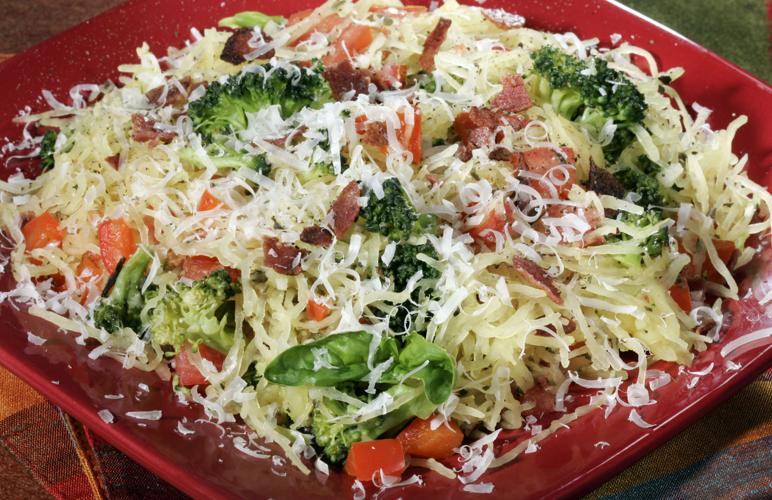
Remove the pulp in long strands and top with your favorite marinara sauce or pesto.
Or it can be served with a few mix-ins. A Martha Stewart recipe suggests removing the squash flesh into a medium bowl and tossing with:
1 tablespoon extra-virgin olive oil
1 tablespoon lemon juice
1/2 cup chopped fresh flat-leaf parsley
1/2 teaspoon crushed red pepper flakes (optional)
1 tablespoon grated Parmesan cheese, for serving (optional)
Storage
You don’t have to cook the squash immediately. A whole uncooked spaghetti squash stored between 50 to 60 degrees, and will last up a couple of months, at least, or several weeks at room temperature.
Mmmm. Spaghetti squash — not so intimidating or tough.


