

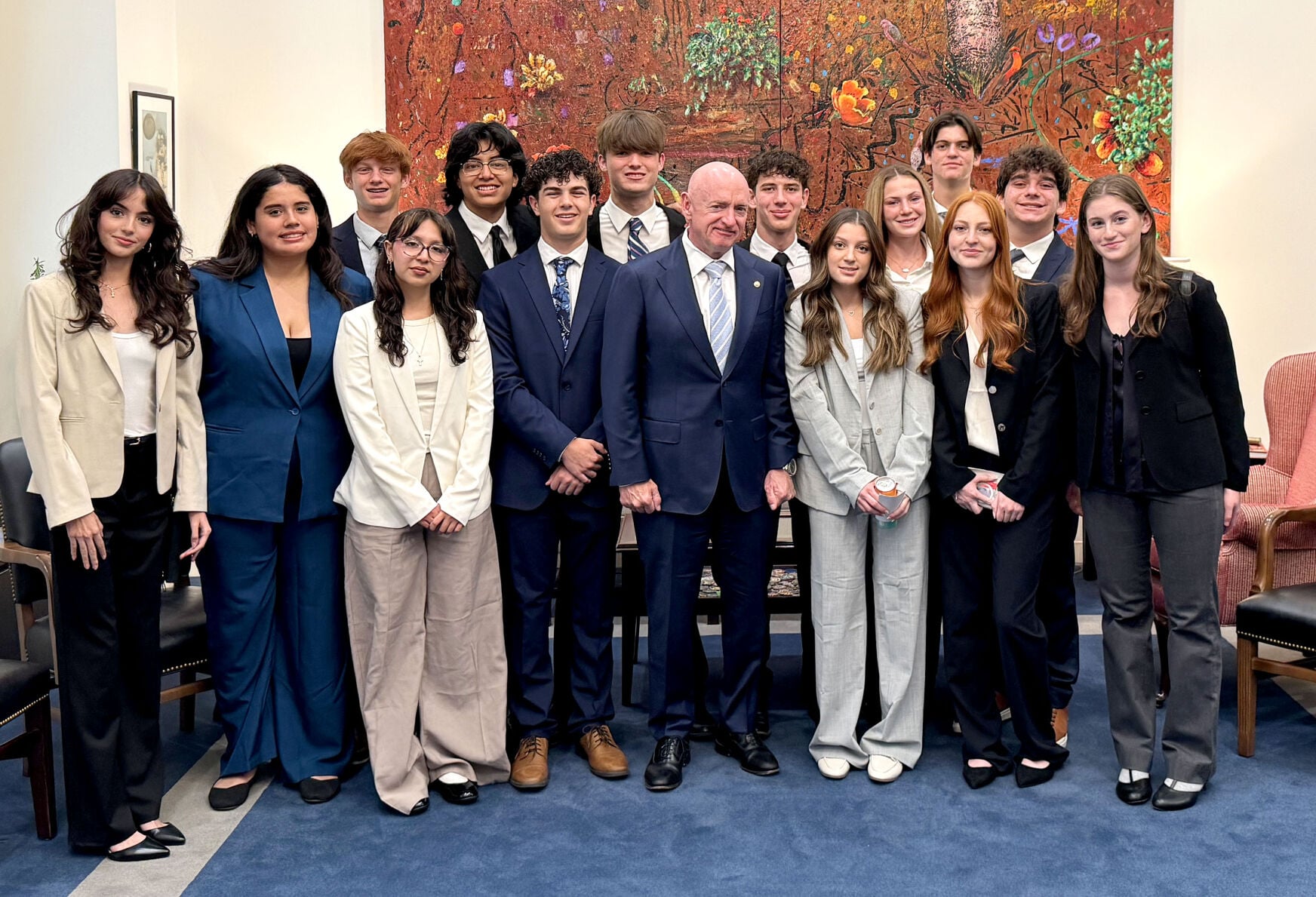
For more than 20 years, a program for high school teens in Tucson has supported the idea that the seeds of social change can be sown at home, sprouting roots that spread across the country and beyond.
The Jewish Latino Teen Coalition (JLTC), founded in 2003 in conjunction with the late Congressman Raúl Grijalva’s office and the Jewish Federation of Southern Arizona, was created to build cross-cultural understanding, promote civic engagement and empower the next generation.
“We were doing lots of social action, community events and Holocaust education with different communities, including the Latino community, to explore what makes our communities special and what we could do to give back together,” said Shari Gootter, who has been involved since the very beginning.
“We had the idea that we needed to do it with our youth. They are at an age when they are impressionable and it is so important to build bridges and connections and have dialogue,” she said. Now director of JLTC, Gootter works with Lisa Kondrat, Matt Landau, Brad Goldstein and other dedicated volunteers to make the program a reality.
People are also reading…
Over the past two decades, more than 220 youths from more than 20 high schools have participated in JLTC, which teaches skills in leadership development while providing opportunities to explore identity and learn about public policy. Now under the umbrella of Jewish Philanthropies of Southern Arizona, JLTC stages weekly meetings, workshops, cultural exchange events, social action, and in-depth issue research on a topic of interest chosen by the students.
The program culminates in an advocacy trip to Washington, D.C., where students meet with members of Congress, policy organizations and national leaders to advocate for their chosen policy issue. Over the years, topics have included issues such as genocide in Darfur, education reform, gun policy in America, childhood food insecurity and more.
For 2025, the 14-member coalition chose immigration reform, which they realized can be a hot-button issue.
“The students decided to focus on two aspects of immigration: the DACA Dream Act and reform of the Asylum Seeker Work Authorization Act of 2023, so we encouraged that,” said Gootter. “We were able to meet with both Republicans and Democrats in Washington and the kids did a great job advocating. There were some situations that were a little heated, but they handled it beautifully and had great discourse.”
The experience was incredible and enlightening, said Oliver Sheinbein, an incoming junior at University High School. He said JLTC helped him learn a great deal about himself, his community and the world.
“You experience what it is like not just to advocate for yourself, but for your people, for Tucson and for other people who can’t advocate for themselves,” said Sheinbein, who helped to advocate for the Work Authorization Act, which proposes shortening the statutory waiting period for asylum seekers to apply for jobs.
“We spoke with an asylum seeker from Africa who experienced a lot of unfortunate events, but one we noticed was that he couldn’t get work until 180 days after he applied for asylum. He couldn’t provide for himself or his family and that caused so many problems. ... We thought shortening the statutory waiting period to 30 days so asylum seekers can provide for themselves faster was reasonable enough to have an impact on lawmakers,” said Sheinbein.
In addition to the “eye-opening” in-person contact with asylum seekers, the students researched economic statistics and facts to justify their position. They also prepared for their time in Washington by learning about government and public policy. Sheinbein said advisors encouraged them to have realistic expectations.
“We were prepped before the trip to know we are not going to make everything change overnight, but in the end our goal was to make a dent and hopefully impact one advocacy group, then another one and then another. We wanted to leave a small imprint on the minds of staffers and members of Congress so they would remember the experiences they had with teenagers who care deeply about the issue of immigration,” Sheinbein said.
The JLTC apparently made an impact: Sheinbein said they drew support from Rep. Juan Ciscomani, Sen. Mark Kelly and many other members of Congress. Additionally, on Friday, June 20, the coalition will receive the Youth Voices Award from Immigrants List at the annual conference of the American Immigration Lawyers Association in Denver.
Sheinbein believes diversity across the coalition — and the Tucson community — was instrumental to the coalition’s success. He said insights of the asylum seekers and experiences of Latino students were particularly valuable to those who have limited understanding of possible failures in immigration policies. He was equally grateful for the opportunity to share his Jewish heritage and explore the powerful connections between cultures.
“The program is really to bridge gaps and learn about different heritages and cultures. We didn’t focus on differences: we focused on finding similarities between us,” he said.
Coalition member Lucia Galvan, who will start her senior year at Basis Tucson North in August, believes the program illustrates how tolerance of different cultures can begin locally.
“We learned how issues in the Latino community are intertwined with issues happening right now in the Jewish community. It is nice to share the connections between the two and become more aware of the different cultures present here in Arizona,” said Galvan, a Latina who describes herself as a “politics nerd.”
As an aspiring attorney and politician, Galvan also appreciated the opportunity to become the “eyes” for representatives in Washington.
“I think it was important to see the issues through our eyes and interpret them and then become more educated. That way when we were on the Hill, it was easier to share our stories with representatives who don’t have the eyes that we do, especially in our community,” she said.
Galvan encourages students of all backgrounds to consider applying for the program, no matter their career plans. The application process for 2025-’26 will begin in the fall.
“It is such an amazing resource to gain leadership skills and to become more communicative with different communities and, in total, to become more empathetic and engaged civically. That is such an important quality, especially for young people, because our future is us. Who is going to be part of it if we aren’t starting to learn about it right now?” Galvan said.
For more information on the JLTC, or to make a donation to support the program, visit the website at jparizona.org/forms/jltc25.


