Developer Douglas Jemal's interest in the Richardson Olmsted Campus beyond the three buildings occupied by Hotel Henry gives the entire campus what its supporters have long sought: a real chance for revival.
The Washington, D.C.-based developer entered into a development agreement in July 2020 with the Richardson Center Corp., the property's nonprofit owner, with the goal of leasing all seven buildings west of the hotel, totaling 202,000 square feet, said Mark Mortenson, president of the Richardson Olmsted Campus.
"It has always been a challenge to get a developer interested in those buildings given the substantial amount of financial investment needed," said Mortenson.
His comments were the first public confirmation of the development agreement with Jemal, who did not return calls for comment.
Those 19th-century buildings, along with the rest of the campus that opened in 1880 as the Buffalo State Asylum for the Insane, have sat empty since last used for patients in 1974.
People are also reading…
"Doug's interest goes deeper than just leasing the hotel," Mortenson said. "It includes saving buildings on this property that are in the most dire physical circumstances and that many thought would never be salvaged again."
The five brick buildings and two others on the west end of the Richardson Olmsted Campus always posed the biggest development challenge.
The gutted buildings need new roofs and interior finishes from plumbing and electrical work to new windows. The work could cost in the tens of millions of dollars, but Jemal has shown that projects of this magnitude are in his wheelhouse.
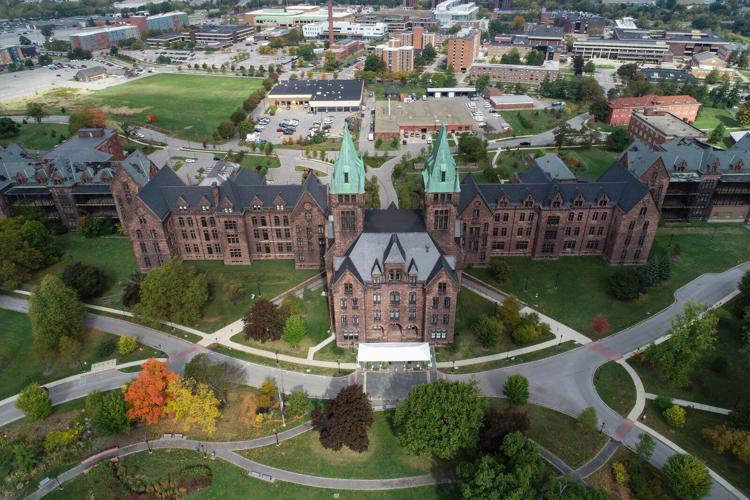
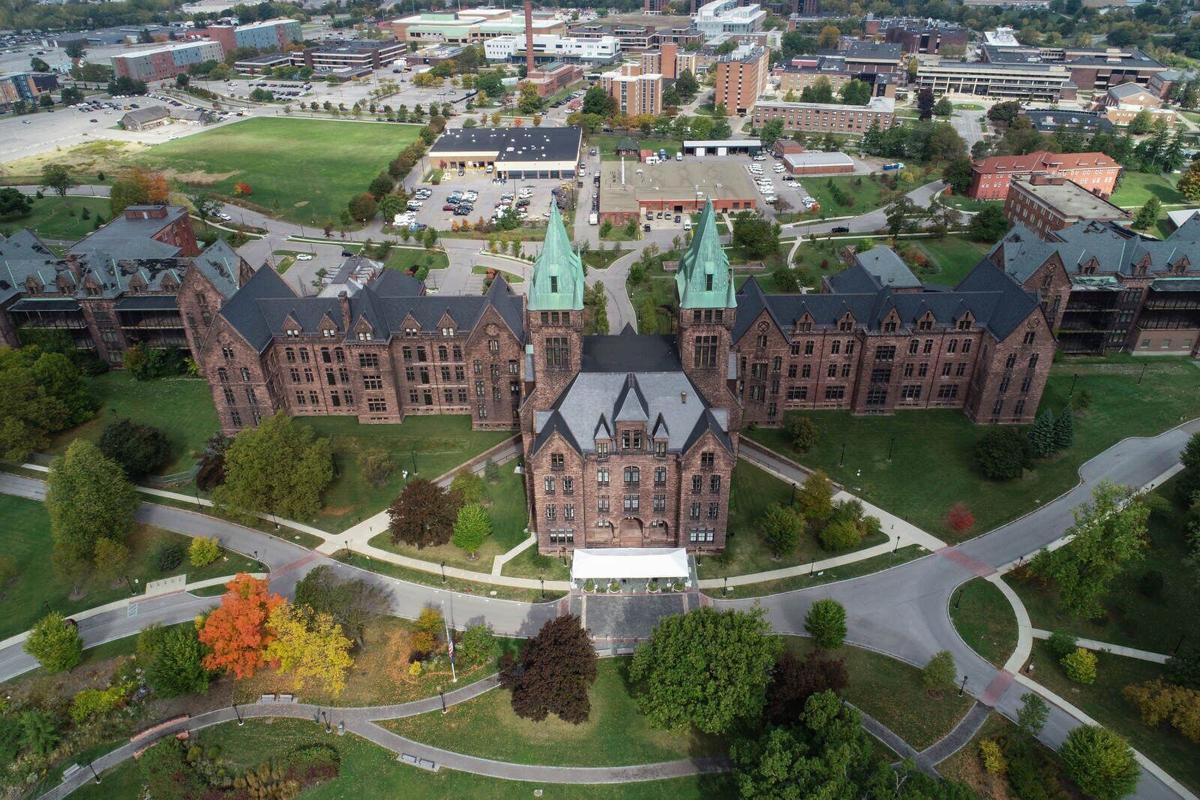
The #BNDrone takes you on an aerial tour of the Richardson-Olmsted Campus and its iconic towers. Hotel Henry recently announced it is closing, a victim of the pandemic economy. But a plan to develop still-vacant portions of the campus into apartments and commercial space continues, and there is already a flurry of talk about what comes next for the hotel.
The board, encouraged by Jemal's interest, hopes ongoing discussions will lead to an agreement, Mortenson said.
Under the development agreement, Jemal is developing schematic designs, delving into the financing and considering the historic preservation implications as part of the process that could lead to an agreement.
"We are impressed by Douglas's commitment to this community, his commitment to historic preservation and his commitment and love for these buildings in particular," Mortenson said. "If all goes well, the development agreement will evolve into a long-term ground lease."

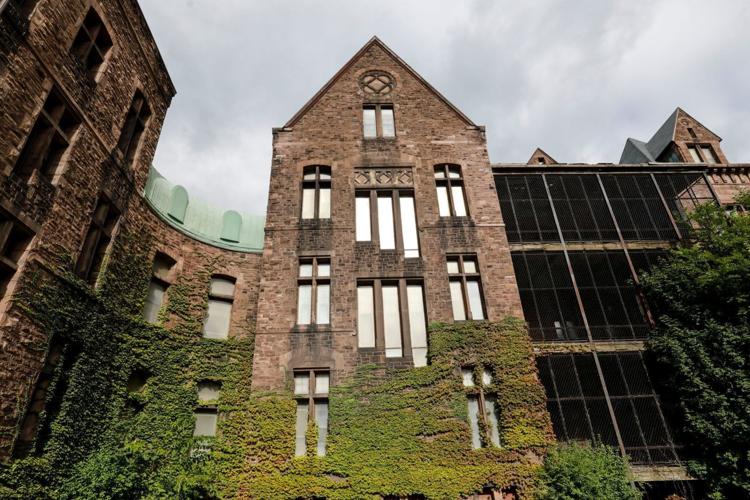
Ivy covers a portion of the east wing at the Richardson Olmsted Campus. At left is the eastern edge of the Hotel Henry.
The buildings on the western side of the campus consist of five brick buildings, one building made of Medina sandstone and a historic barn.
Jemal expressed interest in Hotel Henry Urban Resort Conference Center last week, one day after InnVest Lodging Services announced it was closing the hotel on Feb. 27 due to a financial pummeling from the pandemic.

Developer Douglas Jemal confirmed he has met with the operators of the hotel and conference center about acquiring and reinvesting in the property.
The Richardson Center Corp.'s board of directors discussed Jemal's interest in the hotel for the first time Tuesday at a monthly meeting.
Mortenson said there is a sense of urgency in finding a new owner for the hotel.
"We want to get this building into reuse as quickly as possible," he said.
Jemal has demonstrated the financial ability to take on a development project of this scale.
He first made a splash in Buffalo by buying the renamed Seneca One tower out of foreclosure for $12.6 million in 2016 and embarking on a $120 million redevelopment.
He has since added the Boulevard Mall and Statler City, both major renovation projects, among several acquisitions, and is negotiating to buy Hyatt Regency Buffalo.
Hotel Henry opened in April 2017, the first business on the Richardson Olmsted Campus since the state provided an initial $76.5 million in 2004 to revive the abandoned, 463,000-square-foot complex. The "Richardsonian Romanesque"-style buildings were designed by Henry Hobson Richardson, with landscape design by Frederick Law Olmsted and Calvert Vaux.
The revival of the long-dormant National Historic Landmark drew national attention and brought rave reviews for the 88-room Hotel Henry, designed by Deborah Berke Partners. It also marked the first time a tenant on the 100-acre campus was on the tax rolls.
Another project on the Richardson Olmsted Campus has been announced for two buildings east of the hotel.
Developer Sam Savarino, with CJS Architects, is working on an 80,000-square-foot, $17 million residential project that would include artist lofts.
If Jemal were to lease the properties under consideration, it would leave only one building unaccounted for – an 8,000-square-foot former men's kitchen on the eastern side of the property, between the hotel and the Savarino development.
Mark Sommer covers preservation, development, the waterfront, culture and more. He's also a former arts editor at The News.