

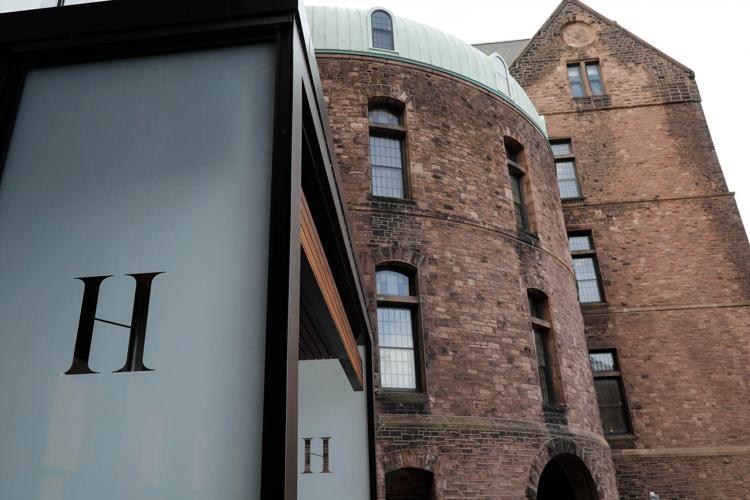
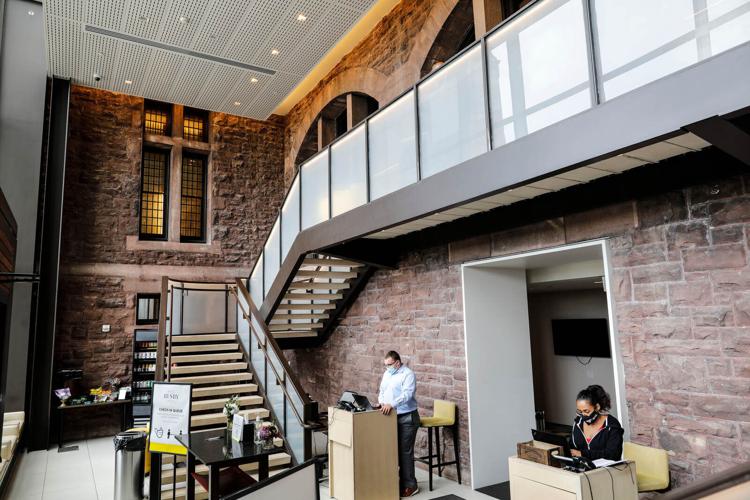
Dennis Murphy expected 2020 to be Hotel Henry's "best year ever."
Then Covid-19 hit the hospitality industry like a sledgehammer.
"While we worked very hard to keep our doors open, there just weren't many people coming through those doors for the longest time," said Murphy, president of InnVest Lodging Services, which owns the Hotel Henry Urban Resort Conference Center.
In the early days of the pandemic, there were some nights when Hotel Henry had no overnight guests, Murphy said.
With the plunge in occupancy at the 88-room Hotel Henry, it could be forced to temporarily close if a second wave of Covid-19 hits Western New York, he said.
Or it could temporarily shut down by the second quarter of 2021 if business doesn’t pick up, Murphy said.
People are also reading…
The same challenges the Hotel Henry faces are hitting the hotel industry in general.
Two out of every three hotels reported being at below 50% occupancy, and half were in danger of foreclosure due to Covid-19, according to a survey issued on Aug. 31 by American Hotel and Lodging Association. More than two-thirds said they would be able to last only six more months at current projected revenue and occupancy levels unless Congress delivers more stimulus relief.
What the federal government and banks are willing to do – or not do – to help businesses like the Hotel Henry will be a big factor in what the future holds, he said.
"The likely scenario is it's going to be a fixed period of time – pick the months, not years – where we get back to a sustainable point," Murphy said. "It may not be a break-even point, but something we can all tolerate.
"But in the unlikely case that it becomes endless, there is a point in time where you say it is much less expensive to have the doors closed than to have them open," said Murphy, who still remains optimistic about the hotel's long-term prospects.
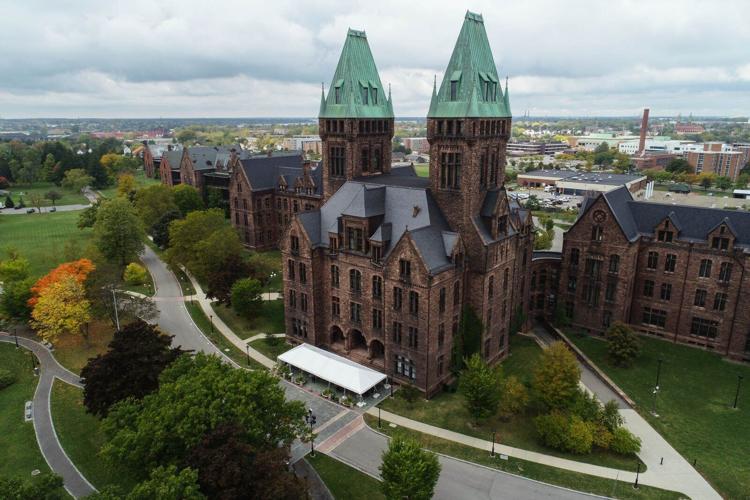
The pandemic has also taken a heavy toll on the Richardson Olmsted Campus, where the hotel opened in April 2017.
At the western end of 11 connected buildings on the campus, a university-based retirement community planned for three vacant buildings that have been empty since the 1970s has been shelved due to funding challenges exacerbated by the pandemic.
"It has not been easy in the world of trying to redevelop a campus," said Mark Mortenson, executive director of the nonprofit Richardson Center Corp., which owns the Richardson Olmsted Campus. "It's changed the way a lot of people view things."
The public has a lot of interest – and investment – in the H.H. Richardson-designed buildings and Frederick Law Olmsted and Calvert Vaux-designed grounds.
New York State spent $76.5 million to rehabilitate the National Historic Landmark. That included construction, furnishings, fixtures and equipment costs for the hotel.
An additional $10 million was raised through grants and fundraising, with $16 million coming from state and federal tax credits.
In 2018, the National Trust for Historic Preservation gave the Richardson Olmsted Campus its top preservation honor, the Richard H. Driehaus Foundation National Preservation Award. Hotel Henry was named that same year on Time magazine's list of the "World's Greatest Places," and earned four preservation awards in New York from state government, architectural design and preservation organizations.
Furloughs, lost business
Both chain-operated lodging and boutique hotels, like Hotel Henry, have been battered by Covid-19.
Occupancy is down around 50% from a year ago at the Giacomo, a 44-room luxury hotel in Niagara Falls, according to William Paladino, CEO of Ellicott Development.
"We're holding our own," Paladino said "Our hotel sales aren't great, but we have offices and residential in there that's been helping us to get by."
Paladino expects it will be 18 to 24 months before things get back to how they were before Covid-19 struck.
Business at InnBuffalo off Elmwood Avenue, an 11-room bed and breakfast, is down 75% due to the pandemic, owner Joseph Lettieri said.
But Lettieri – who said his inn is for sale for reasons unrelated to Covid-19 – predicted the coronavirus may actually benefit boutique hotels like his in the future.
"Boutique accommodations that can demonstrate hospital-grade standards for cleaning will come out of this stronger and with better market share than the larger properties," Lettieri said. "If you're traveling you are going to seek smaller venues with smaller gatherings.
"That's the silver lining, even if doesn't help pay the bills now," he said.
Although Hotel Henry's business has slightly improved since August, it's still down 65% for traditional hotel meetings, and events are off 90%, Murphy said.
The lack of hotel stays has caused 85% of the workforce to be furloughed.
Getting out in front with safety protocols for Covid-19 helped, Murphy said.
Most of the people coming to the hotel, he said, needed to travel or wanted to take a summer "staycation" since they couldn't travel out of the area. The loss of Canadian travelers due to the travel ban has had a big effect on the hotel's business.
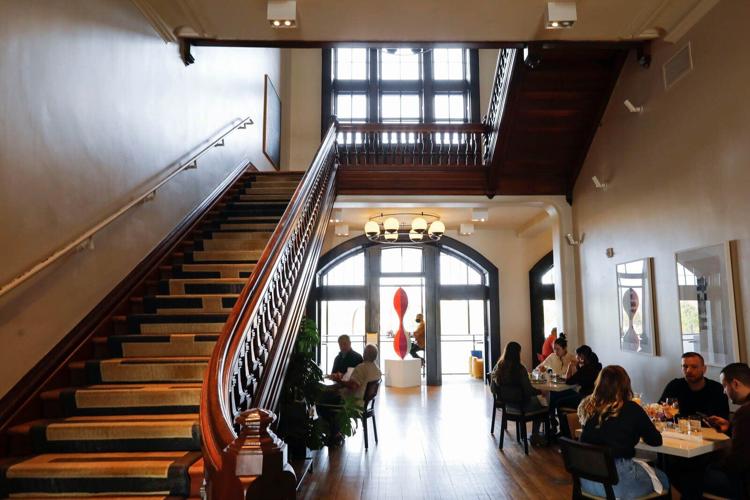
The restaurant, 100 Acres: the Kitchens at Hotel Henry, has reduced meals to dinner Wednesday through Sunday. Patio dining and pickup service are also offered.
Business and senior leisure have made autumn one of the travel industry's better quarters, which is gone this year, Murphy said.
The public's need to learn to use technology to communicate remotely may be a plus for Hotel Henry in the future, Murphy said, because it was positioned to offer virtual meetings and hybrid get-togethers before Covid-19.
"If you look at a bright spot out of this catastrophe, this particular cycle of time has taught everybody what Hotel Henry was built to do," Murphy said.
Murphy remains optimistic life will return to normal.
He said he continues with expansion plans into two buildings and plans to upgrade technology used for conferences and to make other improvements. But the timetables to do so will be pushed back to ensure there are enough cash reserves on hand to get through this difficult period, he said.
"It's been an absolute incredible journey thus far, but it is just getting started," Murphy said. "The things that are going to end up happening at Hotel Henry are really going to be something quite spectacular."
Workspace apartments for local artists are still planned in two buildings on the eastern end of the Richardson Olmsted Campus, along with the two buildings the hotel still plans to use.
Mortenson said the Richardson Center Corp. is seeking redevelopment interest for the three buildings now left vacated, while recognizing they are challenging and expensive to redevelop.
"Being a National Historic Landmark creates additional construction and restoration requirements, and because the buildings were abandoned since the 1970s, they are in such poor disrepair," Mortenson said.
"But given the uniqueness and significance of these historic buildings, I remain hopeful that we will find the right development partner to reactivate these buildings for years to come," he said.
Mark Sommer covers preservation, development, the waterfront, culture and more. He's also a former arts editor at The News.


