

Jesuit priest Eusebio Francisco Kino and other Spanish colonial missionaries left more than a legacy of religion in these parts. They also introduced many edible plants to Southern Arizona.
You can easily add a bit of this tasty history to your yard.
FRUIT TREES
Jesuits and Franciscans planted mission orchards in the 17th century, says Jesus Garcia, an education specialist with the Arizona-Sonora Desert Museum who has worked to identify heritage trees.
Desert Survivors Nursery grows plants from the cuttings of some of those trees.
"What we're basically growing is out of the oldest heirloom fruit trees from Southern Arizona, Sonora and missions in Baja California," says nursery director Jim Verrier.
People are also reading…
The garden center stocks black mission fig, tropical guava, quince and three types of pomegranate trees in $30 and $15 boxes. It occasionally sells an heirloom apricot and hopes to have plums next year.
Verrier suggests planting figs, guava, pomegranate and quince anytime but winter so that they become established before frost hits. Plant stone-fruit trees in autumn.
Grow trees in a well-draining soil-compost mix in a spot that gets morning sun and afternoon shade. Feed with organic fertilizer a month after planting and then on a schedule of September and the spring.
These trees "will take a fair amount of water," Verrier says.
GRAPES
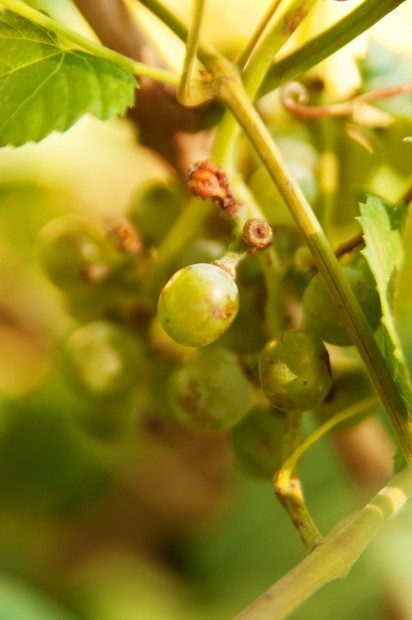
Grapes were brought to the region to make sacramental wine.
You'll need very rich soil to grow them in Tucson. While the plants like sun, "it would be nice if the base is in the shade," Verrier says. They are high-water-use crops, "but you can get pretty big production out of grapes."
The nursery sells one-gallon plants ($15).
HERBS
In colonial times, herbs flavored food and served as medicines and pest-control agents. Missionaries and settlers brought Old World herb seeds, bulbs and cuttings to the Sonoran Desert, says Jacqueline A. Soule, a botanist and garden writer.
Her book, "Father Kino's Herbs: Growing & Using Them Today" (Tierra del Sol Institute, $14.95), details 48 plants that the missionaries used in their area travels, including 26 they introduced. Those included basil, borage, fennel, sage and parsley.
The visita stations, which were not full-fledged missions where the Jesuits and Franciscans stayed, usually included an enclosure. "You change the microclimate to where it's just a little bit more humid and warmer," says Soule. That made it just right for growing non-native herbs.
Almost all of the herbs in Soule's book are widely available, so it's easy to find out a plant's needs before planting it.
European sage does well in a well-drained container, while borage needs ground space for its deep tap root. Mint will overgrow a garden and is better contained in a pot.
Plant most herbs in the fall, she says. Use a well-draining mixture of sand, compost and dirt and locate the plants where they can have afternoon shade in the summer. Allow soil to slightly dry out between waterings.

 Lake Mead's drops raise prospect of unaffordable Hoover Dam electricity


