

Van Robinson, an early believer in pulling out a highway that once seemed immovable, was among the last to hear of it when his dream of many years cleared a major procedural hurdle last month.
Today, the reality that his great hope even made it this far is the lesson in faith he offers Buffalo.
Robinson retired in 2017 after 18 years on the Syracuse Common Council, including two terms as president. A few weeks ago, while he and his wife Linda did some traveling, he came down with a grinding cough. Robinson learned he had pneumonia. He was recovering in his Syracuse home – on a self-imposed blackout from television and the Internet – when the state Department of Transportation made a monumental announcement.
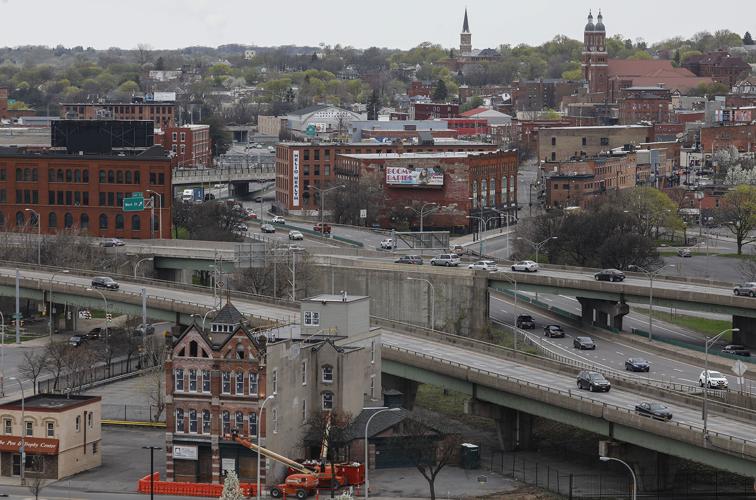
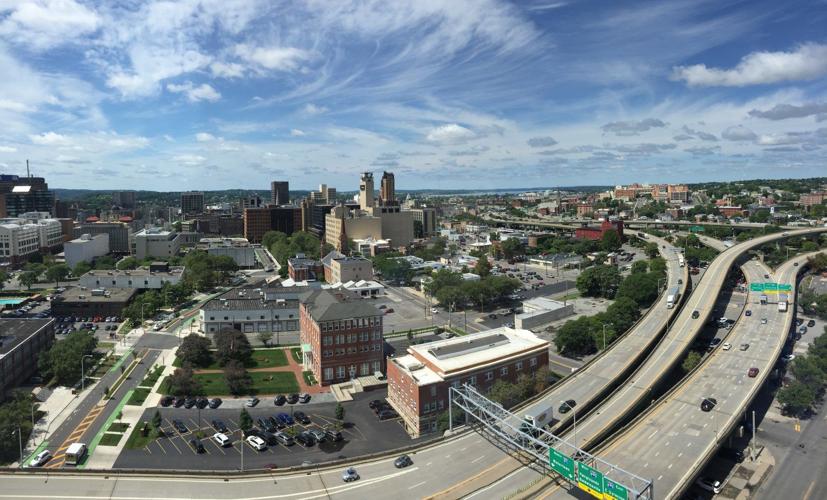
After years of study and relentless local argument that rose into the form of billboards, the state recommended, within a draft environmental impact statement, the demolition of a roughly mile-long stretch of elevated bridges that carry Interstate 81 through downtown Syracuse. The $1.8 billion plan involves replacing the high-speed viaducts with a new boulevard and street-level traffic known as the community grid.
People are also reading…
"I can't think of a more significant decision that has been or will be made in this city, at least in the near future," said Syracuse Mayor Ben Walsh.
The announcement, and the sheer level of financial commitment, adds fuel to already intense debate in Buffalo about the nature, function and consequences of the Scajaquada and Kensington expressways and, more immediately, the Skyway.
Gov. Andrew Cuomo said in April that he hopes to use a design competition as a means of deciding within six months whether to keep or level that elevated gateway, a time frame that is roughly parallel to an ongoing and far more detailed state study on the viability of the Skyway and the practicality and expense of other routes. For years, those factors were the biggest obstacle to removal.
“Previously, there were no alternatives but to rehab outdated infrastructure,” wrote Rep. Brian Higgins, the Buffalo congressman who wants to see the Skyway brought down, in a recent email. Cities like Syracuse and Buffalo, he wrote, “are changing and fighting for new infrastructure that reflects the new landscape and economies.”
In Syracuse, with I-81, the state recommended against the more expensive or demolition-involved alternatives of building new viaducts or spending additional billions to run a tunnel under the city.
Nothing yet is completely sure. This is still a draft statement, and more public input is coming. Some in Syracuse anticipate eventual legal challenges from businesses or even communities that object to the plan, which as recommended would offer motorists who travel I-81 the option of either using a boulevard or skirting the city on a suburban loop now called Interstate 481.
Higgins is also part of the Congressional delegation that put together the framework for a tentative $2 trillion infrastructure deal last week with President Donald Trump. If it happens, Higgins said, it could be a source of money for both removing the Skyway and anticipating and resolving any potential traffic woes.
To him, the I-81 decision becomes an especially dramatic Upstate example of a shifting perspective on major highways, and how they affect cities. In downtown Rochester, a large and obstructive section of the Inner-Loop, an old Interstate 490 connector, has already been removed.
Closer to home, a portion of what was once called the Robert Moses Parkway, named for the planner whose expressways blasted through neighborhood fabric in New York City, is being demolished along the Niagara River. Higgins has described it as "righting a historic wrong."
In Syracuse, removing I-81 went from what seemed like fantasy 20 years ago into an idea supported by City Hall, Syracuse University, many neighborhood groups and the business coalition known as CenterState CEO – the closest equivalent in that community to a Chamber of Commerce.
It also generates passionate opposition from a group known as Save 81, an alliance of businesses with elected officials, unions and community groups that contend removing the interstate would damage the area and corrode the local economy. In a tweet last Tuesday, the group maintained the relative impact would be comparable to the Amazon pullout from New York City.
Earlier this year, NYS drove away tens of thousands of high-paying jobs with the Amazon deal. Now, the state is putting jobs in Syracuse at risk. Hotel owners in Salina are already warning about the community grid’s negative impact on their businesses: https://t.co/Stv2DEJ5JX
— Save 81 (@Save81) April 30, 2019
While the two sides agree upon few things, one of the truths no one would dispute is that Van Robinson was making his case from the beginning.
"It seems like he's been after it forever," said Bob Doucette, an outspoken supporter of the grid and a developer whose work was critical in reviving Armory Square, a downtown neighborhood.
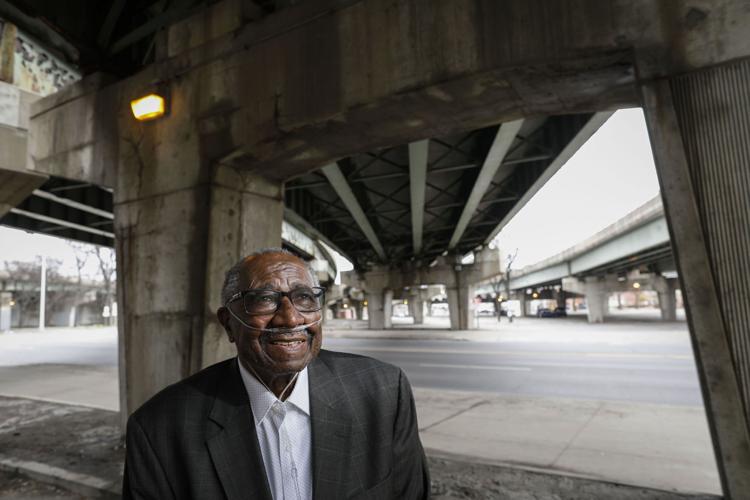
Robinson, a Bronx native, said he wondered about the interstate since the day in 1968 when he drove into Syracuse for the first time. He saw how the bridges formed a wall between the city’s downtown – and the struggling neighborhoods just beyond it – and the clustered development, including two major hospitals, on the Syracuse University hill.
It was only afterward that Robinson learned how constructing I-81 had essentially wiped out the old 15th Ward, once the heart of the city’s African-American and Jewish communities, as part of what planners of the time described as “slum control.”
“It just seemed ridiculous,” Robinson said. He saw the viaducts as a fast way out of town for businesses and homeowners who left behind neighborhoods that quickly slumped into poverty. The underbelly of the interstate was not only desolate and ugly, Robinson said, but the constant fumes offered a respiratory threat to children growing up nearby.
By the late 1990s, Robinson was telling anyone who would listen that the city and state ought to remove the bridges. The pushback reached a level of such disbelief and mockery that Robinson said even his wife half-joked that it had grown to be too much.
“She told me I’d better shut up or they'd take me away,” he said, recalling how critics made jokes about his sanity.
Yet the national outlook was evolving. Such cities as Milwaukee and San Francisco were removing portions of city expressways, and Robinson began finding influential allies. Once the state announced it was time to either rebuild or remove the crumbling I-81 bridges, there was significant backing in Syracuse for the notion of a grid.
After years of passionate civic debate, the state finally recommended that option last month, announcing it through a draft environmental impact statement. A senior official in the Cuomo administration said there is no doubt the process intertwines with an awareness that many postwar highways traumatized cities throughout New York.
The bottom line, the official said, is that the grid was also the most inexpensive option, and that building it will cause the least damage to the city around it. Highway decisions in Buffalo or any city, the official said, will be worked out based on the particular nature of how each one affects surrounding fabric, and the relative costs.
Still, if the trend accelerates – if Interstate 81 truly disappears from downtown Syracuse, and other cities make choices on a similar scale – Robinson might be remembered as a statewide pioneer who saw early what so many others missed.
"I'm always hoping that someday other cities will be looking to Syracuse as a model for the right way to do things," said Walsh, the city's mayor, who recalls listening as a young planner while Robinson explained why the interstate should go.
As for Robinson, he likes to think chronological symmetry brings a kind of cosmic logic to his long wait. After all, one of the biggest highway announcements Upstate New York has seen in years happened only months after he turned 81.
Sean Kirst is a columnist for The Buffalo News. Email him at skirst@buffnews.com or read more of his work in this archive.


