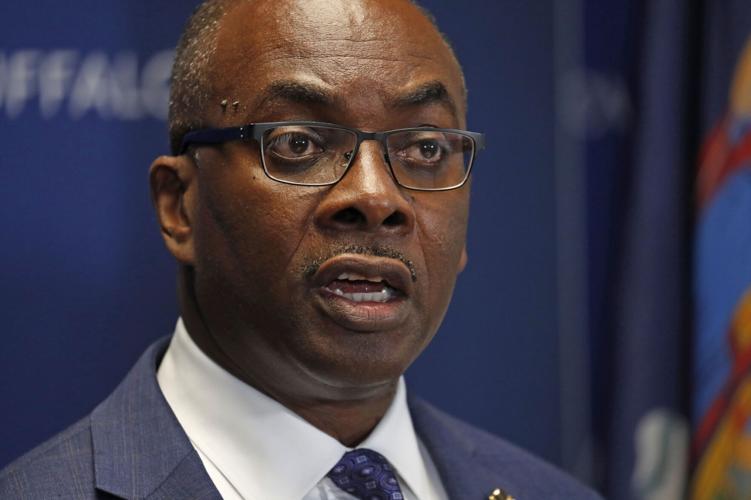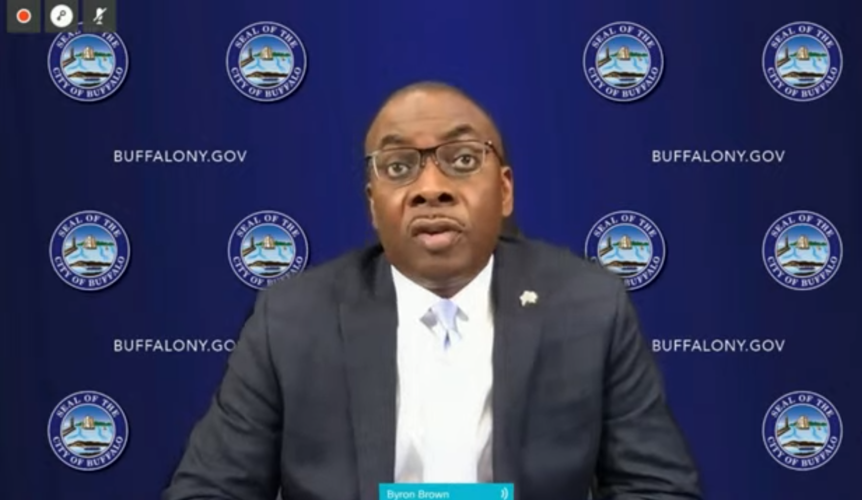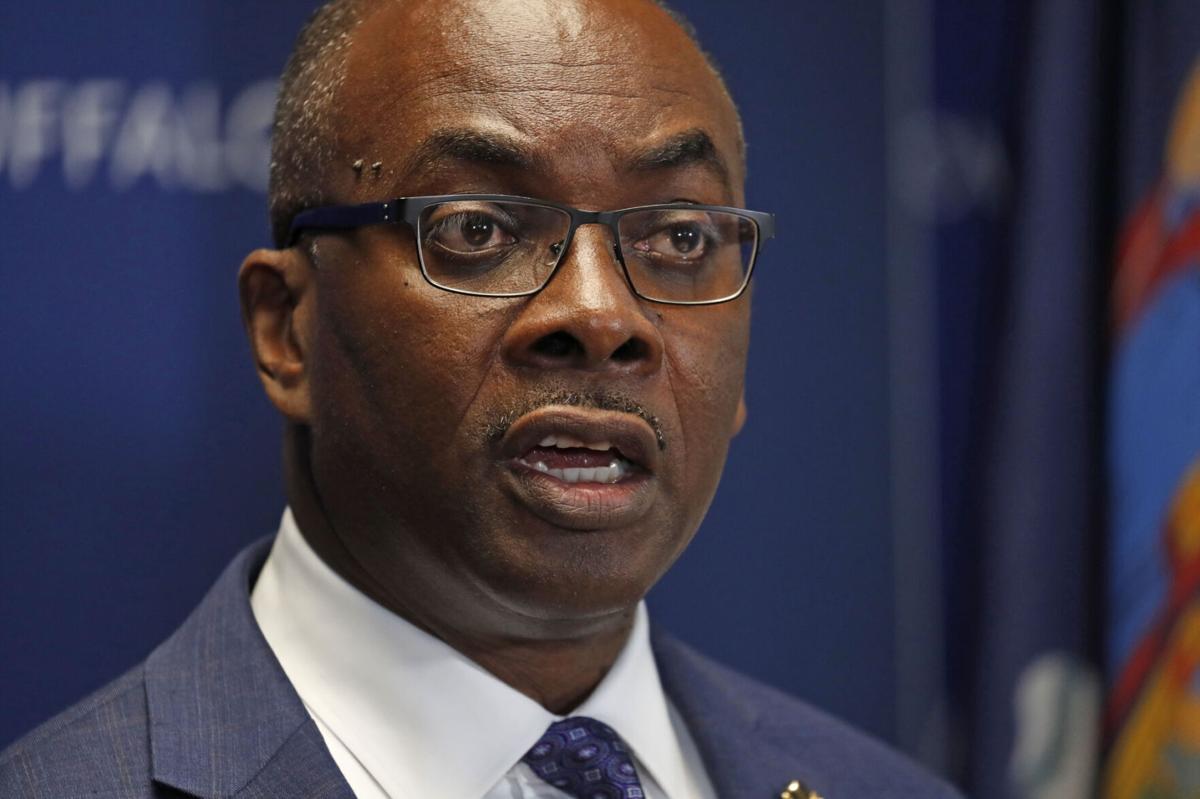
WASHINGTON – The U.S.-Canadian border is largely closed for now, but Buffalo Mayor Byron W. Brown brought a radically different – and high-tech – view of that border crossing to a House hearing where he testified virtually on Thursday.
Touting President Biden's $2 trillion infrastructure plan, Brown said that effort needs to take into account a new era of trade between Canada and the U.S. that will feature driverless commercial vehicles regularly crossing the border.
"We must have an infrastructure that will be able to meet the demands that trade in the 21st century will require," Brown said. "That means that our infrastructure must be capable of supporting the autonomous electric vehicles that are becoming a greater segment of the transportation industry."
Testifying before the House Ways and Means Committee's Subcommittee on Trade, Brown said: "These low-carbon vehicles will rely on the presence of sensors, communications devices and a charging infrastructure which we should lay the foundation for now."
People are also reading…
Read the full story from News Washington Bureau Chief Jerry Zremski
Noting that Canada is New York State's greatest trading partner – with more than $19 billion in goods and services crossing into Canada annually – Brown stressed that the infrastructure bill will need to go beyond just rebuilding roads and bridges.
"The ability to move goods and people by rail must also be improved if cities are to remain competitive," Brown said. "This will mean dedicated lines for high-speed rail between metro areas like Buffalo and Toronto, as well as greater commercial rail capacity so that our reliance on other carbon-producing modes of transit shrinks."
Brown said he was happy that Biden's plan includes such rail investments. He also lauded the plan's focus on rebuilding water systems in older cities and closing the digital divide.
Noting that it will cost between $350 million and $500 million to replace all of Buffalo's lead water pipes, Brown praised the Biden plan for offering to replace all such pipes in every community in the country.
"When lines are only repaired, lead particles are distributed and can enter a home's drinking water," Brown said.

Buffalo Mayor Byron W. Brown testifies virtually on Thursday, April 29, 2021, before the House Ways and Means Committee's Trade Subcommittee.
That's just what prompted the water crisis in Flint, Mich., said Dr. Mona Hanna-Attisha, founder and director of the Michigan State University and Hurley Children’s Hospital Pediatric Public Health Initiative and another witness at the hearing.
"To this day, my heart breaks knowing that lead-poisoned water was filling baby bottles and sippy cups," Hanna-Attisha said. Citing the case of a young boy who suffered seizures because Flint's water poisoned him, she added: "I wish there was something as a pediatrician that I could prescribe to take away what happened. But when it comes to lead, the only cure is prevention."
Brown said the lead issue is one of several in which federal disinvestment in infrastructure in recent decades disadvantaged poor neighborhoods and people of color. He also cited Buffalo's spotty access to high-speed internet service.
"When we talk about broadband, we only need to look at the experience of Buffalo during the pandemic, when we went to remote learning in the Buffalo Public Schools and there were thousands of children in our school district that did not have access to the internet," Brown said.
The city eventually worked with the Buffalo Bills Social Justice Fund and Spectrum Cable to lower the price of internet service just so more students could access it, the mayor noted.
Brown testified at the hearing at the request of Rep. Brian Higgins, a Buffalo Democrat and longtime advocate of a huge boost in federal infrastructure funding.
"Mayor Brown is leading Buffalo's rebirth," Higgins said while introducing the mayor. "He knows the value of infrastructure and how it impacts our communities and affects our quality of life."
The hearing was one of many that various congressional committees will hold in the coming weeks as Congress begins trying to craft Biden's American Jobs Plan into legislation. Doing so will likely be a struggle, as Republicans have flatly rejected Biden's main proposal for paying for his infrastructure plan: an increase in the business tax rate.
Rep. Vern Buchanan of Florida stated the Republican case at the hearing.
"Higher taxes will make us less competitive and hamper our economic recovery, sending jobs overseas, and (lead to) lower wages," Buchanan said. "Higher taxes will cost jobs."