

ALBANY – In December 2012, in an office outside Detroit, frustration was building.
Representatives for the Buffalo Bills, New York and Erie County couldn't get past a snag that kept them from finalizing a stadium renovation deal to keep the team in Western New York for another decade.
Robert Duffy, the then-lieutenant governor assigned to the state’s negotiating team, left the room and placed a private call to then-Gov. Andrew Cuomo. From the headquarters of the team’s owner, the late Ralph C. Wilson, Duffy relayed to Cuomo that a deal was all but in place, but that the sides were stuck over a final funding pot of about $20 million out of an overall $130 million deal. Cuomo, Duffy recalled, suggested a simple solution: split the dollar difference between the team and public partners.
Jeff Littmann, the team’s chief financial officer at the time, listened to the offer and excused himself from the negotiating table.
People are also reading…
Not long after, he reappeared, with a bottle of champagne and glasses. “He said, ‘We have a deal,’ " Duffy recalled last week.

Negotiations continue between the county, state and Buffalo Bills regarding a new stadium.
Not even 10 years later, the sides are at it again, but with some key differences: many different players are at the negotiating table, and the financial and political stakes – a new stadium that could cost at least $1.4 billion – are far higher for the team and the state and county.
Much today is uncertain, given the secrecy of the talks, but it is clear, if other pro sports teams' recent stadium deals are any guide, that any final agreement for a new Bills stadium will be far more intricate than what came out of the 2012 stadium renovation deal.
“I do believe there will be some complexities that may not have been present during the last negotiations,’’ said Duffy, now the president of the Greater Rochester Chamber of Commerce.
Big project = big complexities
Today, not only are the numbers far larger, taxpayer mood about projects some call “corporate welfare” has grown less patient. New York's Legislature has shifted to the left and demonstrated numerous times in recent years that it likes to tax rich people, not give them big taxpayer-funded subsidies.
Gone from years ago, especially since the Great Recession of 2008, are the eye-popping, direct cash grants that governments showered upon pro sports franchises as bait to keep teams happy in gleaming new stadiums.
Read the full story here.
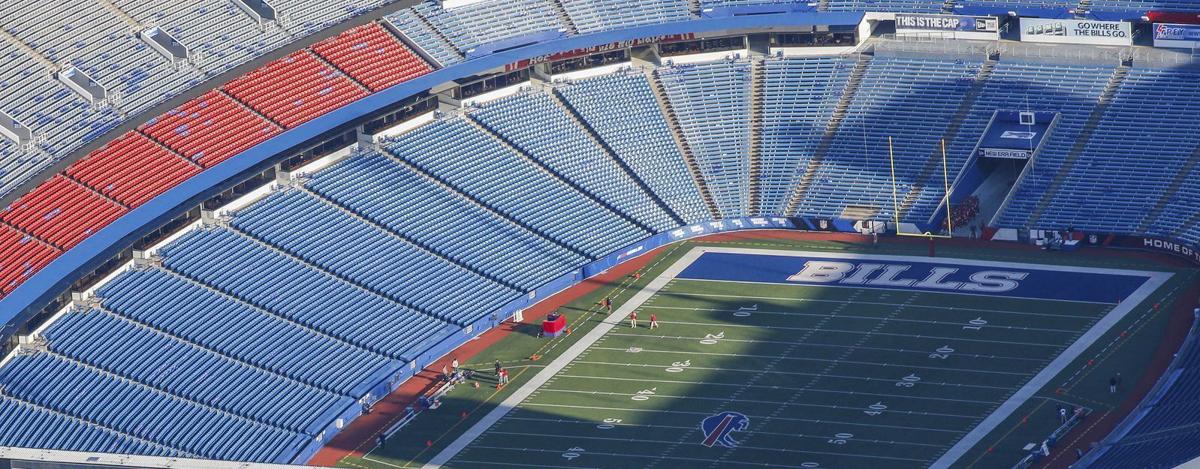
Now, with talks underway to build a proposed 60,000-seat NFL stadium in Orchard Park next to the aging facility, the team, state and county are playing a high-stakes game of "Who-pays-what?"
It's understood now that the financing will be a "public-private partnership." But how might the public pay?
The possible list of options is long, can be creative and can be carried out in such a way that hides the extent of taxpayer involvement over the long term.
'Public participation' in stadium deals
Local and state taxpayers can be on the hook in an assortment of ways for a pro sports stadium or arena deal.
State and county taxpayers could also help fund a stadium by the issuance of various kinds of borrowing schemes.
But a deal for a stadium in New York State also can affect taxpayers in the other 49 states.
Three economists – from the University at Arizona and the Brookings Institution – several years ago looked at the 43 stadium projects nationwide funded at least in part by municipal bonds that exempt investors from federal income tax. The total revenue loss to the federal treasury from those deals: $4.3 billion.
In stadium deals, financing doesn’t always go as planned. Consider Allegiant Stadium, home to the Las Vegas Raiders, which opened in 2020. Clark County footed $750 million of the project’s costs through a 0.88% hotel room tax.
What happened the past year in Las Vegas? Like many tourist areas, hotels became ghost towns for part of the year into 2021. As a result, with lower-than-expected hotel tax revenues, the county had to twice dip into reserve accounts in order to meet payment obligations on the stadium bond.
Financing deals have changed
Victor Matheson, an economist at the College of the Holy Cross in Worcester, Mass., said the public financing component of pro stadium deals have changed dramatically in the past 15 or so years. Before 2008, about two-thirds of stadium projects were funded by the public. Since then, about two-thirds, on average, come from private sources, including a number of major NFL projects – from the NFL’s Giants and Jets stadium to the mega Los Angeles stadium project – that have been self-financed by team owners.
“Following the Great Recession, taxpayers started thinking it was a little bit disastrous to be handing out hundreds of millions of dollars in subsidies to billionaire team owners while communities were laying off police and firefighters," said Matheson.
The pushback has been most evident, he said, in blue states, particularly in the Northeast and West Coast. Levi’s Stadium, home of the San Francisco 49ers since 2014, is more than 90% privately financed, with the sale of personal seat licenses and luxury suites accounting for approximately one-third of the project's $1.3 billion cost. That stadium is publicly owned, and in 2019 the team won a lucrative property tax challenge over the facility.
Many funding schemes involving public dollars have been used to do pro sports stadium deals, some direct and some obscured, according to experts such as Judith Grant Long, associate professor of sport management and urban planning at the University of Michigan.
The range, she and others said, can include:
• Land acquisition, including by government-led eminent domain procedures, as well as help speeding up government environmental or other review processes. Governments have helped, too, with site cleanup. Gov. Kathy Hochul, a Buffalo resident and longtime Bills fan who is overseeing the state’s talks with the Bills and Erie County, recently noted that part of the current due diligence work is to answer a basic question: Who pays for demolition of the Bills’ current stadium if a new one is built right next door?
• Governments have helped finance road improvements leading to and around a new stadium, or, as in the case of Yankee Stadium, paid for mass transit infrastructure work. One sports investment banker, who has been involved giving financial advice on many pro stadium projects and who spoke on condition of anonymity, said some localities have gotten creative: from letting teams run public parking facilities and keeping the profits to giving away space on public lands and financial assistance for team billboard advertising spread around a community.
• Borrowing is one of the bigger categories. Michigan’s Long said that can include general obligation or revenue bonds, including tax increment financing. Property tax exemptions or abatements are another major public participation vehicle in stadium deals, as well as free municipal services, such as local police and fire. Targeted tax hikes, other experts said, have been on the table in other cities’ stadium deals, such as increases on sin taxes, like tobacco, or higher hotel and car rental taxes that, officials believe, are more politically palatable because they hit tourists, not local voters.
Then there are the ongoing, annual costs that can go on for years. Again this year, the New York State budget adopted in April had tucked away a line item totaling $4,605,000.
The item, hardly even noticed anymore in Albany, covered the annual payment from Albany to the Bills from the 2012 deal. Another item in the budget, once again, gives blanket authority for a state authority to issue bonds for projects to keep the Bills in Buffalo.
“I’d guess everything is on the table," Duffy said of current stadium negotiations. The 2012 deal he helped cut saw the state and county paying nearly three-quarters of $130 million initiative.
If other communities are a guide, the Bills and state and local officials will be increasing their public messaging on a key point: that the public should financially participate in a new stadium project because the team contributes mightily to the region’s economy, reputation and overall psyche.
The Hochul administration, Erie County Executive Mark Poloncarz and the Pegulas' company all declined to comment.
Bills self-finance new stadium?
A number of state lawmakers from the Buffalo area are already on record saying there has to be some public financing component for a new stadium. Duffy agreed. “They cannot do it alone, and they should not be expected to," he said. If the goal is to keep the team, he said, “we need to make it financially palatable” for the Pegulas to remain in one of the smallest pro sports markets and not be lured to a more lucrative larger community.
Economists have long disputed claims that pro sports stadiums provide some major economic boost to an area. They note NFL stadiums host eight or nine regular season games and don't return nearly as much in sales and income taxes as many taxpayer-funded stadium subsidy packages.
With rising public opposition to taxpayer subsidies of pro stadium deals, negotiators have become more “surreptitious” in dealmaking to find “hidden ways” to provide taxpayer money for the new stadiums, according to Andrew Zimbalist, a Smith College economist and stadium financing expert.
Zimbalist believes if those hidden public financing arrangements are included – from complex tax breaks to well-below market land deals – then the true costs of stadium deals in recent years would be higher than many estimate.
Zimbalist and Holy Cross’ Matheson agree: Buffalo is in a far different position than a big NFL market. “Buffalo has a lot less bargaining leverage because the Pegulas could always take the team to a much bigger market if they want," Zimbalist said.
Two sports investment bankers, who have been involved in dozens of major sports transactions over the years, don’t believe the Pegulas have any intention of leaving Buffalo. But they said, speaking on condition of anonymity, the Pegulas know that Hochul, Poloncarz and other politicians can’t take any chances.
Many ways to hide taxpayer stadium subsidies
The sports bankers wonder if the Pegulas will also push for some sort of rights to a mixed-use development project – as seen in some major markets with completed or planned stadiums surrounded by entertainment areas and hotel, retail, restaurant and office space. The state and county could offer financially beneficial avenues if such an idea is pushed, from tax breaks to fast-tracking regulatory approval processes.
One sports banker said the governments could even offer financing credits to help lower annual lease payments that the Bills would owe on what would be another county-owned stadium. There are also payment-in-lieu-of-taxes scenarios, one the New York Yankees received for its stadium deal in the 2000s. Critics said that deal had many fiscal sleight-of-hand provisions that made it appear taxpayers were on the hook for fewer subsidies. One state Assembly report on that deal – dubbed "The House That You Built" – dismissed initial claims that the baseball stadium was totally team-financed, saying the true, overall cost to taxpayers, when all aspects of the deal were included, totaled as much as $1 billion.
The record in recent years has been a mixed one for taxpayer subsidies. One of the sports bankers noted the Sacramento Kings arena deal nearly 10 years ago was helped by the city floating bonds backed by city parking garage revenues. A few years later, not far away, the NBA’s Warriors were forced to self-finance the entire tab for its new, $1.4 billion arena.
The sports banker agreed with academic researchers, saying the Great Recession was a “big deal” in changing how stadium and arena deals were structured. Amid dire economic news, huge bailouts of the financial and auto industries, the banker said the public increasingly questioned taxpayer deals for teams making major profits off stadium and TV contract deals. “Wait a minute, why are we paying?" the banker, who has helped forge a number of big publicly financed stadium deals, said of the public's increasing attitudes.
Another sports investment banker said the major difference between NFL team revenues in Buffalo and Dallas are venue revenues. “Their media revenues are exactly the same because of revenue-sharing. The salaries are the same, the same caps, the same floors," he said.
But the small market of Buffalo presents big challenges for the state and county in the Bills’ stadium talks. “You don’t want to lose the team because it’s not going to be replaced," the banker said. He noted that the Pegulas, unlike some other team owners, face far higher construction costs doing business in New York State – driven by anything from environmental rules to union labor mandates.
The more the state and county put into the deal, the banker said, the more they are apt to demand “more draconian and more severe” exit penalties to ensure the team doesn’t break the stadium lease.
Matheson said government negotiators in the Bills deal will have to think hard about the future, as well, noting that the Pegulas, like other pro sports owners, could develop "stadium envy" in the years ahead as they watch other stadiums get the newest features of the day.
“The reality is if Buffalo wants the franchise, they’re much more likely to need to subsidize the stadium than Los Angeles. I’m not saying it’s right, but it is the reality," added Matheson. “Buffalo and upstate New York need to decide: is this something that is worth it to us or not, but they should not kid themselves … that this will pay for itself in terms of economic growth, because it isn’t.”


