


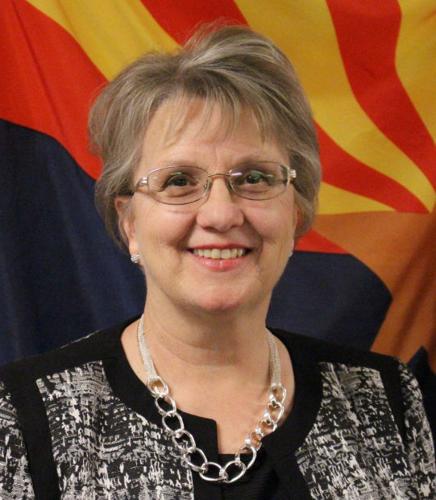
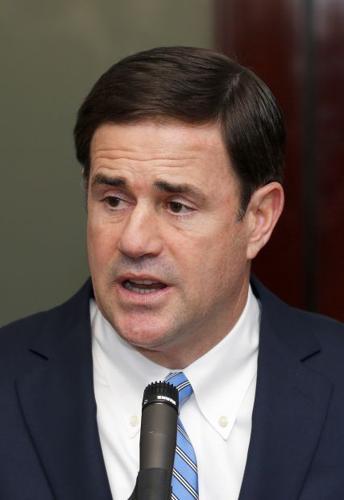
The way Superintendent of Public Instruction Diane Douglas lashed out at Gov. Doug Ducey last week made her an object of mockery among Arizona’s ruling class.
Lisa Graham Keegan, the architect of Arizona’s school-choice movement and a key Ducey adviser, called her approach “erratic” on KPNX TV in Phoenix.
Glenn Hamer, CEO of the Arizona Chamber of Commerce and Industry, told the New York Times her behavior was “bizarre and outrageous and offensive.”
The basic message coming from Ducey’s camp: That lady is crazy.
I’m not here to say Douglas is a normal politician — or that I even support her. Sometimes, though, when other people are saying you’re crazy, it’s because you’ve shouted out some unvarnished truths on the way to the loony bin.
People are also reading…
That’s the case with Douglas. Her intemperate outburst in a press release last week revealed key facts in the education debate as well as key frictions within the Republican Party that will color the discussion of education funding — perhaps more so now that she said them.
Let’s review. Douglas called Ducey “someone who has spent so much time discussing the plain meaning of ‘or vs. and’ as a justification to deprive schools of hundreds of millions of dollars to give to his corporate cronies as tax cuts.”
This is a reference to some sly doubletalk Ducey engaged in during his State of the State address and in unveiling his proposed budget. In a statesmanly move, Ducey encouraged the state Legislature to settle a lawsuit filed by Arizona school districts over the hundreds of millions of dollars the state has been shorting them.
But then he took a shot at the courts, including the state Supreme Court, that ruled the schools are owed money, by saying, “The words of the statute are clear. ‘And’ means ‘and’; ‘or’ means ‘or.’” In other words, he was winkingly saying we really shouldn’t have to pay this money — about $330 million this year — even though the voters mandated it and the courts said so.
In Douglas’ view, Ducey wants to short the schools in order to ensure there are tax breaks for corporations. She’s not wrong.
Douglas went on to say Ducey “has established a shadow faction of charter school operators and former state superintendents who support Common Core and moving funds from traditional public schools to charter schools.”
She’s wrong when she says it’s a “shadow faction” — really, it’s out in the open. Ducey’s transition team of education advisers consisted of Graham Keegan, a former state superintendent; Matthew Ladner, formerly of the Goldwater Institute; and Erik Twist, a top administrator at Great Hearts Academies. All charter school people.
But when it comes to the idea that his proposals would move funds from district schools to charter schools — again, she’s not wrong. Some of the state’s top charter schools could get help expanding through financial backing and access to closed district schools.
Finally Douglas hit Ducey on her favorite issue, the Common Core standards that in Arizona have been manifested in the AzMERIT test. Ducey, she said, needs to fill vacant positions on the 11-member Arizona Board of Education, of which she is a member.
“If he would spend time selecting Board members it would also reveal whether he is actually for or against Common Core. Perhaps that is the cause for his reticence,” she said in her press release.
Now, I disagree with Douglas’ fears about Common Core, but Ducey did say he agrees with her and opposes the standards even though Arizona’s corporate leaders favor them. So in asking him to state his real position, she’s not wrong.
Ducey built an impressively broad coalition of supporters to win the Republican nomination. But now the various Republican factions are pressing him to follow through on his commitments to them. Douglas is essentially demanding that Ducey show whether his loyalties really lie with the populist tea-party faction that she came from, or the corporate conservative faction that bankrolled his victory.
The tea-party faction is concerned that he’s speaking their language while siding with the corporate Republicans, as David Berman, a senior research fellow at the Morrison Institute at Arizona State University, told me.
“She was speaking for a lot of Republicans who feel the same way and think he might be gravitating too much toward the corporate side,” Berman said. “I think there’s a little bit of tension there, and it’s surfaced.”
There should be little doubt that if Ducey must align with any faction, it will be the corporate faction. It’s the Michael Bidwill/Goldwater Institute/Paradise Valley faction — the people who think they should have been ruling all along and finally, finally are getting their overdue chance.It’s no wonder people like Diane Douglas bristle at them: She’s not of that elite. She’s throwing accusations at the wall and finding a few of them stick. No wonder she’s being mocked.
Contact columnist Tim Steller at tsteller@tucson.com or 807-7789. On Twitter: @senyorreporter

Tim Steller
Columnist


