

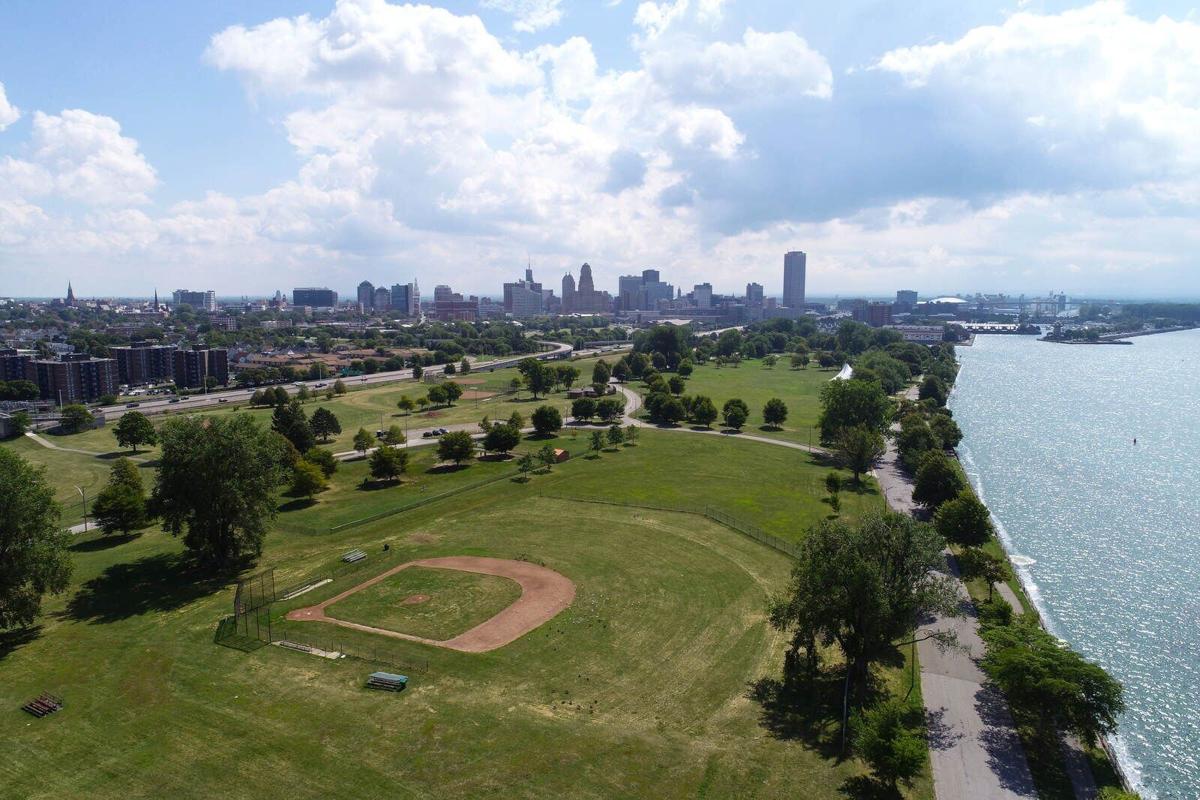
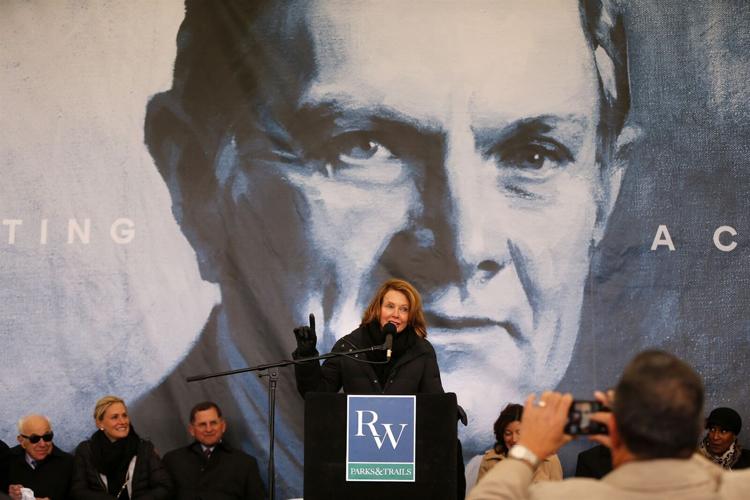
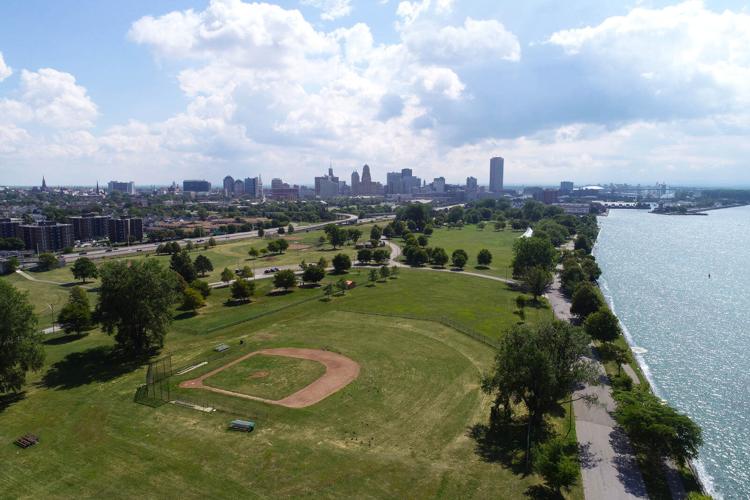
When the Ralph C. Wilson Jr. Foundation announced it would spend $50 million to remake LaSalle Park in Buffalo a little over three years ago, the price tag had people buzzing.
It turns out it wasn't nearly enough.
The estimated amount to be spent is now $140 million and counting, but that isn't a surprise to the foundation, which is making the donation for the since-renamed Ralph C. Wilson Jr. Centennial Park. The plan was to use the initial gift as a starting point for the community to decide what it wanted the park to be, and then to work with partners to fund and sustain the plan that emerged.
"It sounds like a lot of money, but we are completely transforming 90 acres of waterfront, addressing connection issues, utilities, roadways, bridges and a hundred-year-old seawall that is deteriorating," said Andy Rabb, Buffalo's deputy commissioner for parks and recreation.
People are also reading…
"If you look at how some of the private money is being utilized with existing state, federal and other grants, I think we're really addressing what the community is asking for, and doing it in a way that can be maintained and realized," Rabb said. "It is a lot, but it is a big park project and nothing like this has happened in a long time."
The Wilson Foundation's initial $100 million announcement called for $50 million for the park and $50 million to add trails in Western New York, with $10 million set aside for each project for an endowment. The foundation also announced it was giving $100 million to southeast Michigan, where Ralph Wilson had lived, to be split similarly on a park project and to create trails.
Both regions have followed a similar public process, with the same architect designing both parks.
In Buffalo, community input led to a decision to boost access to the park with a new pedestrian bridge over the I-190 and a trail extending behind Waterfront Village. Subsequent design and engineering studies revealed the shoreline needed to be strengthened to withstand storms and flooding that could become more destructive due to climate change.
Those two infrastructure projects have added up to a little more than $50 million alone.
Erecting a maintenance building, constructing a neighborhood playground on 4th Street at the other end of the bridge, and repairing a water main are among the other expenses that have come along.
The Wilson Foundation has committed $80 million in all to date, including $13.6 million in grants for design, engineering and project management services. That amount includes an endowment that has grown from an initial $10 million commitment to $16 million.
Financial support for the park's transformation is also coming from New York State, the City of Buffalo and the federal government, as well as smaller entities such as the Buffalo & Erie County Greenway Fund Standing Committee and the Great Lakes Commission.
Significant funding announcements are also expected in early 2022.
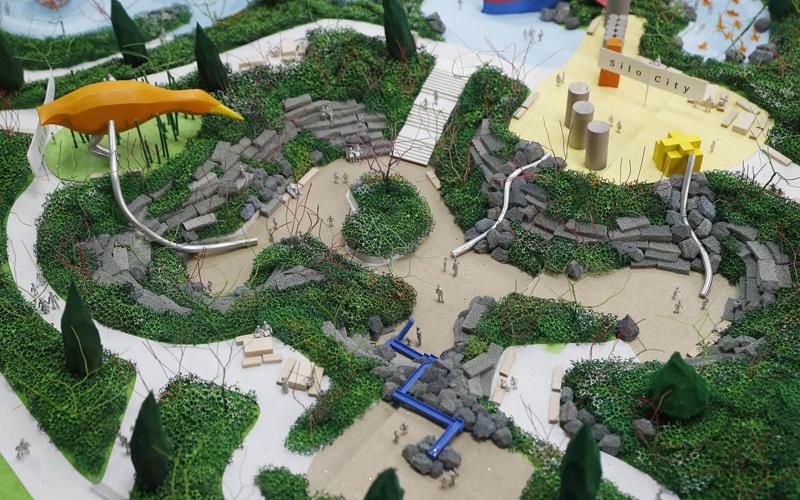
The new park, being designed by Brooklyn-based park designer Michael Van Valkenburgh Associates, will see topography, including hills and valleys, added to what is now a flat park. A 2.5-acre playground is planned, along with improved ball fields, cycling paths, an athletic loop and new dog park.
The water, where the mouth of Niagara River meets Lake Erie, is also a big part of the park's reconstruction. There will be ecological habitats, a large inlet, a kayak launch and a promenade to walk by the water.
The Wilson Foundation easily could have held the line after offering $50 million, Mayor Byron Brown said, but instead listened to what the community wanted, including a safer pedestrian bridge that will replace the one there now.
"It's great from my perspective that Wilson didn't say, 'Hey, we already gave you $50 million, you can't fix the seawall, you can't do this, you can't do that,' " Brown said. "They had a commitment to do the things that needed to be done to make it world-class."
'Imagine LaSalle'
After the Wilson Foundation announced its $50 million grant, it sought community input through a process called "Imagine LaSalle."
The LaSalle Focus Group, consisting of 21 people including several from the West Side, visited Brooklyn Bridge Park in Brooklyn and Maggie Daley Park in Chicago, both designed by Van Valkenburgh, as well as Washington Park in Cincinnati. The trips were intended to expand the group's awareness of parks to show what was possible in Buffalo.
The process also brought 400 people to public meetings, and got feedback from 1,100 community surveys written in several languages for the multicultural West Side. Youth from the nearby Belle Center took photographs and wrote about what they wanted to see in the park.
Out of that process came interest in several of the features planned for the park, including the new pedestrian bridge.
"The current bridge is a real utilitarian bridge that does not feel safe," Rabb said. "You have to go up steep ramps and you can't see across it. It's narrow and not well-lit. People don't enter the park that way."
He said the new bridge, whose design was chosen by a jury, will address those concerns.
"It's more open, well lit, wider, more airy and you can see all the way across it," Rabb said.
The cost of the bridge is $16.4 million. New York State committed $7.5 million, the City of Buffalo $3 million and the Wilson Foundation $5.9 million, including $900,000 for engineering studies.
The need for greater seawall protection and to protect 13 of the park's 90 acres from flooding came out of hydrology and engineering studies conducted by Buffalo Niagara Waterkeeper, another of the project's partners.
Waterkeeper is developing a Buffalo Blueway that will soften the shoreline to make it more nature-based while developing a launching pad for kayaks, a fishing perch and a place to sit and watch the sunset.
The need to protect the park against extreme weather conditions that are becoming more common soon shared equal importance.
"What was really surprising to me was the effect of lake levels and the effect of climate change and the need for shoreline resiliency," said J.J. Tighe, who directs the Wilson Foundation's Parks & Trails Initiative.
"This is a real issue that would had to have been addressed whether this park project came along or not," he said. "The seawall is reaching the end of its useful life."
Tighe said it will cost $35 million to fortify the shoreline against ice, seiche, tall waves and other rough weather conditions, and to create the ecological habitats and public access.
The project team has also requested additional funding for flood studies for the park and to see what other areas along the Buffalo waterfront are at risk of flooding and climate change.
Jill Jedlicka, Waterkeeper's executive director, said the shoreline access, ecosystem improvements and climate resiliency being created are critically important features of the park project.
"There will be nothing like this in Western New York, and it really is going to change our waterfront for the next several generations," Jedlicka said.
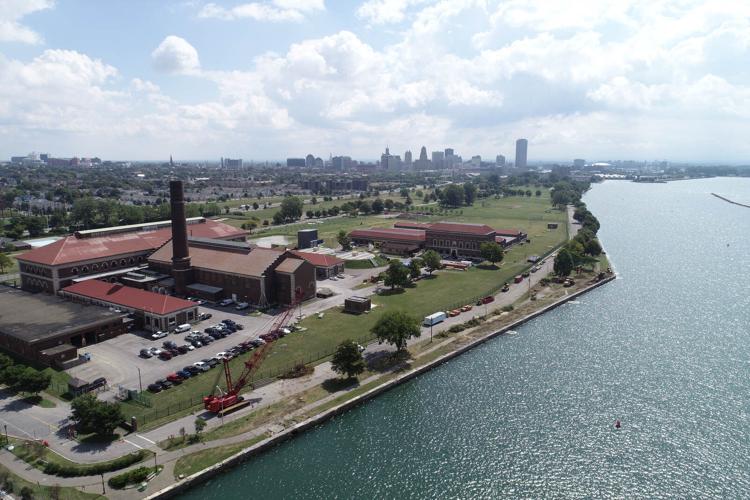
The U.S. Army Corps of Engineers is completing a related $8.5 million project, paid for with federal funds, to rebuild the portion of the seawall in front of the Col. Ward Pumping Station for storm protection.
Buried bottles
The project has also helped show the twists and turns in the park's evolution.
Old Iroquois brewing bottles were found buried in what was once municipal waste, before the park was created in the 1930s, said Gabriel Schmidbauer, the Army Corps' project manager.
The city just finished repaving the pedestrian and bike path along the water, including a decorative fabricated railing.
The Wilson Foundation is funding changes in a 22-acre park in Detroit that also received $50 million at the time of the Buffalo project, and similarly has been renamed for Wilson. The Detroit park has also seen additions to its plan "similar in nature" to what's happening in Buffalo, Tighe said.
Construction on the Buffalo park is expected to begin in late spring or early summer 2022. The project could be completed in two to three years "if everything falls into place," he said.
Robert Shibley, dean of the University at Buffalo's School of Architecture and Planning who has facilitated the public meetings, continues to be impressed by the process established early on by the Wilson Foundation and other partners to be responsive to the park's and the public's needs.
"Part of the purpose of the public engagement was to lift up the aspirations in the first place," Shibley said. "If the measure of the budget that is required to do it right at this point in time is any indication, we've more than doubled the aspirations."
Shibley doesn't expect it to stop there.
Over time the planned Ralph Wilson Park Conservancy, an 11-member board that will include members from the LaSalle Focus Group, will undoubtedly make additions to the park, too.
"Like the city is never done, neither is the park," he said.
Mark Sommer covers preservation, development, the waterfront, culture and more. He's also a former arts editor at The News.


