

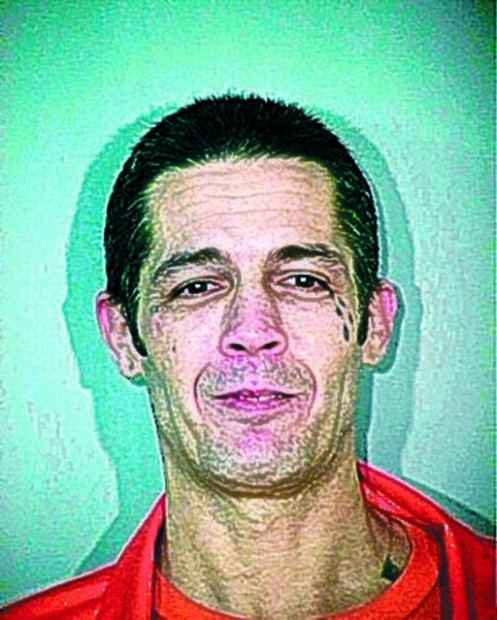
For six weeks over the summer of 2005, Dominique Martinez and his family lived in mortal fear after a panel of seven strangers decided he should face the death penalty for killing someone during a kidnapping for ransom.
Today Martinez is facing life in prison, but not death. The panel reversed itself after obtaining evidence he participated in the murder, but was not the trigger man.
He was lucky. Since Pima County started using the panel five years ago it has gone from having one of the highest rates of death-penalty cases in the nation to among the lowest.
Just one of 65 accused killers charged in Pima County last year now faces the death penalty, compared to 44 of the 89 first-degree murder defendants charged in Maricopa County.
For Christopher Payne, the facts went the other way, as prosecutors will seek to have him put to death for the heinous way in which he is accused of killing his children, Ariana, 4, and Tyler, 5.
People are also reading…
While the age of the victim is a consideration in death-penalty cases, the decision isn't automatic, even for child killers.
Three weeks after Payne was arrested in the deaths of his children, another Tucson parent — Diane Marsh — was accused of killing her 5-year-old son with an overdose of cold medications. The County Attorney's Office still hasn't decided whether to present the case to the capital murder panel of senior prosecutors, despite indications the boy was abused.
"Anytime someone harms a child it's cruel, heinous and depraved, but that doesn't mean it always meets the legal definition of an aggravating factor for the death penalty," County Attorney Barbara LaWall said.
There is no such thing as a "slam dunk," LaWall said. No matter how violent, senseless or sickening a crime may appear on its surface, a death-penalty decision must be based on legal issues, LaWall said.
With Maricopa County Attorney Andrew Thomas seeking the death penalty at a far more frequently than LaWall, the debate over when the death penalty is sought, and by whom, is heating up in Arizona.
Both LaWall and Thomas leave the life-or-death decision to a panel of senior prosecutors, although both retain final veto power. Until five years ago, the decision in Pima County was made by two seasoned prosecutors within LaWall's office.
In Arizona, prosecutors must be able to prove at least one of 14 different "aggravating factors" before a defendant can become eligible for the death penalty.
In the case of Payne, they found the fact that more than one death took place, the age of the victims, and that the deaths were "especially heinous, cruel or depraved" warranted the ultimate penalty.
Chief trial counsel Rick Unklesbay said words such as "cruel" and "depraved" take on special legal meaning when considered as factors in a death-penalty decision. To be "cruel," the state needs to show the victim was conscious and aware of impending death, while "depraved," indicates the suspect relished the act, he said.
Other factors include such things as whether the crime was committed for financial gain, the suspect's criminal history, whether the suspect was on probation for another felony, and whether the victim was a police officer.
The panel is given the facts of the case, information about the defendant, victim and witnesses, photos, and the autopsy report, and sometimes arguments against the death penalty from defense attorneys.
"We all bring something different to the table," said Unklesbay. "Barbara looks at them differently than I do. I think she and David (Berkman, chief criminal deputy county attorney) are more clinical than I am."
Berkman and LaWall tend to focus on what the statutes require and how prosecutors can meet their burden in front of a jury.
Unklesbay, a 26-year veteran who visits almost every murder scene, approaches it from a different angle.
"I go through the murders I've seen and I try to see how it fits in. All murders are bad, but I try to decide just how bad was this murder and just how bad is this defendant."
Proportionality also is considered by the entire panel.
"One of the ways we seek justice is when similar individuals commit similar offenses, we attempt to treat them similarly." The problem is that no two cases are exactly the same, LaWall said.
A lot of subjective issues related to whether a conviction is realistic come up, like witnesses who aren't credible. Gang members with bad attitudes who can barely speak intelligently don't make good witnesses, Unklesbay said.
Sometimes victims aren't sympathetic characters or, conversely, the defendant is, which can influence a case.
In 1999, the County Attorney's Office chose not to seek the death penalty against Daniel Ray Averett for splashing acid in the eyes of Wal-Mart executive Kurt Imel, stabbing him with a kitchen knife, and bashing in his head. Averett was brain-damaged and had been convinced by Imel's wife and daughter that Imel was an abusive father who deserved to die.
Also, jurors aren't likely to sentence one drug dealer to death for killing another drug dealer, although they may be more inclined to do so if the victim was burned alive or died while begging for his life, LaWall said.
"Nobody deserves to be murdered, but as human beings, people do take those things into consideration," LaWall said.
Pima County Public Defender Bob Hooker and defense attorneys Rick Lougee and Joe St. Louis much prefer the way LaWall's office handles death-penalty cases now.
Before the panel was implemented, the death penalty was sought on the "subjective wishes" of one or two people, Lougee said.
Lougee speculates the number of death cases also has diminished because of questions about DNA evidence.
"There's greater uncertainty right now over the reliability of the verdicts; people just aren't sure about the science anymore," Lougee said. "That affects jurors' willingness to impose the death penalty."
There were times in the past when he was alarmed by the decisions being made in Pima County, St. Louis said. "I saw cases where they should not have sought it and I wasn't convinced proportionality was being taken into consideration." The County Attorney's Office is being much choosier now, he said.
Last summer, a panel of the American Bar Association released a report on the death penalty in Arizona that included a recommendation the attorney general or some other outside entity, rather than individual elected county attorneys, decide who should be eligible for the death penalty.
The study showed that how murder defendants were treated depended upon where the crimes were committed, said panel member Larry Hammond, a Phoenix lawyer.
The differences in the number of death-penalty cases in Maricopa County and Pima County "can't be justified in any demographic way," Hammond said.
A system such as the federal government uses, with both prosecutors and defense attorneys allowed to make their case to a central power, ensures that every defendant is treated the same, Hammond said.
LaWall called the panel's recommendation "the worst idea I've ever heard of."
"I'm an independent elected official who is responsible to my constituency. One of the things I absolutely have to be able to do is consider who the people are who elected me," LaWall said. "If they don't like the decisions I make, they can choose to have another county attorney."
Every community has different mores, and that fact is evident with what is happening in Maricopa County right now, LaWall said.
Even with all the extra steps and safeguards, Art Martinez, whose nephew Dominique currently is on trial for murder, said the panel still can make mistakes, as shown by the decision to withdraw the death penalty in his case.
The family went through hell during those six weeks they thought Dominique could be convicted and executed, Art Martinez said. "Why did they put the family through this?"
No one, whether it's a single person or a group of people, should have the power to decide death sentences, he said. "Who are we in this world to take somebody's life?"
Kathy Weir, whose brother was one of three people killed during an attempted robbery at a Pizza Hut restaurant in January 1999, wants the death penalty abolished too, but for an entirely different reason.
The killers, Christopher "Bo" Huerstel and Kajornsak "Tom" Prasertphong, were tried a combined five times because of death-sentence issues.
"We went through six additional years of hell because of the death penalty. If they'd been sentenced to life we would've been done with them," Weir said.
Ultimately, the death penalty caused too much heartache, she said.
Where do you stand on the death penalty? Vote in our online poll at http://azstarnet.com/crime


