

Prosecuting those who prey on children is a tough job — tougher still when you have to rely on undersized and outdated facilities.
Limited space in the Southern Arizona Children's Advocacy Center meant prosecutor Susan Eazer and her Pima County Attorney's Office Special Victims Unit colleagues, who determine what charges should be sought against those accused of abusing children, spent hours watching DVDs of children painfully describing what was done to them to a specially trained interviewer.
There just wasn't room for everyone who needed to be part of the investigation to be that close.
After the first of the year, though, prosecutors will take turns watching the interviews in person at a brand-new children's advocacy center on East Ajo Way.
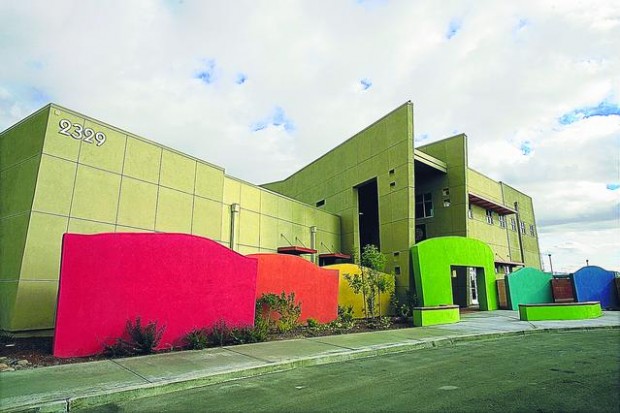
The Southern Arizona Children's Advocacy Center, which opened in late October, is a 21,000-square-foot facility devoted to helping children and their families recover from abuse while giving law enforcement agencies tools they need to pursue justice.
People are also reading…
The original advocacy center started out in 1996 in a couple of rooms at Kino Hospital.
It was created in response to a system that forced victimized children to be dragged from place to place and required to tell their story again and again to law enforcement officers, Child Protective Services and prosecutors, said Wilene Lampert, executive director. They were also forced to go to sterile, unwelcoming hospitals for medical examinations.
Most recently, the advocacy center operated out of an old building with a tiny waiting room, tiny examining room and small interview rooms, Eazer said. Sadly, the need has outgrown the building.
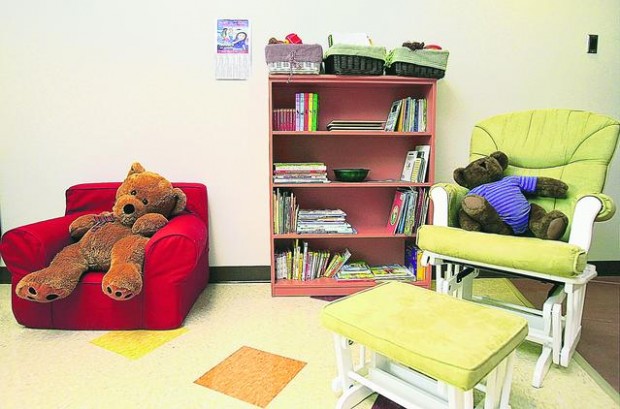
The new facility is large and open, with extra examining and interview rooms and large waiting and playing areas, Eazer said.
Children advocacy centers allow children to tell their story once in a child-friendly atmosphere as detectives, CPS workers and prosecutors watch from another room, and as it's being recorded for defense attorneys, Lampert said. Sexual-assault nurse examiners, located on the same premises, can do what they have to do during the same visit.
The new advocacy center is so large, several Pima County Sheriff's Department and CPS investigators have been able to move in completely and the Tucson Police Department and Pima County Attorney's Office have offices there as well.
Twice per month, representatives from the law enforcement agencies and CPS meet with mental health and social service organizations to discuss child- abuse trainings, protocol development and to review problematic cases.
Eazer plans to rotate her prosecutors in and out of the center on a weekly basis.
A prosecutor will attend every forensic interview and be on hand to answer detectives' questions on such things as search warrants — without having to play phone tag.
"There are certain times when a prosecutor might want to ask for clarification during the actual interview," Eazer said.
The facility, which was built and furnished with 2004 bond funds and community donations, is all about making sure children are less traumatized than they might be otherwise, while ensuring the investigation goes as smoothly as possible from a policy-and-procedures standpoint, Eazer said.
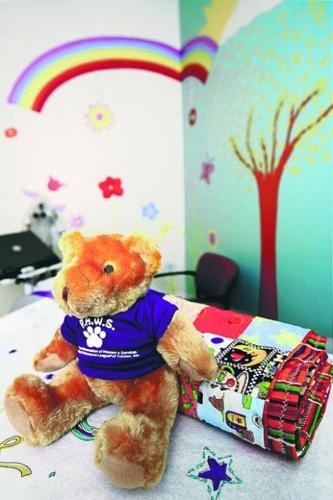
The entire facility — right down to the colors of the walls, carpeting and furnishings — has been designed to promote healing, calmness and safety, Lampert said.
Every year, the advocacy center serves approximately 1,000 children and their families, Lampert said.
Approximately 80 percent of the children live in Pima County. The rest are from other Southern Arizona counties and from Indian reservations, Lampert said.
Eighty-seven percent of the children helped last year were victims of sexual abuse, the rest were physically abused or neglected, Lampert said.
Besides facilitating the interviews and examinations of child victims, Lampert said the center provides crisis intervention and referral services for the non-offending members of victims' families so they can get beyond the abuse.
Follow-up case management is available for at least six months after non-offending family members make their initial visit to the center.
Children who can't return to their homes receive clothes, books, a blanket and teddy bear to take with them to foster care.
The center also has a large prevention and education program, Lampert said. Every year, more than 10,000 children and parents are taught how to recognize, resist and report abuse, she said.
There are 16 children advocacy centers in Arizona and 600 nationwide, Lampert said. Some of them, such as the Southern Arizona Children's Advocacy Center, are private, non-profit, and others are owned and operated by local governments.
The Southern Arizona Children's Advocacy Center is the only one south of Pinal County, Lampert said.
Since the new facility opened, staff members are already seeing an increase in traffic, Lampert said.
"Unfortunately, one of the reasons, I think, is what is going on with the economy," Lampert said.
When parents are stressed, they sometimes take their frustration out on their children, Lampert said.
Secondly, the facility's proximity to Interstate 10 makes it easier for families to find, Lampert said.
By the numbers
800
Forensic interviews done in fiscal year 2007-2008
176
Prevention training provided in FY 2007-2008
$618,478
Operating expenses in FY 2007-2008
$631,075
Grants, contributions, donations, special event income, etc., in FY 2007-2008
Demographics of those served in fiscal year 2007-2008:
41%
Hispanic
27%
white
16%
unknown
8%
black
6%
Native American
2%
Asian
75%
girls
25%
boys
53%
ages 7-12
26%
ages 13-17
21%
up to age 6
For more information on the Southern Arizona Children's Advocacy Center, call 243-6420 or visit www.soazadvocacy.org
SOURCE: Southern Arizona Children's Advocacy Center


