For the second time this week, parents, employees and others shared with Interim Superintendent Tonja Williams their concerns about the Buffalo Public Schools.
They talked about the chaos on school buses and the needs of children with autism. They called for better training for teachers and hiring more teachers of color. They asked for more aides on the buses and more equity in the schools.
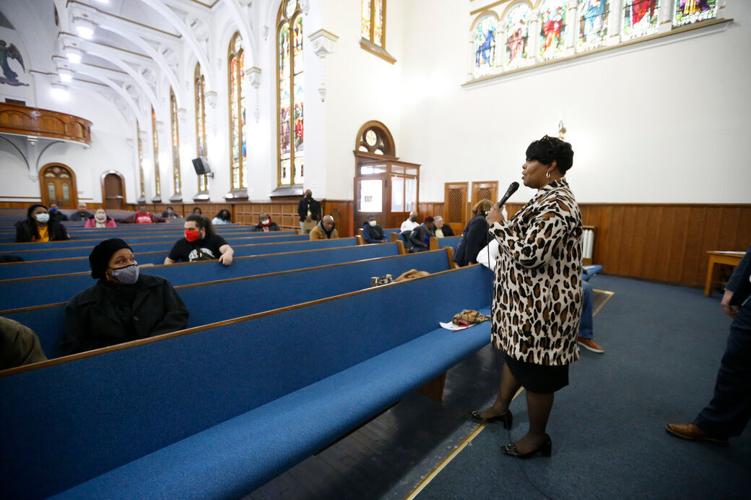
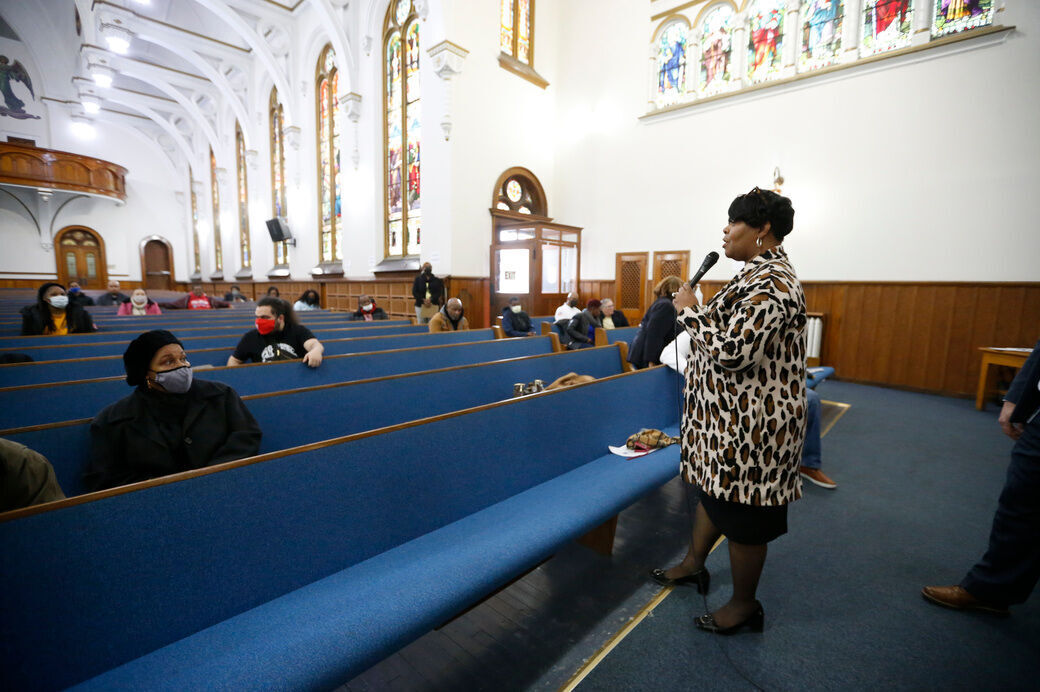
Although several violent incidents in the schools have made news in recent weeks, security issues did not dominate the conversation Wednesday night at Antioch Baptist Church on Fillmore Avenue during the second stop of Williams’ listening tour.
Tamitra Miller said her daughter, who has autism and sickle cell anemia, has faced many challenges at school.
She has been locked in the bathroom, leaving her afraid to go to the bathroom by herself, Miller said. She is sometimes on the bus until 5 p.m., and arrives home anxious. But when she asks teachers how her daughter is doing, they tell her things are going well.
People are also reading…
“They’re not trained to know what’s going on, or how to deal with or talk to these children,” she said. “Children are being diagnosed more frequently with these issues. I think the schools need more help or training to know how to deal with these children.”

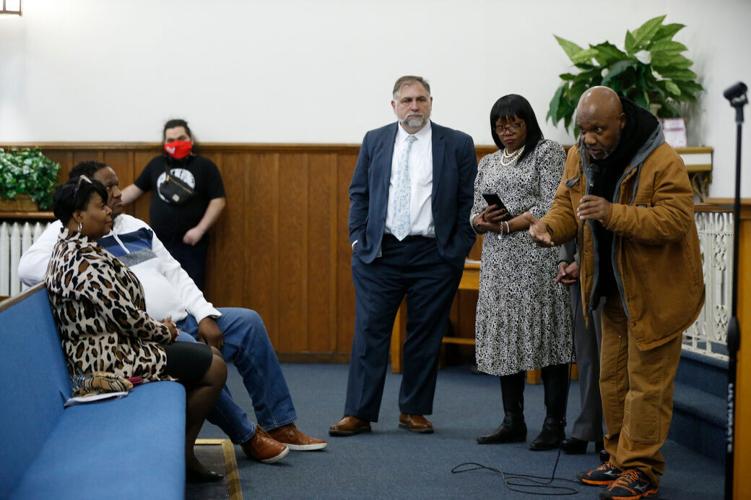
Interim Buffalo Public Schools Superintendent Tonja Williams listens to Leonard Lane at Antioch Baptist Church on Wednesday, March 30, 2022.
The bus driver shortage during the pandemic made an already difficult job that much harder, veteran driver Rickey Carter said. At some points, there would be 60 students on a bus, with no aide.
Too often, before the bus even pulls away from the school in the afternoon, children are cursing at one another or at the bus driver.
“We write them up and nothing happens,” Carter said. “The whole point is, we need aides to watch our backs.”
Most of the speakers from among the 20 or so people who attended the forum spoke in general terms about schools in the district.
Kelly Camacho, though, pointed to the lack of equity specifically at her alma mater, City Honors. While the East Side is home to many low-income people of color, she said, many of the students at City Honors are white and from families with more money.
And the resources given to other schools do not seem comparable to those given to City Honors, said Camacho, a community organizer with Citizen Action of New York.
“Why are schools like City Honors wondering how they’re going to have a rowing team,” she said, “while other schools don’t have textbooks or computers?”
More than one speaker appealed to Williams to hire more Black and Hispanic teachers, and to hire more teachers who live in the city.
The Rev. Brian Robinson of Fillmore Community Church works as a teacher aide in the district.
“Students need to see more people that look like them,” he said. “We need to see more people of color in our schools. And I don’t just mean as teacher aides and teacher assistants, but instructors in math and science and history and technology.”
Years ago, he said, many teachers lived in the communities where they taught, and that made a difference. Students and their parents would see teachers in church, at the barbershop and in the supermarket, he said.
“The parents were on a first-name basis with them,” Robinson said. “Now you don’t have that type of dialogue. We need to try to get back to that.”