

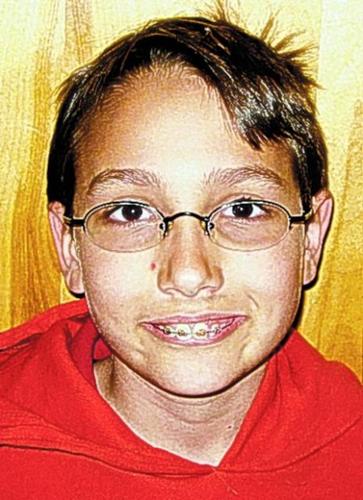
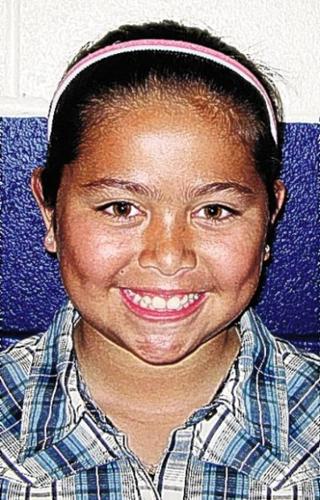
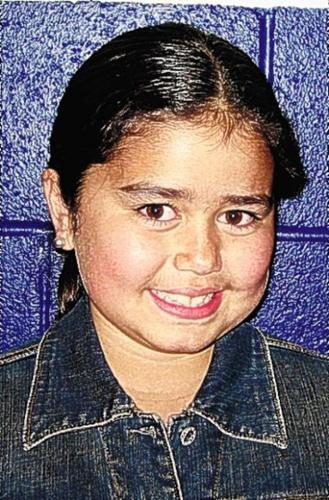
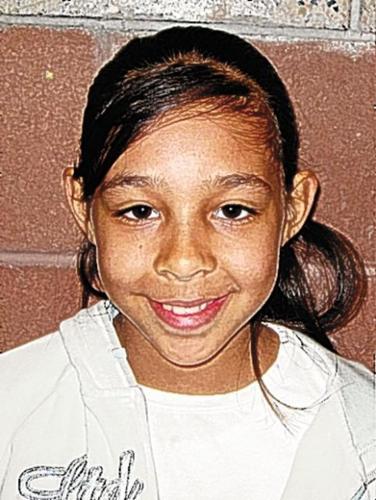
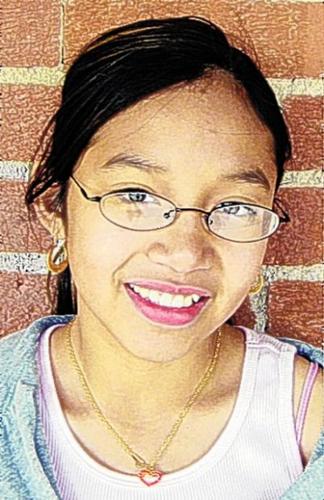
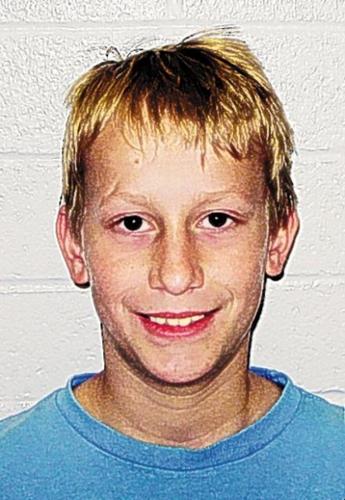
● Here are several examples of what can happen when a child's curiosity is introduced to scientific research. Some had winning ideas, and others were just plain fun. All of the featured Wilson students had winning entries and will go on to compete at the regional level, as will Daniela Diaz and Jasmine Duong.
Easton and Kayla Tilicki
School: Wilson K-8 School (Amphitheater Public Schools).
Grades: Easton, fourth; Kayla, second.
The question: "Is it safe to play in the streets of our neighborhood?"
Why they chose this project: "Me and my sister wanted to play on our street alone, but my mom wouldn't let us," said Easton, who is 9. "We said we will try to prove it to her that we can play on our street alone with our science project."
People are also reading…
Hypothesis: Siblings Easton and Kayla, 8, said speed bumps and law-abiding drivers make their neighborhood safe.
Method: Easton and Kayla used a speed gun to track the speed of more than 100 cars over seven days. Also, they watched more than 100 cars react to a stop sign.
Results: The outcome wasn't what the two had hoped for. Only 16 of 107 cars observed came to a complete stop, which the two determined was long enough to say the word "banana." And only 43 of the 125 cars tracked were actually going the 25 mph speed limit.
Lanea Tuiasosopo
School: Wilson.
Grade: Fourth.
The question: "Which leg angle (60- or 30-degree) combined with ball strike (side, laces or toes) results in the most accurate kick?"
Why she chose this project: "I am a soccer player and I always do a toe kick or a laces kick and it never works," she said. "I wanted to find out if the side kick would still work better than the laces and the toe."
Hypothesis: Lanea, 10, predicted the 60-degree side kick would triumph in the accuracy test because it picks up more power and is easier to control.
Method: She kicked the ball at a target 20 feet away for 10 days. She did each of the leg angles with each of the ball strikes three times a day and measured the distance from the target.
Results: Lanea's hypothesis proved to be correct. At an average of 14 inches from the target, the 60-degree side kick was the most accurate.
The hardest part: "Lining up straight," she said. "I had to make sure I was doing the right kick every time."
Maya Tuiasosopo
School: Wilson.
Grade: Third.
The question: "Does the human eye mix pure colors?"
Why she chose this project: "I love art and learning," she said. "I also love learning new things."
Hypothesis: Maya, 8, predicted people would see a third, blended color when looking at a card with two colors.
Method: She asked 25 people to stand 25 feet away from the colored cards and tallied what color they said they saw. She had each person look at three different cards — one with red and yellow dots; one with red and blue dots; and one with blue and yellow dots.
Results: Only two people saw purple when asked to pick a color from the red-and-blue card. Nineteen people chose green when shown the blue-and-yellow card. And all 25 people who looked at the red-and-yellow card picked the color orange.
What did she think? Maya was most surprised by the results of the red-and-blue card test. She expected more people to see a blended color.
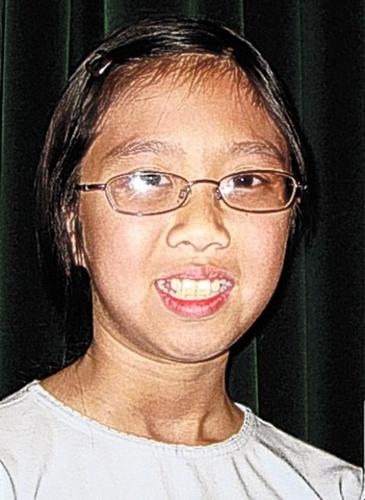
Jasmine Duong
School: Estes.
Grade: Fourth.
The question: "How do different surfaces affect the distance mealworms can travel in two minutes?"
Why she chose this project: "I am really interested in bugs," she said.
Hypothesis: Jasmine, 10, predicted her eight mealworms would travel a greater distance on a piece of aluminum foil.
Method: She dabbed a different color nail polish on eight mealworms and let them move around for two minutes on pieces of foil, carpet and cardboard. She marked each time they turned, connected those dots and measured the distance they traveled.
Results: It wasn't foil that had the mealworms moving great distances. On cardboard, the mealworms moved an average of 2.03 inches. On foil, the mealworms managed to move an average of 1.28 inches.
The hardest part: "The hardest part was to get them moving. I just tapped them a little right after I started timing."
Jessica Burch
School: Homer Davis Elementary School (Flowing Wells School District).
Grade: Fifth.
The question: "Which household liquid cleans pennies the fastest?"
Why she chose this project: "I decided to do pennies because my brother has a penny collection and he wanted them clean."
Hypothesis: Jessica, 10, thought an acidic liquid, like lemon juice, would shine a penny quicker than other liquids.
Method: She soaked pennies in pizza sauce, milk, lemon juice, salsa, vinegar and water. She checked on the progress of each penny after the first 30 minutes, after the first hour and again after 24 hours.
Results: Pizza sauce did the trick in 30 minutes. After the first hour, the lemon juice completed the task.
What did she think? "I really couldn't believe it because I looked up in my research and the more acid it has, it's going to clean better," she said. "I didn't think pizza sauce would work because it doesn't taste sour like the lemon juice."
Maureen Ramirez
School: Homer Davis.
Grade: Fifth.
The question: "What type of orange juice has the most vitamin C?"
Why she chose this project: Maureen, 11, logged onto the Internet for inspiration. Plus, it wasn't hard to find the necessary supplies. "We had the resources to do it," she said.
Hypothesis: Maureen, 11, thought freshly squeezed orange juice would contain the most vitamin C.
Method: She added a boiled mixture of iodine and corn starch to freshly squeezed, frozen and bottled orange juices and observed how many drops of orange juice it took to turn the solution clear. The clearer the liquid, the more vitamin C it contains.
Results: Though the frozen juice turned clear almost immediately, it didn't stay that way. It took an average of 7.3 drops of freshly squeezed juice to turn the solution clear, but it stayed that way.
What did she think? "I wasn't all that surprised," she said. "I heard freshly squeezed orange juice was the best for you."
Daniela Diaz
School: Estes Elementary School (Marana Unified School District).
Grade: Sixth.
The question: "What type of music will attract the hamster most and make it complete the maze first?"
Why she chose this project: "We were looking on the Internet and I wanted to do something with my hamster," she said. "I saw them doing the same thing with a gerbil. I wanted to know if I could do it with my hamster."
Hypothesis: Because rock music is louder and more attracting, Daniela said her hamster, Rizzy, would find his way through the maze quicker listening to a rock tune.
Method: Daniela, 11, clocked the time it took her hamster to finish the maze while jazz, rock and classical music played. She sent Rizzy through the maze three times to each genre.
Results: It was jazz, not rock, that actually moved Rizzy through the maze quicker. While listening to jazz, Rizzy completed the maze in 10 seconds. The hamster's slowest time was clocked at 1 minute, 46 seconds — listening to rock.
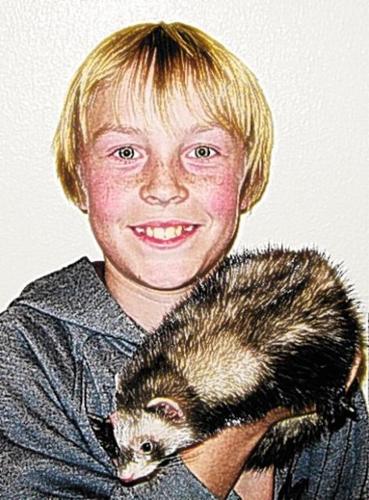
Austin McMains
School: Estes.
Grade: Fifth.
The question: "Will the ferret get faster every time it goes in the maze?"
Why he chose this project: "I like ferrets," he said. Austin's ferret, Bonnie, was the cooperative assistant.
Hypothesis: Austin, 10, expected the ferret to increase its speed each time it went through the elaborate maze.
Method: He let Bonnie scamper through the maze twice a night for 10 days.
Results: The ferret improved its time, but was prone to slow speeds as well. Once, it managed to find its way out in five seconds. But later, it would need 2 minutes, 24 seconds to finish.
What did he think? "They were pretty good," he said about the results. "She was really slow at first and started getting faster then slower."
The hardest part: "Probably making the maze," he said. Austin had a little help constructing the maze from his dad.
Rachel Logsdon
School: Homer Davis.
Grade: Fifth.
The question: "What cookie do people prefer more — Oreo, Chips Ahoy or Nutter Butter?"
Why she chose this project: "I was having a hard time picking a project, but then my dad gave me ideas," she said. "He said I should do this one and I thought it was a really good idea."
Hypothesis: Rachel, 10, figured that most people would prefer Oreo cookies.
Method: She asked 12 people to wear a blindfold and taste each cookie. After snacking on the cookies, her subjects would pick their favorite and least favorite.
Results: Early on, it seemed as though Oreo would prevail, but Chips Ahoy escaped with the coveted title. But Chips Ahoy also was the least favorite of the three snacks.
What did she think? "I was kind of shocked because I thought Oreo would win," she said. "It is a big-selling cookie."
Hardest part: "The hard part was just picking what to do," she said.
Avery Claridge
School: Homer Davis.
Grade: Fourth.
The question: "What makes crystals different colors?"
Why he chose this project? "My dad takes me to the gem and mineral show and we get crystals," he said. "I wondered how crystals get their colors."
Hypothesis: Avery, 10, suspected that if he added his own ingredient to the chemicals used for crystal growing, the color of the crystal would change.
Method: He had two separate experiments. In one, he used Epsom salt to grow three crystals. One was a control crystal. In the other two jars he added blue and red food coloring and observed what happened. His second experiment involved growing crystals with vinegar and popcorn rock. Again, one was a control growth. He added red, blue and green food coloring to the other three jars and observed.
Results: The crystals' colors matched the color of the chemical added.
The hardest part: "I think the hardest part was typing all of it," he said of his report.
Easton and Kayla Tilicki
School: Wilson K-8 School (Amphitheater Public Schools).
Grades: Easton, fourth; Kayla, second.
The question: "Is it safe to play in the streets of our neighborhood?"
Why they chose this project: "Me and my sister wanted to play on our street alone, but my mom wouldn't let us," said Easton, who is 9. "We said we will try to prove it to her that we can play on our street alone with our science project."
Hypothesis: Siblings Easton and Kayla, 8, said speed bumps and law-abiding drivers make their neighborhood safe.
Method: Easton and Kayla used a speed gun to track the speed of more than 100 cars over seven days. Also, they watched more than 100 cars react to a stop sign.
Results: The outcome wasn't what the two had hoped for. Only 16 of 107 cars observed came to a complete stop, which the two determined was long enough to say the word "banana." And only 43 of the 125 cars tracked were actually going the 25 mph speed limit.


