
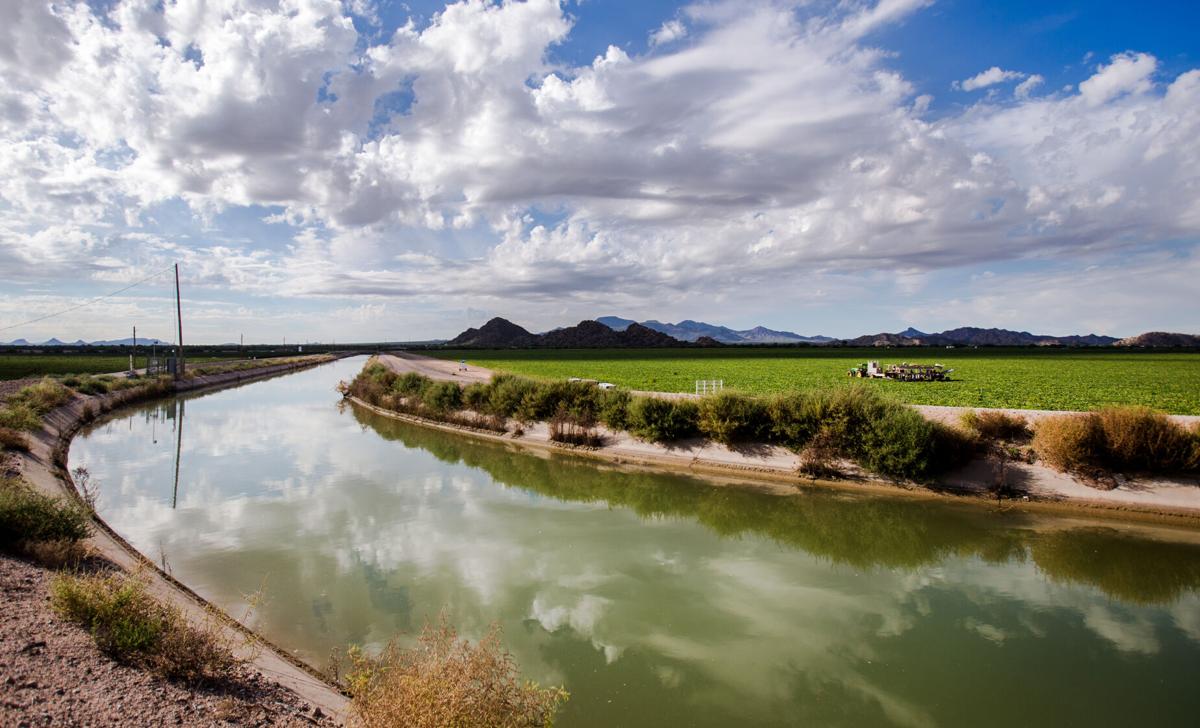
While it's clear Lake Mead will get less water from Lake Powell this year, it's not clear how that cut will affect how much water Arizona and the other two Lower Colorado River Basin states will get from Mead as a result.
The U.S. Bureau of Reclamation plans a 20% cut in its release of river water from Powell to Mead to keep Powell propped up in the face of record low mountain snows, possibly record low spring-summer flows into Powell, and record-setting heat across the West in March.
If the bureau passes that cut on to water users in the Lower Basin by reducing water releases from Mead, that could set off sudden cutbacks in river water deliveries to the Central Arizona Project that serves Tucson, as well as to Yuma-area and Imperial Valley farmers and to large Southern California water users.
They're normally told much farther in advance how much river water they'll get from Mead. So a mid-year cutback of this nature would deprive them of water they've planned on getting.
People are also reading…
But if the feds maintain their current releases from Lake Mead to the states, that will lower the already depleted reservoir even further. Lake Mead is 31% full. Lake Powell is only 24% full. In 2000, by contrast, both were close to capacity.
Under its new plan, announced last month, the Bureau of Reclamation will reduce releases from Powell to Mead by 1.48 million acre-feet, from an original planned release of 7.48 million acre-feet.
The 1.48 million acre-feet is somewhat less than the total amount of water the Central Arizona Project canal system delivers from the river to Phoenix and Tucson over two years.
Tucson Water gets most of its current drinking supply from CAP water that it recharges into a local aquifer and pumps back out again.
But if releases from Mead aren't cut, the reservoir would keep declining further, raising concerns about its long-term health and the possibility it will hit "dead pool" levels, at which no water could be released at all.
"If future years are dry like this one, I hate to use the phrase 'new normal,' but what we're seeing now could be the new normal," said Eric Kuhn, an author and former general manager of a Colorado water district.
Every year, Lake Mead sends water downstream that people in Tucson and Phoenix drink, water that irrigates crops in the Yuma area and Southern California's Imperial Valley and water that serves millions of Southern California residents.
But this past month, the Star has been unable to get answers from key state and federal agencies on how the cut in water deliveries from Powell will affect how much is delivered from Mead to downstream users.
Asked that question by the Star, Reclamation spokeswoman Becki Bryant said on April 21, "At this time, we do not have any additional comments to share," beyond a news release the agency had issued announcing the cuts in releases to Mead and a related plan to release more water into Lake Powell from the upstream Flaming Gorge reservoir.
Asked the same question by the Star, Arizona Department of Water Resources spokesman Doug MacEachern replied, "We can't speculate on how individual users may or may not be affected at this point. However, we can say that the reduced delivery of only 6 million acre-feet from Lake Powell to Lake Mead" could require water use reductions by Lower Basin water users.
The reduction in releases from Powell will knock Mead's water level down 20 feet, said Bronson Mack, a Southern Nevada Water Authority spokesman. He said he based that estimate on information he received in a recent Bureau of Reclamation webinar.
A 20-foot drop could push the lake below 1,035 feet — at which Hoover Dam's power supply would be cut 70% from what it generated in 2000 — by as early as June, federal forecasts for the river show.
By fall 2027, the lake could fall far enough that a 20-foot decline would drop Mead as low as 1,005 feet. That's a shade above the 1,000-foot water level that Reclamation has vowed to protect at Mead if at all possible.
At 950 feet at Mead, Hoover would be unable to generate any electricity. At 895 feet, Mead would hit "dead pool."
Because of the risks from additional water level declines, former Reclamation official David Wegner said he expects the bureau will ultimately reduce releases from Mead, but he's not sure when.
"I suspect they are going to wait till a little bit later in the year to see how much they have," said Wegner, who today sits on a National Academy of Sciences advisory board. "You want to know how bad off it really is. Get the data and then make the decision."
But CAP Board President Terry Goddard said he doesn't expect any immediate cuts in Lake Mead releases. He said Reclamation has contracts with the Lower Basin water users to deliver a specified amount of water through the end of 2026, and he believes the amount of river water it's under contract to deliver is 7.48 million acre-feet.
The bureau could well release the amount of water Lower Basin states are expecting even if that lowers Mead below the level at which its water will be high enough to flow into the intakes leading to Hoover Dam's turbines, thereby severely restricting its ability to generate electricity, he said.
"Right now, the first demand for the bureau to satisfy has got to be water," Goddard said.
Asked if the low reservoir levels and the warm dry weather have put officials in a pinch, he said, "Pinch is the nicest word you can use. We’re in a hell of a pinch."
"Someone said we were waiting for Noah’s flood but El Niño will do," said Goddard, referring to numerous scientists' forecasts that the coming fall and winter will bring El Niño weather conditions to the world, which often mean cooler, wet weather in the Southwest.
Contact Tony Davis at 520-349-0350 or tdavis@tucson.com. Follow Davis on Twitter@tonydavis987.

Tony Davis
Reporter


 Federal actions could trigger Colorado river litigation