SANTA ROSA, Calif. — Madison Bernard climbed into bed before dawn with her toddler, Charlotte, who was asleep next to a nightstand strewn with straws, burned tinfoil and a white powder.
Hours later, the mother woke and found her daughter struggling to breathe, according to investigators who described the scene in court documents.
After being rushed in an ambulance to a hospital, the 15-month-old girl died from a fentanyl overdose. Her mother and father, whom authorities said brought the drugs into their California home, were charged with murder and are awaiting trial.
The couple has pleaded not guilty but are part of a growing number of parents across the U.S. being charged amid an escalating opioid crisis that has claimed an increasing number of children as collateral victims.

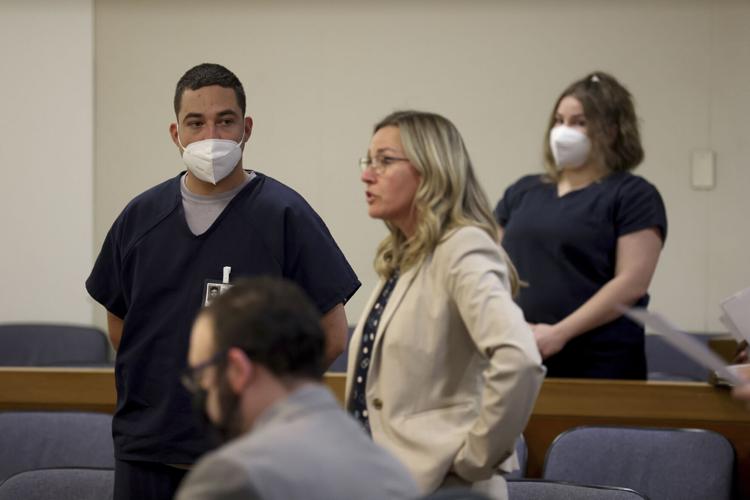
Evan Frostick, left, and Madison Bernard, right, both charged with murder and child cruelty in the death of their daughter, Charlotte Frostick, appear before a judge Sept. 1, 2022, at the Sonoma County Superior Court in Santa Rosa, Calif. They are part of a growing number of parents across the U.S. prosecutors have charged in the fentanyl overdose deaths of their children since the pandemic started.
Some 20 states have so-called “drug-induced homicide” laws, which allow prosecutors to press murder or manslaughter charges against anyone who supplies or exposes a person to drugs causing a fatal overdose. The laws are intended to target drug dealers.
People are also reading…
In California, where the Legislature has failed to pass such laws, prosecutors in at least three counties are turning to drunken driving laws to charge parents whose children die from fentanyl overdose. It’s a unique approach that will soon be tested in court as the cases head to trial.
Supporters of the ramped-up enforcement say that by now those who use the synthetic opioid know the lethality of the drug and, like drunken drivers, they should know the consequences of exposing their children to their actions.

Critics say the parents didn’t intend to kill their children but instead made poor choices because of their addictions and are being further punished instead of being offered help.
The debate comes as the country battles with how to effectively diminish the use of the highly accessible and extremely deadly drug.
Authorities believe some of the children died after touching something with the powdery substance and then touching their eyes or mouth. In one case, the drug may have been on the hands of a parent who prepared the baby’s bottle. The drug is not absorbed into the skin but experts say it can be lethal if as little as 2 milligrams, about the weight of a mosquito, enters the body.
“These are tragic cases because drug addiction has destroyed a precious life and the parents face the consequences of their reckless actions,” said Charlie Smith, the top prosecutor in Frederick County, Maryland, and president of the National District Attorneys Association.
Parents also can face charges if young children become seriously ill or die from crack, heroin and cocaine, but such cases are rare because a sizeable amount must be ingested, Smith said.
"This is really a first in the history of our country because we have a drug on the streets that can potentially kill you instantly with a minor amount of product,” Smith said.

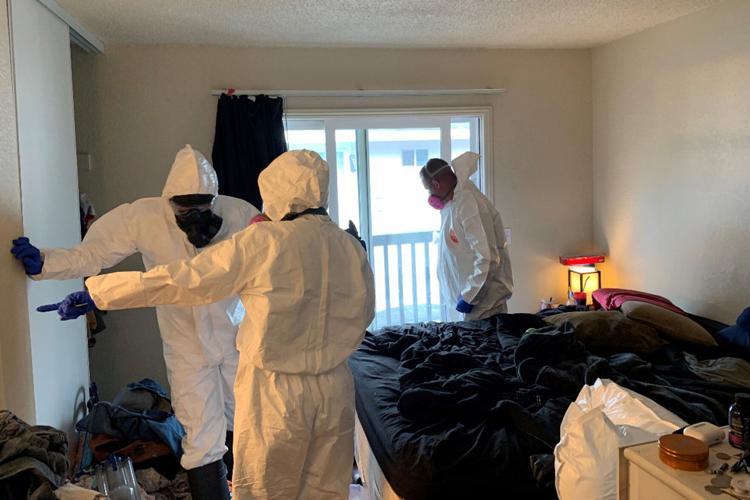
Investigators collect evidence May 9, 2022, from the home of Evan Frostick and Madison Bernard, the parents of a 15-month-old toddler found unresponsive in a bedroom in Santa Rosa, Calif. Prosecutors have been ramping up enforcement efforts as children increasingly become accidental victims of an escalating opioid crisis.
Prosecutors have a difficult decision to make when determining whether to charge parents, but Smith said the goal is to deter others from doing the same.
He prosecuted a case in which parents in Maryland were convicted of involuntary manslaughter in the 2020 death of their 2-month-old son. The Mount Airy couple had mixed fentanyl in the same bathroom where they prepared bottles for their infant.
Jeremy Whitney Frazier and Heather Marie Frazier were each sentenced in December to five years in prison and five years of supervised probation.
The National District Attorneys Association doesn’t track how many parents have been charged for exposing their children to fentanyl, but news reports and interviews with prosecutors show such cases have been on the rise since the onset of the pandemic.
Last month, a Maine woman pleaded guilty to manslaughter after her 14-month-old son’s fentanyl overdose. Investigators found fentanyl on a blanket and sheet where Ashley Malloy’s son Karson had been sleeping.

States such as Maryland that don’t have “drug-induced homicide” laws often charge parents with manslaughter, Smith said.
In California, prosecutors have turned to a drunken driving law. Prosecutors have charged parents with murder based on the “Watson advisement," a formal statement signed by anyone convicted of a DUI charge who says they understand driving under the influence can injure or kill people. The statement can be used against them if they cause another fatal, DUI-related crash.
“I’ve been a prosecutor 25 years now and I can’t recall any other drug that has led to this much destruction and death,” Riverside County Deputy District Attorney Daima Calhoun said.
In Sonoma County, where Charlotte slept with her mom in a messy apartment in Santa Rosa, first responders testified at a preliminary hearing that they found fentanyl in powder form on a nightstand next to the bed. A judge is expected to set a trial date at a Sept. 11 hearing for Charlotte’s mother, Bernard, who woke up to find her daughter struggling to breathe, and her father, Evan Frostick.
“They need to be held accountable under the law because they allowed harm to come to their children and they let their drug use and addiction outweigh taking care of their children and keeping their children safe,” Sonoma County District Attorney Carla Rodriguez said.
Photos: ‘Tranq,’ the new fentanyl additive worsening America’s opioid epidemic

Registered nurse Kathy Lalli treats Ellwood Warren's injuries at the Kensington Hospital wound care outreach van, parked in the Kensington neighborhood of Philadelphia on May 23, 2023. In humans, xylazine can cause breathing and heart rates to drop. It’s also linked to severe skin ulcers and abscesses, which can lead to infections, rotting tissue and amputations. Experts disagree on the exact cause of the wounds, which are much deeper than those seen with other injectable drugs.

A box of Narcan sits in the Savage Sisters' community outreach storefront in the Kensington neighborhood of Philadelphia on May 24, 2023. Generically known as Naloxone, the medication used revive people who have stopped breathing, doesn’t reverse the effects of xylazine. Philadelphia officials stress that naloxone should still be administered in all cases of suspected overdose, since xylazine is almost always found in combination with fentanyl.

People gather outside the Savage Sisters' community outreach storefront in the Kensington neighborhood of Philadelphia on May 24, 2023. Xylazine, a powerful animal sedative that's moving through the illicit drug supply is complicating the U.S. response to the opioid crisis, causing gruesome skin wounds and scrambling longstanding methods for treating addiction and reversing overdoses.

Volunteer registered nurse Jennifer D'Angelo treats a person's skin wounds the Savage Sisters' community outreach storefront in the Kensington neighborhood of Philadelphia on May 24, 2023. Xylazine, a powerful animal sedative that's moving through the illicit drug supply is complicating the U.S. response to the opioid crisis, causing gruesome skin wounds and scrambling longstanding methods for treating addiction and reversing overdoses.

Sarah Laurel, founder of Savage Sisters, speaks with community members at her outreach storefront in the Kensington neighborhood of Philadelphia on May 24, 2023. “Nobody asked for xylazine in the drug supply,” said Laurel. “Before anybody knew it, the community was chemically dependent on it. So now, yes, people do seek it out.”

Sarah Laurel, founder of Savage Sisters, speaks during an interview at her community outreach storefront in the Kensington neighborhood of Philadelphia on May 24, 2023. “Nobody asked for xylazine in the drug supply,” said Laurel. “Before anybody knew it, the community was chemically dependent on it. So now, yes, people do seek it out.”

Dominic Rodriguez speaks with registered nurse Kathy Lalli after she treated his skin injuries at the Kensington Hospital wound care outreach van, parked in the Kensington neighborhood of Philadelphia on May 23, 2023. Xylazine’s effects are easy to spot: users experience a lethargic, trance-like state and sometimes black out, exposing themselves to robbery or assault. “It’s a delayed reaction, I could be walking down the street, it's 45 minutes later,” says Rodriguez, who is homeless and battling addiction. “Then I wake up, trying to piece together what happened.”

Dominic Rodriguez walks away after receiving treatment at the Kensington Hospital wound care outreach van, parked in the Kensington neighborhood of Philadelphia on May 23, 2023. Xylazine’s effects are easy to spot: users experience a lethargic, trance-like state and sometimes black out, exposing themselves to robbery or assault. “It’s a delayed reaction, I could be walking down the street, it's 45 minutes later,” says Rodriguez, who is homeless and battling addiction. “Then I wake up, trying to piece together what happened.”

Sarah Laurel, founder of Savage Sisters, checks on a community member at her outreach storefront in the Kensington neighborhood of Philadelphia on May 24, 2023. “Nobody asked for xylazine in the drug supply,” said Sarah Laurel, founder of Savage Sisters, a Philadelphia outreach group. “Before anybody knew it, the community was chemically dependent on it. So now, yes, people do seek it out.”

Kensington Hospital wound care outreach van is parked in the Kensington neighborhood of Philadelphia on May 23, 2023. Xylazine, a powerful animal sedative that's moving through the illicit drug supply is complicating the U.S. response to the opioid crisis, causing gruesome skin wounds and scrambling longstanding methods for treating addiction and reversing overdoses.

Nick Gallagher reacts as volunteer registered nurse Jennifer D'Angelo treats his skin wounds the Savage Sisters' community outreach storefront in the Kensington neighborhood of Philadelphia on May 24, 2023. Xylazine can cause severe skin wounds, but whether it is leading to more deaths — as suggested by officials in Washington — is not yet clear, according to health and law enforcement professionals on the front lines of efforts in New Jersey, New York and Pennsylvania.

A community member holds a hot cup of coffee at the Savage Sisters' outreach storefront in the Kensington neighborhood of Philadelphia on May 24, 2023. Xylazine, a powerful animal sedative that's moving through the illicit drug supply is complicating the U.S. response to the opioid crisis, causing gruesome skin wounds and scrambling longstanding methods for treating addiction and reversing overdoses.

Sharday Miller, walks away holding extra bandages she received after having her skin treated at the Kensington Hospital wound care outreach van parked in the Kensington neighborhood of Philadelphia on May 23, 2023. Xylazine, a powerful animal sedative that's moving through the illicit drug supply is complicating the U.S. response to the opioid crisis, causing gruesome skin wounds and scrambling longstanding methods for treating addiction and reversing overdoses.

Dominic Rodriguez speaks with registered nurse Kathy Lalli after she treated his skin injuries at the Kensington Hospital wound care outreach van, parked in the Kensington neighborhood of Philadelphia on May 23, 2023. Xylazine, a powerful animal sedative that's moving through the illicit drug supply is complicating the U.S. response to the opioid crisis, causing gruesome skin wounds and scrambling longstanding methods for treating addiction and reversing overdoses.