WASHINGTON — A powerful animal sedative in the illicit drug supply is complicating the U.S. response to the opioid crisis, scrambling longstanding methods for reversing overdoses and treating addiction.
Xylazine can cause severe skin wounds, but whether it is leading to more deaths — as suggested by officials in Washington — is not yet clear, according to health and law enforcement professionals on the front lines of efforts in New Jersey, New York and Pennsylvania. In fact, early data suggests the drug may inadvertently be diluting the effects of fentanyl, the synthetic opioid behind most overdose deaths.
There is broad agreement, however, that much more information is needed to understand xylazine’s impact, to craft ways of disrupting illegal supplies and to develop medicines to reverse its effects.

Sharday Miller walks away holding extra bandages she received after having her skin treated at the Kensington Hospital wound care outreach van parked in the Kensington neighborhood of Philadelphia on May 23. Xylazine, a powerful animal sedative that's moving through the illicit drug supply is complicating the U.S. response to the opioid crisis, causing gruesome skin wounds and scrambling longstanding methods for treating addiction and reversing overdoses.
“We don’t know whether xylazine is increasing the risk of overdose or reducing the risk of overdose,” said Dr. Lewis Nelson of Rutgers New Jersey Medical School, who advises federal regulators on drug safety. “All we know is that there are a lot of people taking xylazine and a lot of them are dying, but it doesn’t mean that xylazine is doing it.”
People are also reading…
In almost all cases, xylazine — a drug for sedating horses and other animals — is added to fentanyl, the potent opioid that can be lethal even in small amounts. Some users say the combination, dubbed “tranq” or “tranq dope,” gives a longer-lasting high, more like heroin, which has largely been replaced by fentanyl in U.S. drug markets.
Like other cutting agents, xylazine benefits dealers: It’s often cheaper and easier to get than fentanyl. Chinese websites sell a kilogram for $6 to $20, no prescription required. Chemicals used to produce fentanyl can cost $75 or more per kilogram.

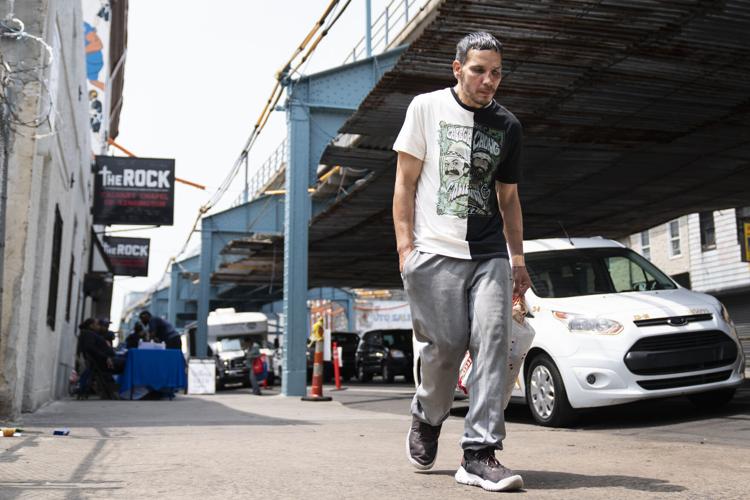
Dominic Rodriguez walks away after receiving treatment at the Kensington Hospital wound care outreach van, parked in the Kensington neighborhood of Philadelphia on May 23, 2023. Xylazine’s effects are easy to spot: users experience a lethargic, trance-like state and sometimes black out, exposing themselves to robbery or assault. “It’s a delayed reaction, I could be walking down the street, it's 45 minutes later,” says Rodriguez, who is homeless and battling addiction. “Then I wake up, trying to piece together what happened.”
“Nobody asked for xylazine in the drug supply,” said Sarah Laurel, founder of Savage Sisters, a Philadelphia outreach group. “Before anybody knew it, the community was chemically dependent on it. So now, yes, people do seek it out.”
Xylazine’s effects are easy to spot: users experience a lethargic, trancelike state and sometimes black out, exposing themselves to robbery or assault.
“It’s a delayed reaction, I could be walking down the street, it's 45 minutes later,” says Dominic Rodriguez, who is homeless and battling addiction. “Then I wake up, trying to piece together what happened.”
Xylazine: What is it?
U.S. regulators approved xylazine in 1971 to sedate animals for surgery, dental procedures and handling purposes.
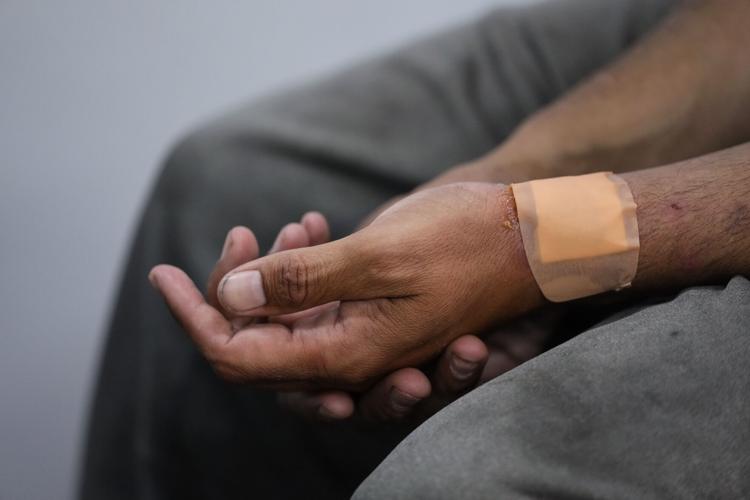
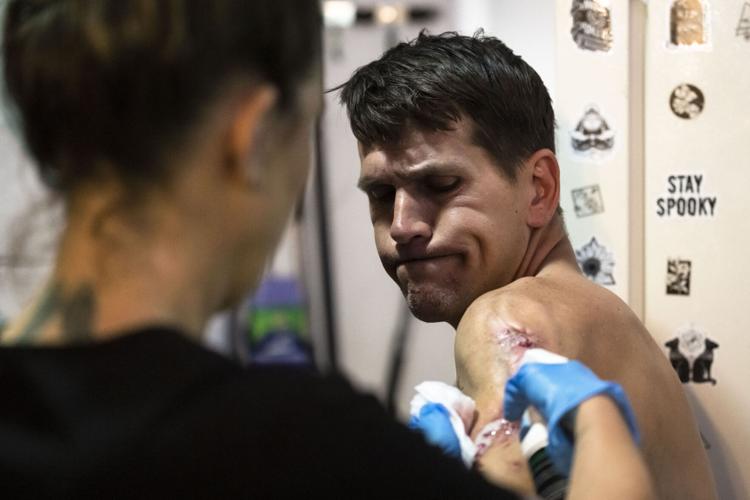
In humans, the drug can cause breathing and heart rates to drop. It’s also linked to severe skin ulcers and abscesses, which can lead to infections, rotting tissue and amputations. Experts disagree on the exact cause of the wounds, which are much deeper than those seen with other injectable drugs.

Dominic Rodriguez speaks with registered nurse Kathy Lalli after she treated his skin injuries at the Kensington Hospital wound care outreach van, parked in the Kensington neighborhood of Philadelphia.
Naloxone, a medication used revive people who have stopped breathing, doesn’t reverse the effects of xylazine. With no approved reversal drug for xylazine, the Savage Sisters group has taken to carrying oxygen tanks to help revive people.
Meanwhile, a roaming van staffed by local health workers and city staffers aims to treat the skin wounds before they require hospitalization.
The wounds can make it harder to get people into addiction treatment programs, which typically don’t have the expertise to treat deep lesions that can expose tissue and bone.
“If you have someone out there who’s ready to come in for treatment, you really want to act on that quickly,” said Jill Bowen, who runs Philadelphia's behavioral health department.
Xylazine can be addictive and patients who stop taking it report severe withdrawal symptoms, including anxiety and distress. There’s no approved treatment but physicians have been using the blood pressure-lowering drug clonidine, which is sometimes prescribed for anxiety.

Nick Gallagher reacts as volunteer registered nurse Jennifer D'Angelo treats his skin wounds the Savage Sisters' community outreach storefront in the Kensington neighborhood of Philadelphia on May 24.
In April, federal officials declared xylazine-laced fentanyl an “emerging threat,” pointing to the problems in Philadelphia and other northeastern cities. Testing is far from uniform, but the drug has been detected in all 50 states and appears to be moving westward, similar to earlier waves of drug use.
Officials describe the drug's toll in stark terms and statistics: Fatal overdoses involving xylazine increased more than 1,200% percent between 2018 and 2021. But that largely reflects increased testing, since most medical examiners weren’t looking for the drug until recently.
“What it is doing is making the deadliest drug we’ve ever seen, fentanyl, even deadlier,” Anne Milgram, head of the Drug Enforcement Administration, told attendees at a recent conference.
But those who have studied the problem closely aren’t so sure.
Startling study
One of the only studies looking at the issue reached a startling conclusion: People who overdosed on a combination of fentanyl and xylazine had “significantly less severe” outcomes than those taking fentanyl alone.
It was the opposite of what Dr. Jennifer Love and her colleagues expected, given xylazine’s dangerous effects on breathing. But their analysis of more than 320 overdose patients who received emergency care found lower rates of cardiac arrest and coma when xylazine was involved.
Love, an emergency medicine physician at New York's Mount Sinai hospital, suggested xylazine may be reducing the amount of fentanyl in each dose. She stressed that this is only one possible explanation, and more research is needed into xylazine's long-term effects. She also noted that the study didn’t track downstream effects of xylazine that could be deadly, including skin infections and amputations.
A shifting mix of opioids, stimulants and sedatives has come to define the U.S. drug epidemic, making it harder to manage a crisis that now claims more than 100,000 lives a year.
The Biden administration and Congress are considering changes to try to limit xylazine prescribing and distribution.
But past restrictions didn’t solve the problem: When regulators cracked down on painkillers like OxyContin, people largely shifted to heroin and then fentanyl.
“First we had pills, then we had heroin and then we had fentanyl,” Piotrowski said. “Now we have everything. And xylazine is just a part of that.”
Photos: ‘Tranq,’ the new fentanyl additive worsening America’s opioid epidemic

Registered nurse Kathy Lalli treats Ellwood Warren's injuries at the Kensington Hospital wound care outreach van, parked in the Kensington neighborhood of Philadelphia on May 23, 2023. In humans, xylazine can cause breathing and heart rates to drop. It’s also linked to severe skin ulcers and abscesses, which can lead to infections, rotting tissue and amputations. Experts disagree on the exact cause of the wounds, which are much deeper than those seen with other injectable drugs.

A box of Narcan sits in the Savage Sisters' community outreach storefront in the Kensington neighborhood of Philadelphia on May 24, 2023. Generically known as Naloxone, the medication used revive people who have stopped breathing, doesn’t reverse the effects of xylazine. Philadelphia officials stress that naloxone should still be administered in all cases of suspected overdose, since xylazine is almost always found in combination with fentanyl.

People gather outside the Savage Sisters' community outreach storefront in the Kensington neighborhood of Philadelphia on May 24, 2023. Xylazine, a powerful animal sedative that's moving through the illicit drug supply is complicating the U.S. response to the opioid crisis, causing gruesome skin wounds and scrambling longstanding methods for treating addiction and reversing overdoses.

Volunteer registered nurse Jennifer D'Angelo treats a person's skin wounds the Savage Sisters' community outreach storefront in the Kensington neighborhood of Philadelphia on May 24, 2023. Xylazine, a powerful animal sedative that's moving through the illicit drug supply is complicating the U.S. response to the opioid crisis, causing gruesome skin wounds and scrambling longstanding methods for treating addiction and reversing overdoses.

Sarah Laurel, founder of Savage Sisters, speaks with community members at her outreach storefront in the Kensington neighborhood of Philadelphia on May 24, 2023. “Nobody asked for xylazine in the drug supply,” said Laurel. “Before anybody knew it, the community was chemically dependent on it. So now, yes, people do seek it out.”

Sarah Laurel, founder of Savage Sisters, speaks during an interview at her community outreach storefront in the Kensington neighborhood of Philadelphia on May 24, 2023. “Nobody asked for xylazine in the drug supply,” said Laurel. “Before anybody knew it, the community was chemically dependent on it. So now, yes, people do seek it out.”

Dominic Rodriguez speaks with registered nurse Kathy Lalli after she treated his skin injuries at the Kensington Hospital wound care outreach van, parked in the Kensington neighborhood of Philadelphia on May 23, 2023. Xylazine’s effects are easy to spot: users experience a lethargic, trance-like state and sometimes black out, exposing themselves to robbery or assault. “It’s a delayed reaction, I could be walking down the street, it's 45 minutes later,” says Rodriguez, who is homeless and battling addiction. “Then I wake up, trying to piece together what happened.”
Dominic Rodriguez walks away after receiving treatment at the Kensington Hospital wound care outreach van, parked in the Kensington neighborhood of Philadelphia on May 23, 2023. Xylazine’s effects are easy to spot: users experience a lethargic, trance-like state and sometimes black out, exposing themselves to robbery or assault. “It’s a delayed reaction, I could be walking down the street, it's 45 minutes later,” says Rodriguez, who is homeless and battling addiction. “Then I wake up, trying to piece together what happened.”

Sarah Laurel, founder of Savage Sisters, checks on a community member at her outreach storefront in the Kensington neighborhood of Philadelphia on May 24, 2023. “Nobody asked for xylazine in the drug supply,” said Sarah Laurel, founder of Savage Sisters, a Philadelphia outreach group. “Before anybody knew it, the community was chemically dependent on it. So now, yes, people do seek it out.”

Kensington Hospital wound care outreach van is parked in the Kensington neighborhood of Philadelphia on May 23, 2023. Xylazine, a powerful animal sedative that's moving through the illicit drug supply is complicating the U.S. response to the opioid crisis, causing gruesome skin wounds and scrambling longstanding methods for treating addiction and reversing overdoses.

Nick Gallagher reacts as volunteer registered nurse Jennifer D'Angelo treats his skin wounds the Savage Sisters' community outreach storefront in the Kensington neighborhood of Philadelphia on May 24, 2023. Xylazine can cause severe skin wounds, but whether it is leading to more deaths — as suggested by officials in Washington — is not yet clear, according to health and law enforcement professionals on the front lines of efforts in New Jersey, New York and Pennsylvania.

A community member holds a hot cup of coffee at the Savage Sisters' outreach storefront in the Kensington neighborhood of Philadelphia on May 24, 2023. Xylazine, a powerful animal sedative that's moving through the illicit drug supply is complicating the U.S. response to the opioid crisis, causing gruesome skin wounds and scrambling longstanding methods for treating addiction and reversing overdoses.

Sharday Miller, walks away holding extra bandages she received after having her skin treated at the Kensington Hospital wound care outreach van parked in the Kensington neighborhood of Philadelphia on May 23, 2023. Xylazine, a powerful animal sedative that's moving through the illicit drug supply is complicating the U.S. response to the opioid crisis, causing gruesome skin wounds and scrambling longstanding methods for treating addiction and reversing overdoses.

Dominic Rodriguez speaks with registered nurse Kathy Lalli after she treated his skin injuries at the Kensington Hospital wound care outreach van, parked in the Kensington neighborhood of Philadelphia on May 23, 2023. Xylazine, a powerful animal sedative that's moving through the illicit drug supply is complicating the U.S. response to the opioid crisis, causing gruesome skin wounds and scrambling longstanding methods for treating addiction and reversing overdoses.