

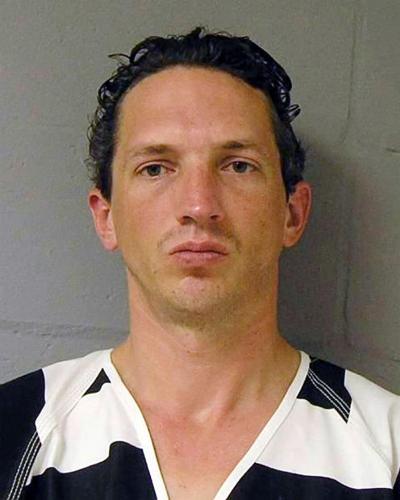

ANCHORAGE, Alaska - The suspect, hands and feet shackled, fidgeted in his chair, chuckling at times as he confessed to a brutal killing.
Israel Keyes showed no remorse as he described in merciless detail how he'd abducted and strangled an 18-year-old woman, then demanded ransom, pretending she was alive.
As the two prosecutors questioned him, they were struck by his demeanor: He seemed pumped up, as if he were reliving the crime. His body shook, they said, and he rubbed his muscular arms on the chair rests so vigorously his handcuffs scraped off the wood finish.
The prosecutors showed him surveillance photos, looked him in the eye and declared: We know you kidnapped Samantha Koenig. We're going to convict you.
They aimed to solve a disappearance, and they did. But they soon realized there was much more here: a kind of evil they'd never anticipated.
People are also reading…
Confessing to Koenig's killing, Keyes used a Google map to point to a spot on a lake where he'd disposed of her dismembered body and gone ice fishing. He wasn't done talking, though. He declared he'd been "two different people" for 14 years. He had stories to tell, stories he said he'd never shared. He made seemingly plural references and chilling remarks such as, "It takes a long time to strangle someone."
As prosecutors Kevin Feldis and Frank Russo and investigators from the FBI and Anchorage police listened that day in early 2012, they came to a consensus:
Israel Keyes wasn't talking just about Samantha Koenig. He'd killed before.
In 40 hours of interviews over eight months, Keyes talked of many killings; authorities believe there were nearly a dozen. He traveled from Vermont to Alaska hunting for victims. He said he buried "murder kits" around the country so they would be readily accessible. These caches - containing guns, zip ties and other supplies used to dispose of bodies - were found in Alaska and New York.
At the same time, incredibly, Keyes was an under-the-radar everyday citizen - a father, a live-in boyfriend, a respected handyman who had no trouble finding jobs in the community.
Keyes claimed he killed four people in Washington state, dumped another body in New York and raped a teen in Oregon. Though sometimes specific, he was often frustratingly vague. Only once - other than Koenig - did he identify by name his victims: a married couple in Vermont.
In December, he slashed his left wrist and strangled himself with a sheet in his jail cell. He left two pages of bloodstained writings. And many questions.
Investigators are now left searching for answers, but they face a daunting task: They're convinced the 34-year-old Keyes was a serial killer; they've verified many details he provided. But they have a puzzle that spans the U.S. and dips into Mexico and Canada - and the one person who held the missing pieces is dead. FBI agents on opposite ends of the country, joined by others, are working the case.
Stopped in Willcox
Authorities aren't certain when Keyes' crime spree began or ended. But they have a haunting image of his last known victim.
Snippets of a surveillance video show the first terrifying moments of Koenig's abduction. Keyes is seen as a shadowy figure in ski mask and hood outside Common Grounds, a tiny Anchorage coffee shack then partly concealed from a busy six-lane highway by mountains of snow.
It's Feb. 1, 2012, about 8 p.m., closing time. Koenig is shown handing Keyes a cup of coffee, then backing away with her hands up, as if it's a robbery. The lights go out and Keyes next appears as a fuzzy image climbing through the drive-thru window.
Authorities outlined his next steps:
Keyes forced Koenig to his Silverado; he'd already bound her hands with zip ties and gagged her. He hid her in a shed outside his house, turned on loud music so no one could hear if she screamed, then returned to the coffee shack to retrieve scraps of the restraints and get her phone.
On Feb. 2, Keyes raped and strangled Koenig. He left her in that shed, flew to Houston and embarked on a cruise, returning about two weeks later.
He then took a photo of Koenig's body holding a Feb. 13 newspaper to make it appear she was alive. Keyes wrote a ransom note on the back, demanding $30,000 be placed in her account. He texted a message, directing the family to a dog park where the note could be found. Her family deposited some money from a reward fund.
On Feb. 29, Keyes withdrew $500 in ransom money from an Anchorage ATM, using a debit card stolen from Koenig's boyfriend (the two shared an account). The next day, he took $500 more from another ATM.
Then on March 7, far away in Willcox, Ariz., Keyes withdrew $400. He traveled to Lordsburg, N.M., and took out $80. Two days later, a withdrawal of $480 in Humble, Texas. On March 11, the same amount from an ATM in Shepherd, Texas.
Arrested in Texas
By then, authorities had a blurry ATM photo and a pattern: Keyes was driving along Interstate 10 in a rented white Ford Focus. On March 13, nearly 3,200 miles from Anchorage, police in Lufkin, Texas, pounced when they spotted Keyes driving 3 mph above the speed limit.
Inside his car was an incriminating stash: Rolls of cash in rubber bands. A piece of a gray T-shirt cut out to make a face mask. A highlighted map with routes through California, Arizona and New Mexico. The stolen debit card. And Samantha Koenig's phone.
Authorities suspect Keyes started killing more than 10 years ago after completing a three-year stint in the Army at what is now Joint Base Lewis-McChord near Tacoma, Wash.
Keyes, the second eldest in a large family, was homeschooled in a cabin without electricity near Colville, Wash., in a mountainous, sparsely populated area. The family moved in the 1990s to Smyrna, Maine, where they were involved in the maple syrup business, according to a neighbor who remembered Keyes as a nice, courteous young man.
After leaving the Army, Keyes worked for the Makah Indian Tribe in Washington, then moved to Anchorage in 2007 after his girlfriend found work here. A self-employed carpenter and handyman, he was considered competent, honest and efficient.
He was methodical
Keyes blended in easily. "He was not only very intelligent," Doll says. "He was very adaptable and he had a lot of self-control. Those three things combined made him extraordinarily difficult to catch."
Keyes also was meticulous and methodical, flying to airports in the Lower 48, renting cars, driving hundreds of miles searching for victims, prowling remote spots such as parks, campgrounds and cemeteries.
Keyes was proud he'd gone undetected so long. When asked for a motive, Anchorage police officer Bell recalls, Keyes said, "'A lot of people ask why and I would be like: Why not?' "
"He liked what he was doing," says FBI Special Agent Jolene Goeden. "He talked about getting a rush out of it, the adrenaline, the excitement."
Goeden says Keyes provided information for eight victims, some more specific than others. He also alluded to other victims and said he killed fewer than 12 people altogether.
Shortly after Keyes confessed to Koenig's murder, the prosecutors told him his computers were being searched. Keyes knew he'd stored information in them about two victims. It was time to talk about them.
This time, Vermont
It was about 8 p.m. on April 6, 2012, and police Lt. George Murtie was home in Essex, Vt., when a local FBI agent called.
Nearly 10 months had passed since Bill and Lorraine Currier, a couple in their 50s, had disappeared. They were presumed dead. Leads were still trickling in, but Murtie was surprised to hear authorities in Alaska had a man in custody who'd confessed to killing the couple and disposing of their bodies in an abandoned farmhouse.
An Essex officer for 28 years, Murtie headed out there that night with another detective, only to discover it had been demolished. They checked some nearby buildings but found nothing.
Several weeks later, when Murtie questioned Keyes by phone, he found him matter-of-fact when discussing how he'd killed the Curriers.
"I would describe it as if I was talking to a contractor about the work I was going to have done and he was describing the work he had done in the past," Murtie recalls.
Israel Keyes never provided another name. He was found dead Dec. 2, three months before his scheduled trial in the Koenig case.
Feldis, the prosecutor who heard Keyes' first confession, says it's likely the true scope of his crimes will never be known.
"There's a lot more out there that only Israel Keyes knows," he says, "and he took that to his grave."


