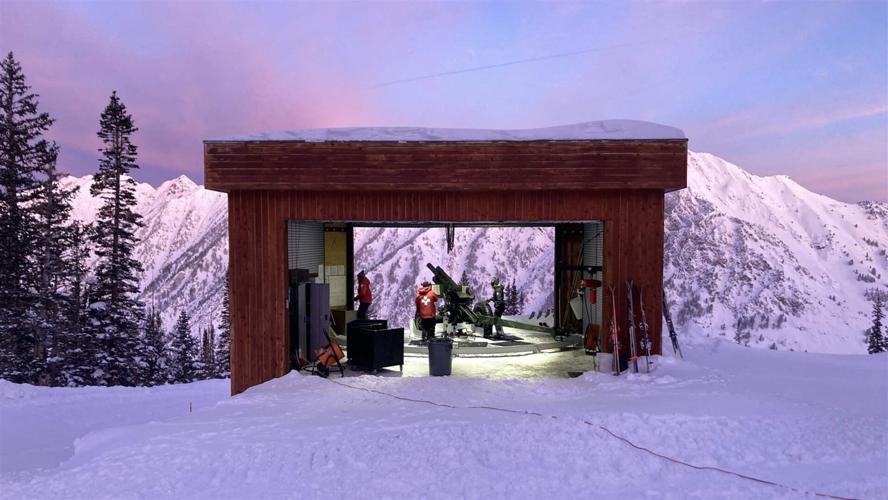
One morning in January, after more than 31 inches of snow fell in the previous two days, Utah transportation workers opened a huge garage-type door in a building near a state highway and fired a military howitzer up a mountain in the Salt Lake Valley.
The explosion triggered several avalanches that buried State Route 210 in Little Cottonwood Canyon. In some areas, the snow was 13 feet deep and 150 feet wide. Officials then sent in crews with specialized heavy equipment to clear the two-lane road. They reopened it later that afternoon.

Utah Department of Transportation workers prepare to fire a howitzer at a mountain in Little Cottonwood Canyon in Salt Lake Valley earlier this month.
On average, 30 natural and controlled avalanches blanket Route 210 every winter, according to Steven Clark, the Utah Department of Transportation’s avalanche program manager. The agency still relies heavily on howitzers, but is trying to reduce their use, he added. While a round has never fallen short of its target, he noted, the idea is to limit firing rounds in part because of all the people who live and work nearby.
People are also reading…
The Utah department is one of at least eight Western state transportation agencies that use various techniques to set off avalanches, aiming to keep motorists safe and protect roads from damage and lengthy closures. Many agencies still use howitzers, but like Utah, they’re increasingly turning to high-tech explosive methods that can be safer and easier to use, such as fixed towers, explosives dropped by helicopter and remote-control systems that detonate compressed air and gases.
“It’s getting harder and harder to find the ammunition to use,” said Rick Nelson, coordinator of the American Association of State Highway and Transportation Officials’ snow and ice cooperative program. “It’s more cost-effective to go with remote systems.”
State transportation officials trigger controlled avalanches when they forecast that a natural avalanche, common in Western states with mountain ranges, might threaten a roadway.
“A (natural) avalanche can catch motorists unaware and sweep them off the road or leave a big snowbank in the middle of the road that drivers may be unaware of and run into,” Nelson said, adding that it can take less time to clean up a road after a controlled avalanche.
As the snowpack begins to build in the fall and into the winter, it forms layers that bond together. But sometimes, when they don’t, additional snow, rain or warming from the sun can trigger an avalanche, a mass of snow, rock and other material that runs down a slope called an avalanche path, gaining speed rapidly. It can be a cohesive slab or loose snow.
Avalanches can cause havoc on the road below, especially when a massive amount of snow and debris, such as rocks and trees, come barreling down the slope.

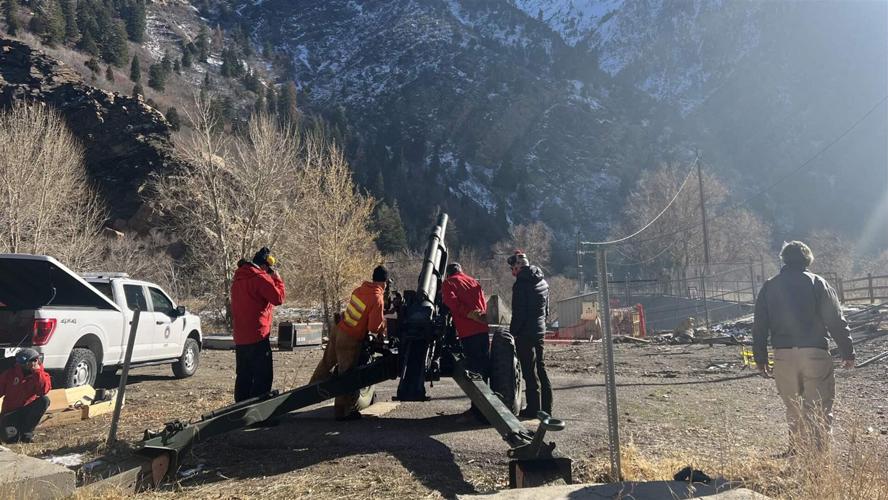
Utah Department of Transportation workers fire a howitzer during a training mission in Big Cottonwood Canyon in November 2022.
“Depending on the size of the avalanche, you don’t want to be in the way of it,” said John Stimberis, an avalanche forecast supervisor at the Washington State Department of Transportation. “Drivers can be buried, if it’s large enough.”
State transportation avalanche teams such as the one Stimberis’ oversees constantly monitor conditions, including the temperature and wind speed, existing snow levels and whether there is new snow or rain. If they determine they need to trigger an avalanche, they try to control how, when and where it will hit.
“You want to bring that snow down under your terms, as opposed to under nature’s terms,” Nelson said. “A lot of small avalanches are a lot better than one big one.”
Crews must undergo special training and typically need to be licensed by states to detonate avalanche explosives.
At Snoqualmie Pass in the central Washington Cascades, transportation officials monitor about 30 avalanche paths along Interstate 90, which carries tens of thousands of vehicles a day, according to Stimberis.
Washington state officials employ avalanche control techniques that include helicopters to drop explosives, howitzers and cable-pulley bomb trams.

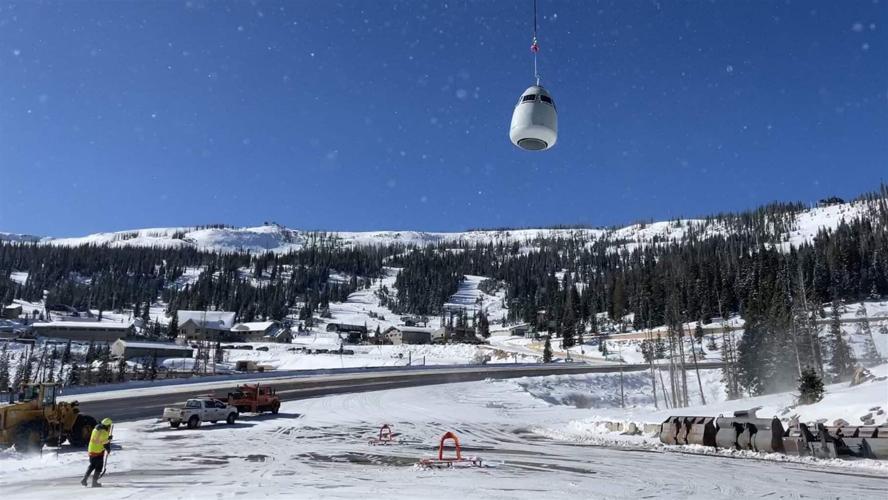
In this November 2022 photo, a helicopter picks up an egg-shaped remote avalanche exploder, which it transported to an area near U.S. 160 Wolf Creek Pass in southwest Colorado in November 2022.
The agency also uses “passive” methods, such as large ditches with a wall that creates a barrier; big earthen berms that change the course of the avalanche and direct it away from the highway; and snow nets that anchor the snowpack to prevent avalanches from occurring.
One of the biggest successes, Stimberis said, has been a pair of bridges the agency built in 2016 on a section of I-90. When an avalanche releases, the snow flows under the highway rather than onto it.
In Colorado, transportation officials coordinate with the Colorado Avalanche Information Center, a state agency, which provides eight forecasters who keep crews abreast about conditions on avalanche paths above highways.
Jamie Yount, winter operations program manager at the Colorado Department of Transportation, said his agency monitors 400 avalanche paths throughout the state and regularly sets off controlled avalanches at about half of them, including on Interstate 70, a busy highway.
Yount said his agency uses various avalanche control techniques, such as units that can set off blasts from the top of the mountain and remotely controlled towers.
“The big push is for remote systems,” he said. “You can use a computer, a radio or even a cell phone, to detonate it and start the avalanche.”
State avalanche program officials say that whatever methods they use to control avalanches, they’re not always guaranteed to work.
“There’s no hard and fast rule,” Yount said. “You’re trying to deal with Mother Nature. We’re pretty good at it, but everybody still gets surprised now and then.”
The 18 Deadliest Weather Hazards
The 18 Deadliest Weather Hazards

Every season, a multitude of natural disasters hits the U.S. From mudslides to avalanches, these hazards cause millions of dollars in damage and affect families nationwide. Sadly, these disasters are often fatal.
The World Meteorological Organization defines natural hazards as "severe and extreme weather and climate events that occur naturally in all parts of the world." Using data collected from the National Weather Service, the experts at WeatherDB researched 18 natural hazards that occur annually. We've ranked this list according to which ones caused the most fatalities between 2005 and 2014.
As winter sets in, it might help to know what Mother Nature has in store.
#18. Dust Storm
Average Annual Fatalities: less than 1
Average Annual Injuries: 8
Average Annual Crop Damage: $805,000
Average Annual Property Damage: $811,000
The U.S. has not been affected by extremely perilous dust storms since the infamous Dust Bowl of the 1930s, which turned thousands of acres of crops into fine, brown dust. From 2005 to 2014, fatalities caused by dust storms averaged out to less than one per year. However, increased problems from dust storms might arise as climate change worsens.
#17. Ice
Average Annual Fatalities: 2
Average Annual Injuries: 2
Average Annual Crop Damage: $29,000
Average Annual Property Damage: $285 Million
Ice obviously creates hazardous conditions, particularly on paved roads. Things can become especially dangerous when drivers do not have the appropriate vehicle or experience driving in such conditions.
#16. Mud Slide
Average Annual Fatalities: 2
Average Annual Injuries: 3
Average Annual Crop Damage: $2 Million
Average Annual Property Damage: $29.4 Million
Mud slides have the potential to do millions of dollars worth of damage when they tear apart foundations and rapidly engulf highways. In 2005, the sleepy, coastal town of La Conchita, Calif., experienced the deadliest mud slide of the decade. After nearly 15 inches of rain fell in two weeks, an entire hillside violently cascaded toward the sea. The event destroyed 36 homes and killed 10 people.
#15. Tsunami
Average Annual Fatalities: 3
Average Annual Injuries: 13
Average Annual Crop Damage: $2,000
Average Annual Property Damage: $13.9 Million
Tsunamis are not as common in the U.S. as they are in tropical countries like Indonesia and the Philippines. While the worst tsunami to hit American soil claimed 32 lives in 2009, this pales in comparison to the Indian Ocean Tsunami, which killed nearly 230,000 people in over 15 countries in late December 2004.
#14. Rain
Average Annual Fatalities: 3
Average Annual Injuries: 12
Average Annual Crop Damage: $37.2 Million
Average Annual Property Damage: $43.4 Million
Between 2005 and 2014, rain caused fewer than 10 deaths per year. While rain is essential for many things, it causes almost as much damage to crops as it does to properties annually.
#13. Fire Weather
Average Annual Fatalities: 6
Average Annual Injuries: 67
Average Annual Crop Damage: $7.41 Million
Average Annual Property Damage: $500 Million
Annually, forest fires destroy numerous structures and crops, but usually people are able to escape before it becomes deadly. The exception was 2013. The Yarnell Hill Fire in Yarnell, Ariz. killed 19 firefighters and burned over 8,000 acres.
#12. Coastal Storm
Average Annual Fatalities: 8
Average Annual Injuries: 4
Average Annual Crop Damage: $160,000
Average Annual Property Damage: $3.23 Billion
Coastal storms are defined as "localized heavy flooding due to storm surge caused by a tropical cyclone which poses a threat to life and/or property." Hurricane Sandy was actually considered a coastal storm when it hit land in 2012. Many unstable structures collapsed and emergency services had a difficult time reaching victims as roads were flooded or wiped out entirely.
#11. Avalanche
Average Annual Fatalities: 16
Average Annual Injuries: 12
Average Annual Property Damage: $291,000
Avalanches have a high fatality rate in the U.S.; the National Weather Service reported that there were 164 avalanche fatalities between 2005 and 2014, compared to 124 injuries. This is probably because first responders have a difficult time reaching injured mountaineers in remote areas and lifesaving help often arrives too late.
#10. Winter Storm
Average Annual Fatalities: 19
Average Annual Injuries: 184
Average Annual Crop Damage: $5.57 Million
Average Annual Property Damage: $328 Million
Winter storms encompass a multitude of threats including snow, ice, wind and cold temperatures. Luckily, they are much more likely to cause injury instead of death. The winter of 2014 was merciless in the Midwest. It brought frequent, tumultuous blizzards and a record number of sub-zero temperature days.
#9. High Wind
Average Annual Fatalities: 25
Average Annual Injuries: 67
Average Annual Crop Damage: $29.7 Million
Average Annual Property Damage: $633 Million
Unlike thunderstorm winds, high winds can occur in any weather. Wind sustaining a speed of at least 40 mph, or gusts of 58 mph or higher, is considered a weather hazard. Wind itself is not usually incredibly dangerous, but debris careening into traffic or buildings claims lives annually.
#8. Thunderstorm Wind
Average Annual Fatalities: 27
Average Annual Injuries: 255
Average Annual Crop Damage: $64.9 Million
Average Annual Property Damage: $547 Million
Thunderstorm wind is defined as “a thunderstorm with hail 1 inch or larger and/or winds 58 mph or greater.” Hail and high wind during a thunderstorm can be very dangerous, deaths and injuries usually involve automobile collisions.
#7. Cold
Average Annual Fatalities: 29
Average Annual Injuries: 20
Average Annual Crop Damage: $463 Million
Average Annual Property Damage: $23.5 Million
Many of us look forward to cuddling inside when the seasons change and the days become shorter. Coats and sweaters help most people keep the cold at bay, so it may be surprising to learn that cold weather exposure kills people annually. An especially brutal weather occurred in 2014; 43 people died from cold exposure, including two people who were shoveling snow outside their homes in Chicago.
#6. Lightning
Average Annual Fatalities: 32
Average Annual Injuries: 192
Average Annual Crop Damage: $165,000
Average Annual Property Damage: $52.1 Million
While the odds of getting struck by lightning really are about one in a million, it is the sixth deadliest natural hazard because lightning is more likely to be fatal than simply leaving a scratch or putting you in the hospital. The human body cannot withstand the extreme surge of electricity as cardiac muscles burst when lightning sears through the body.
#5. Flood
Average Annual Fatalities: 71
Average Annual Injuries: 62
Average Annual Crop Damage: $474 Million
Average Annual Property Damage: $2.87 Billion
Like tsunamis, floods cause more damage in tropical countries near the equator. However, the U.S. is affected by floods annually, particularly in Southern states like Texas, Tennessee and Mississippi. Usually, floods become fatal when a surge of rapidly moving water violently smashes cars and debris towards unprepared onlookers.
#4. Rip Current
Average Annual Fatalities: 51
Average Annual Injuries: 41
Average Annual Property Damage: $26.6 Million
Rip currents are defined as "waves that disperse along the beach causing water to become trapped between the beach and a sandbar or other underwater feature. The water converges into a narrow, river-like channel moving away from the shore at high speed.” This aquatic phenomenon drowns dozens of people every year. The best thing you can do if you get caught in a rip current? Don’t panic, and see if your feet can touch the sea floor, often the water is shallower than you think.
#3. Tropical Storm/Hurricane
Average Annual Fatalities: 105
Average Annual Injuries: 18
Average Annual Crop Damage: $291 Million
Average Annual Property Damage: $10.1 Billion
Of course, the worst hurricane in recent memory was Hurricane Katrina in 2005, which wiped out entire neighborhoods in New Orleans and led to various accusations about the government’s apathetic approach to assistance. Many scientists argue that hurricanes will become increasingly violent as a result of climate change.
#2. Tornado
Average Annual Fatalities: 110
Average Annual Injuries: 1,265
Average Annual Crop Damage: $21.3 Million
Average Annual Property Damage: $2.15 Billion
In reality, tornadoes do not just drop in and send us to Oz. Tornadoes wreak havoc on buildings and crops and kill people. According to NOAA, 2011 was one of the most active tornado years with 1,691 tornadoes reported. The most destructive of all was the tornado that flattened the town of Joplin, Mo., and killed 153 people.
#1. Heat
Average Annual Fatalities: 124
Average Annual Injuries: 980
Average Annual Crop Damage: $50.5 Million
Average Annual Property Damage: $2.4 Million
While most of us eagerly await summer sunshine and warm weather, heat has a dark side. Heat is the deadliest of all natural hazards, perhaps because people do not realize just how dangerous it can be. For the elderly and very young, extreme heat conditions can rapidly cause dehydration and cardiac arrest. Heat also claims the lives of numerous pets left in boiling hot cars. For the sake of grandma and your furry friends, use the A/C and crack the windows when needed.