

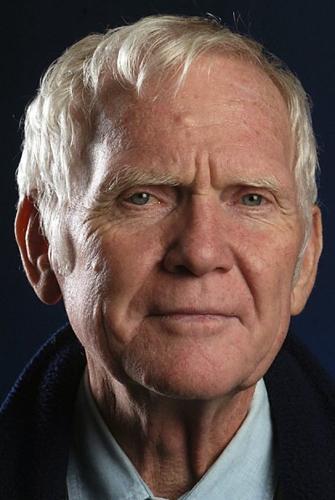
Charles Moore, a photojournalist who chronicled and helped alter the course of history through extraordinary photographs that reflected the brutal reality of the civil-rights movement in the South, has died. He was 79.
Moore died Thursday of natural causes at a nursing home in Palm Beach Gardens, Fla., said his daughter Michelle Moore Peel.
From 1958 to 1965, he trained his lens on the unfolding drama of civil rights as a news photographer for the Montgomery (Ala.) Advertiser and Life magazine.
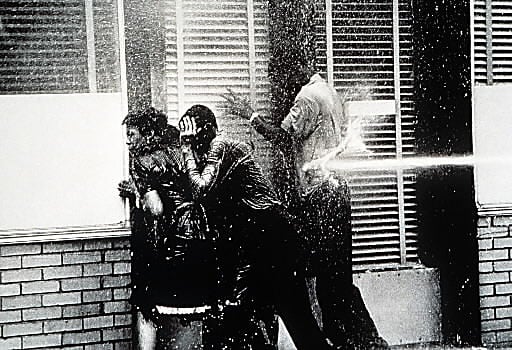
His shockingly graphic images - of police dogs attacking protesters or marchers being assaulted by powerful water hoses - helped propel what had been a regional dispute onto the national stage.
As his photographs created national outrage, they quickened the passage of the Civil Rights Act of 1964, according to John Kaplan, a University of Florida journalism professor who wrote his master's thesis on Moore.
People are also reading…
"He had the courage to stand up in the face of danger and let Americans know what was really happening, through his work," Kaplan told the Los Angeles Times. "That is why he is an unsung hero."
As Moore followed the struggle, he was known for his fearlessness and uncanny knack for capturing the most distressing images possible.
"To people who were really bigoted, I was the worst enemy, a Southern boy working for Life," Moore told USA Today in 1991. "I knew the South. . . . I also knew how to talk back to racists."
The son of a Baptist minister was drawn to photographing the Rev. Martin Luther King Jr., then a Baptist clergyman in Montgomery. After witnessing King's charisma firsthand in 1958, Moore sought to cover him whenever possible.
"I knew that this was a man who was going to make a difference," Moore said of King in the 2005 documentary "Charles Moore: I Fight With My Camera." Moore had yet to realize that his pictures would also make a difference.
Moore's most influential pictures were taken over five days in 1963 during the campaign to desegregate Birmingham, Ala., Kaplan said. One famous photo - Moore crawled across pavement, positioning himself between protesters and firemen to get the shot - showed three students being thrust against a building by high-pressure water from a fire hose.
Covering civil rights "was difficult, exhausting and oftentimes very dangerous," Moore said in the documentary. "Plus troubling and emotional, . . . because I'm a Southerner, too."
By 1965, he had grown weary of the violence and booked an around-the-world airplane ticket. He came home eight months later.
In addition to his daughter Michelle of West Palm Beach, Fla., Moore is survived by three other children, Michael Moore and April Marshall of Dothan, Ala., and Gary Moore of Lewisville, Texas; his brother, Jim, of Conway, Mass.; seven grandchildren; and three great-grandchildren.


