


A spacecraft approaches the lunar pole, spits out a pod from which sprout several tubular arms it uses to bury itself in the soil, where it begins growing plants in preparation for man's return to the moon.
It's science, for sure, but not fiction. The University of Arizona's Controlled Environment Agriculture Center is pushing such a plan in a demanding competitive bid-and-review process for NASA's proposed extended manned lunar mission by 2020, the date President Bush set in his 2005 space goals proposal.
The small group, which works out of the college's farm and greenhouse complex at North Campbell Avenue and East Roger Road, hopes to make the UA the go-to institution for space agriculture, adding to the university's burgeoning reputation for robotic space exploration and imaging.
The team's experience with growing vegetables at the South Pole Food Chamber translates well into doing the same on the moon and Mars, say Gene Giacomelli, the Controlled Environment Agriculture Center's director, and freelance extreme-environments project ace Phil Sadler.
People are also reading…
Giacomelli is a plant-sciences and biosystems engineering professor in the department of agricultural and biosystems engineering, and director of the Controlled Environment Agriculture program, under the College of Agriculture and Life Sciences.
The unit is probably best known for its work in hydroponics, a process used usually in greenhouses to maximize the growth of plants rooted in nutrient-laden water, sometimes in a container with an artificial "soil" or just a tray or tube holding the special liquid diet.
Sadler, president of Tempe-based Sadler Machine Co., was trained as a botanist and specializes in designing and building projects for extreme environments, like the UA's famed greenhouse for the National Science Foundation's Amundsen-Scott South Pole Station in Antarctica.
They hope to parlay the group's bumper-crop success in growing vegetables at the South Pole into extraterrestrial applications. The return-to-the-moon mission is part of a long-range NASA plan to use it as a base for more extended planetary exploration, probably starting with a manned mission to Mars.
If the moon base is anything like the South Pole research station, and in many ways, physically and psychologically, they say it will be, hanging out with some vegetables will probably be close behind breathable air and warmth when it comes to the inhabitants' needs.
Graduate student Lane Patterson returned in November from nine months operating the team's South Pole greenhouse.
It would be hard for even parched desert dwellers in the depths of a drought to begin to understand the importance of green life there.
What time is sunrise?
The sun comes up in September, says Patterson.
"Six months the sun is down," he recalls all too well.
The incredibly hostile conditions — 100-below-zero temperatures, or colder, and gale-force winds — force anyone venturing outdoors to dress up like a spaceman, with no skin exposed.
Outside, Patterson says, he felt claustrophobic, even though he was on a solid piece of earth large enough to hold the U.S. and Mexico.
It makes indoor environment all the more important.
Giacomelli said the mere sight of something naturally green is a rarity, something humans seem to naturally crave and find soothing.
Patterson said staffers cherished time near the greenhouse, contained within the U.S. South Pole Station. Although staffers work 54-hour weeks with only one two-day weekend off a month, he said they volunteered in droves to work in the greenhouse in their free time.
A sitting room next to the greenhouse allows crew members to just hang out near the warm, humid green space, and even do a bit of hobby gardening.
The produce was a big hit, too, although Patterson says a "South Pole ethic" that makes staffers share nearly everything caused him some problems.
The greenhouse worked so well that he had more produce than people were eating, 60 to 100 pounds a week out of a 240-square-foot space lit by special water-cooled, sodium-vapor lamps powered by a diesel generator.
Patterson said, "I had to send an e-mail out that 'If you're being a good South Pole Samaritan and saving it for others, cut it out!' "
Beside romaine, red and salad-bowl lettuce, there were cucumbers, spinach, tomatoes, parsley, basil, cilantro, cantaloupe and even some strawberries, all grown successfully in the same area, which Giacomelli says is unusual for a hydroponic operation.
But the point of the lunar greenhouse won't be produce, says Giacomelli, but cleansing air.
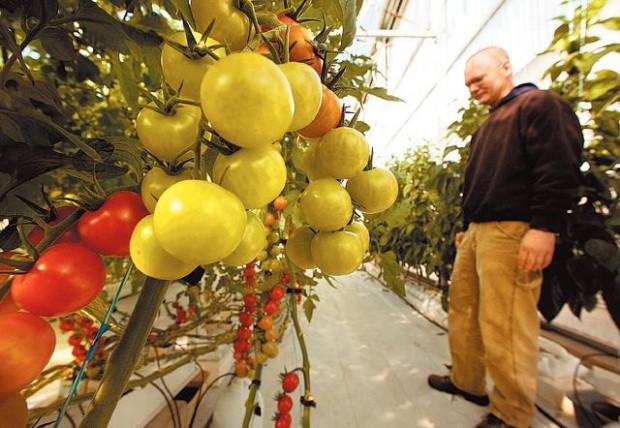
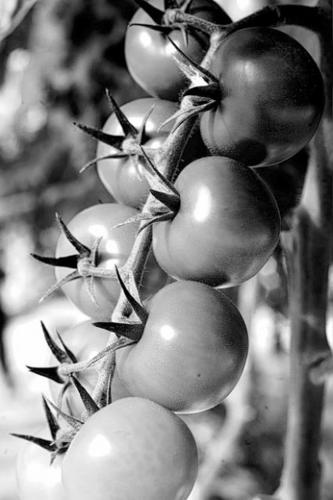
So tomatoes might not even make the cut as produce for the moon unit, Giacomelli says. Green, leafy plants, such as lettuce, produce much more mass more quickly than tomatoes.
And since the main point of the lunar unit is to take astronauts' exhaled carbon dioxide and turn it into oxygen, more biomass is better.
Sadler is also a veteran of Antarctica, first working there in 1978.
The prototype for the South Pole greenhouse used a commercial walk-in freezer. The finished product, assembled on site by Raytheon Polar Services Co., was highly specialized, but not nearly as complex and unique as Sadler says a lunar unit will have to be.
"Challenging" only begins to touch upon the demands of this project, even with his South Pole experience.
You don't just thumb through the seed catalog to buy a lunar greenhouse.
"Space requires redundancy," says Sadler, and that is one of the strong points of a bio-based air-recycling system.
He said a plant-based recycling system has built-in redundancy; should some plants die, others would carry on and even be replaced by a handful of tiny seeds. The results would not be as drastic as a mechanical system's failure, or require the space of mechanical multiple-redundancy backup systems.
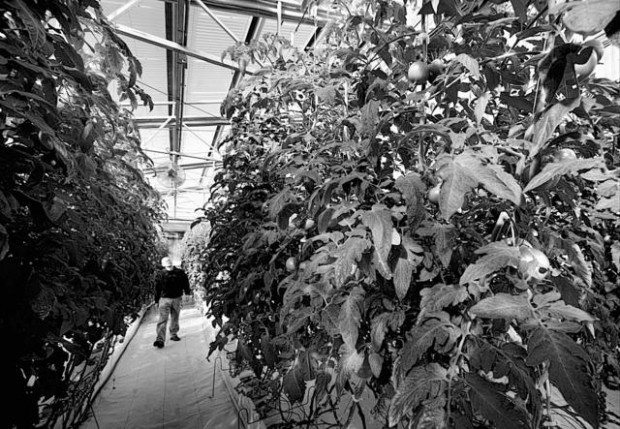
Inside would be a much more densely packed version of the hydroponic growth system at one of the center's greenhouses at its North Campbell Avenue site.
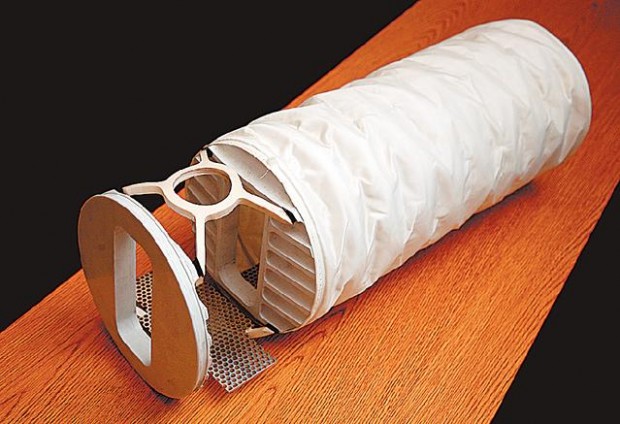
The greenhouse would pop out of a spacecraft module like a jack-in-the-box, be buried in the lunar soil by a robotic digger to shield it from meteorites and radiation. Heat would be provided by light brought in from a fiber-optic collector on the moon's surface, say Giacomelli and Sadler.
The unit would be delivered in an unmanned mission, allowing it time to grow plants before astronauts arrived to populate the lunar station.
But there's the matter of water, crucial for human and plant life, but prohibitively heavy as payload. That means finding it somewhere off Earth.
That's a problem for NASA to work out. Giacomelli and Sadler say among the ideas under consideration are finding water frozen in the lunar soil and using solar power to thaw it.
But there are advantages to being on the moon rather than Earth, too, Sadler and Giacomelli say.
For instance, gravity on the moon being one-sixth that on Earth, the lunar greenhouse won't need as much structural support to keep the 8-foot-diameter, 18-foot-long arms from collapsing. Plans call for 8-foot-diameter aluminum support rings spaced every 3 feet to support the airtight shell.
So far, except for a miniature model, it's all just a paper exercise, says Giacomelli.
He and Sadler hope to have a proposal ready to pitch to NASA by April.
As at the South Pole, Giacomelli says their greenhouse-based system has an advantage over mechanical answers to NASA's needs.
"By growing food you can make people happy psychologically and gastronomically," Giacomelli says.
Watch a slide show about scientists are attempting to create greenhouses for the moon.
• Visit the Controlled Environment Agriculture Center Web site to see its operations on North Campbell Avenue and at the South Pole: http://ag.arizona.edu/ceac
• Learn about growing tomatoes hydroponically: http://ag.arizona.edu/hydroponictomatoes
The UA's Controlled Environment Agriculture Center is sponsoring a public workshop for commercial and dedicated greenhouse hobbyists who want to learn about hydroponic plant production. Visit the center's Web site for information about the Greenhouse Crop Production & Engineering Design Short Course, Jan. 14-17.


