


While several hundred Sonoran pronghorn live in Mexico, herds in this country have dwindled due to human settlement and a brutal drought.
Date / Estimate
Dec. 1992 / 179
March 1994 / 282
Dec. 1996 / 130
Dec. 1998 / 142
Dec. 2000 / 99
Dec. 2002 / 21
Now: 25
SOURCE: US Fish and Wildlife Service
Pronghorn would leave Seabiscuit in the dust and finish a marathon in 45 minutes, making them far faster than any of their predators.
The animals are known to pace pickups on dirt roads, then speed up and dart across the road, like the Roadrunner cartoon character or teen-agers racing a train.
People are also reading…
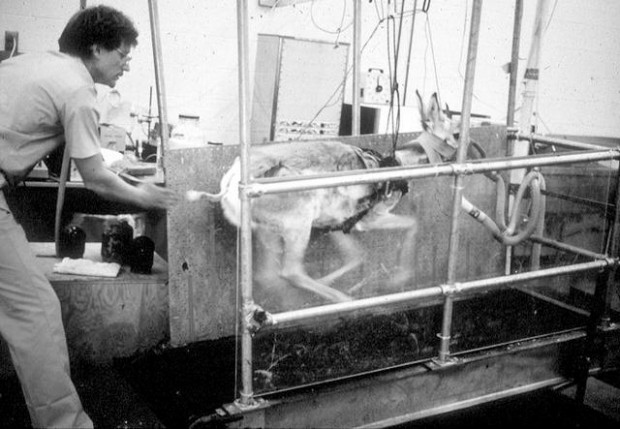
Curious about their speed, Northern Arizona University researchers bottle-fed orphaned pronghorn, put them on a treadmill with an 11 percent incline and logged results off the charts.
Thanks to voluminous lungs, blood filled with hemoglobin - the protein that carries oxygen - and muscle cells rich in mitochondria - which convert food to energy - pronghorn use oxygen three times faster than other mammals their size, scientists reported in the Oct. 24, 1991, issue of the journal Nature.
"We're interested in these extreme examples because we think we can find out something about all muscles. … it would be a shame if we wipe out this endangered species before we've found out what they have to tell us," said NAU physiologist Stan Lind-stedt, who calls pronghorn "probably the world's greatest endurance athletes."
Cheetahs are the top sprinter, reaching 70 mph, but after 20 seconds they're out of gas.
Pronghorn are so fast because they were once attacked by speedier predators, according to University of Idaho biologist John Byers, author of "American pronghorn: adaptation and the ghosts of predators past."
Before the end of the last Ice Age, 10,000 years ago, the continent was prowled by cheetahs, saber-tooth cats, large-skulled "dire wolves" and carnivorous "short-faced" bears. Pronghorn are "survivors from another world, sculpted by natural selection in that world into running machines that in today's environment blow the competition away," Byers writes.
From fossil records, scientists know the now-extinct predators fed on herbivores that also vanished - elephants, horses and camels. It's an open question if extinction of the so-called Pleistocene megafauna was due to climate change, overhunting by early humans or other factors.
Over the past 20 million years, there have been dozens of species of pronghorn. But the only one from the family Antilocapra
to make it through all the evolutionary bottlenecks is today's pronghorn, according to Gary Turbak's "Pronghorn: Portrait of the American Antelope."
— Mitch Tobin


