

LAUREL, Mont. - Crews cleaning up an oil spill on the Yellowstone River faced difficult conditions Tuesday as the scenic waterway rose above flood stage and stoked fears that surging currents could push crude into undamaged areas and back channels vital to the river's prized fishery.
Conditions on the swollen Yellowstone have hampered efforts to find the cause of Friday's break in the 12-inch pipeline that spilled an estimated 1,000 barrels of crude oil.
The river has been flowing too swiftly for crews to reach some oiled areas, and forecasters said mountain snowmelt was adding to high water levels. Officials speculated that the surge may push oil into areas that haven't yet been damaged.
Much of the riverbank also is covered with dense underbrush, making it difficult to walk the shoreline. Most observations have been made through flights.
People are also reading…
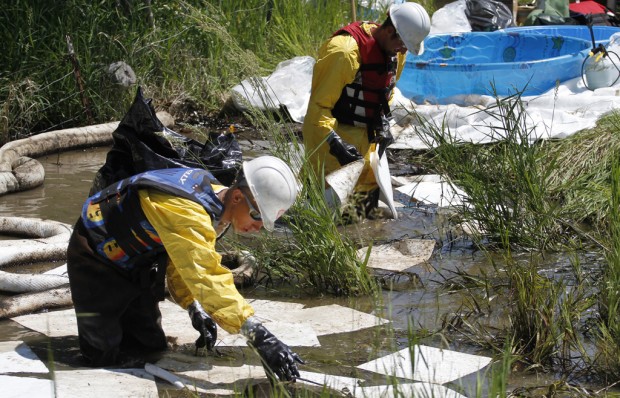
Sweat-drenched workers in hazmat suits and life preservers slogged through the riverside vegetation under a blistering sun. Some raked oily muck into trash bags; others dabbed at blackened grass with absorbent pads.
Booms to collect the oil bobbed in water, and plastic kiddie pools were set up for workers to wash off their boots once they left the water.
A few miles downriver from the broken pipe, homeowner Robert Castleberry said he had been out of his house since Saturday because of dangerous fumes from oil that the river pushed across his yard and into the crawl space beneath his house.
Castleberry's wife suffers from heart disease, and the fumes gave her difficulty breathing, he said. While he appreciated the company's promising to cover the couple's immediate expenses, the retired fuel-truck driver was doubtful workers would be able to clean up the black, gooey film that laced through the underbrush along the river.
"Exxon's been nothing but 100 percent with us," he said. "But when you get into brush that thick, that's going to be virtually impossible to clean."
Company and federal officials said they have seen oil about 25 miles downstream from the site of the break near Laurel. But Gov. Brian Schweitzer said he believes some has traveled hundreds of miles to North Dakota.
"At seven miles per hour, some oil is already in North Dakota. That's a given," Schweitzer said. "I'm asking everyone to get out there and report what you see."
Representatives of Exxon Mobil and the Environmental Protection Agency said they had no reports of oil beyond the town of Huntley.


