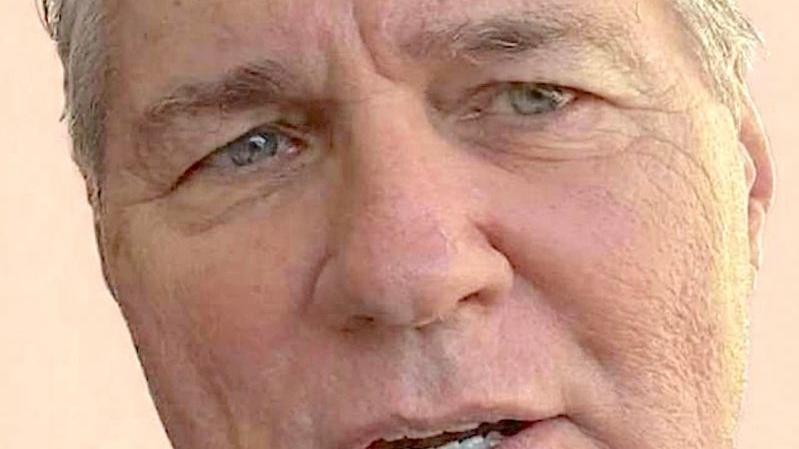
The following is the opinion and analysis of the writer:

Gil Shapiro
In 2016, in his 98th year, my father suddenly lost his mind due to an acute episode of vascular dementia. Until then, this wonderful man was a totally intelligent, loving, and rational human being. Indeed, he beat me at Scrabble the day before that life-changing event. He lingered for two years in a perpetual state of melancholy, anxiety and confusion. He progressively lost his ability to communicate, ambulate and take care of himself. He expressed no enjoyment in life. To the contrary: He was suspicious of everyone, everything and hallucinated constantly. My brother, sisters and I were positive he would not have wanted to live that way. While he was well-cared for in an excellent facility, we watched helplessly as he withered away. Once unconscious and without food or water, he died eight days later.
Even though he had completed an advanced directive telling us how he wanted us to deal with end-stage medical issues, there were no such instructions for end-stage mental issues such as severe dementia. Sadly, the option he would have wanted — euthanasia — was not available to him.
People are also reading…
Suppose you lost your mind with no hope for treatment or cure. Imagine being unable to: communicate coherently with anyone, including yourself; take care of basic human functions; and comprehend reality. Would you want to continue living? I wouldn’t.
You’ve likely known people who have been in such a state. With sadness, heartbreak, and frustration, you’ve watched them suddenly or progressively lose essential mental functions and endure relentless downhill courses lasting months to years.
Consider what psychologist Sandra Bem wrote immediately after receiving her diagnosis of Alzheimer’s: “A mind that could be so alive one moment with thought and feeling building toward the next step and then someone erases the blackboard. It’s all gone and I can’t even reconstruct what the topic was. It’s just gone. And I sit with the dark, the blank.”
Dementia is a chronic condition affecting memory, thinking, social abilities and independent functioning. While 60-80% of cases are caused by Alzheimer’s disease, dementia can also be a symptom of other brain diseases or caused by traumatic brain injuries.
Its toll on society is significant. Worldwide, it is estimated that 55 million suffer from this condition. In the US in 2020, researchers reported that 7 million people aged 65 and older had dementia. Experts anticipate that total to rise to more than 9 million Americans by 2030 and nearly 12 million by 2040.
There’s also the financial burden. An October 2021 report, U.S. Dementia Trends stated, “the cost of care in the last five years of life for someone with dementia averaged about $287,000, significantly higher than the care costs for someone who died of heart disease (about $175,000) or cancer (about $173,000). Not only were care costs higher for people with dementia, but a larger share of those costs was not covered.” And these were 2006-10 figures! With the burgeoning baby boom population entering the age category when dementia is most prevalent, the costs are skyrocketing. Currently, the annual cost to our society for dementia care is north of $600 billion.
Something sensible (and pragmatic) needs to be available.
I suggest broadening the scope of advanced directives to allow people to request euthanasia if they were diagnosed with severe dementia at a future time. Obviously, this “treatment” would need to be legalized.
To be clear, euthanasia is different from physician-assisted dying (PAD), which is allowed in 11 states under different laws: California, Colorado, Hawaii, Maine, Montana, New Jersey, New Mexico, Oregon, Vermont, Washington D.C., and Washington. Voluntary euthanasia is allowed in Belgium, The Netherlands, Luxembourg, Canada, and Colombia.
Currently, PAD is only recognized for terminal illnesses where individuals typically have less than 6 months to live and experience persistent pain and suffering. Such requests must be contemporaneous with the end-stage condition; made when of sound mind; and with the ability to self-administer lethal medication. Because these prerequisites are not possible for those with severe dementia, the only recourse is PAD in the form of euthanasia.
Advanced directives authorizing euthanasia for this condition must be carefully worked out by mental health, legal and medical experts. These documents will need to be highly individualized and then finalized while people are still capable of giving informed consent.
Euthanasia for severe dementia fulfills people’s pre-determined wishes to end lives that are purposeless and meaningless. It releases families from terrible economic burdens. It stops the indignities of futile and often prolonged palliative care given (ironically) to those who would have otherwise refused it. Additionally, it benefits society by repurposing healthcare facilities and redirecting limited health-care dollars for treatments that will truly help others.
In order for people to die with dignity and on their own terms, our laws should recognize advanced dementia as a terminal condition that justifies physician-assisted euthanasia.
Follow these steps to easily submit a letter to the editor or guest opinion to the Arizona Daily Star.
Gil Shapiro lives in Oro Valley. He was the spokesperson for Freethought Arizona from 2005 to 2016. Contact him at: gdshapiro@comcast.net