

I spent most of the past week with middle and high school teachers attending a workshop on Holocaust education. The featured speaker was Peter Feigl, a 96-year-old survivor who was saved by the good and courageous of people of Le Chambon-sur-Lignon, a village in southern France responsible for saving about 5,000 Jewish refugees.
It has been a week of both intellectual and emotional intensity, learning more about the systematic cruelty of the Nazis, the stubborn obliviousness of the bystanders, the pervasiveness of anti-Semitism, and the remarkable heroism and simple decency of the rescuers.
Throughout the week, I came back time and again to the question, “What would I have done?” I tried to imagine what it might have been like to stand in Peter’s shoes as he watched his father ride away on a bicycle after receiving a small pouch containing his father’s watch and his mother’s earrings. I tried to imagine what it might have been like to be Daniel Trocme, arrested by the Gestapo for running a boarding school for Jewish children, or what it would be like to be a struggling farmer in occupied France who has a family of refugees appear on the doorstep looking for help.
People are also reading…
And then I woke up to a story on NPR about the dangers of toxic empathy.
The episode began with a soundbite of Elon Musk saying, “The fundamental weakness of Western civilization is empathy.” That is followed by Josh McPherson, pastor of Grace City Church, saying, “Empathy is dangerous. Empathy is toxic. Empathy will align you with hell.” The story goes on to quote Allie Beth Stuckey, author of “Toxic Empathy: How Progressives Exploit Christian Compassion,” saying “Really, I think empathy as hoisted up as the highest virtue, or even a virtue at all — I think that really gets us into a really big mess.”
Stuckey is correct. Over the past decade or so, many progressives have elevated empathy into a virtue, and that has led to a simplistic form of moral reasoning in which it is always wrong to cause someone pain, or even to hurt their feelings. But it is equally simplistic to conclude that empathy is a weakness, that how others feel shouldn’t matter.
So, how should we think of empathy? The answer is that empathy is neither a virtue nor a vice. It is simply the ability to feel what another person is going through. That ability is the foundation of morality, but not the whole of morality. To try to live a good life based upon empathy alone is like trying to reach one’s destination with a compass but no map, but to try to live a good life without empathy is like trying to reach one’s destination with nothing to point you in the right direction.
An example of someone trying to explain how to be moral without empathy comes from a speech Heinrich Himmler, the head of the Nazi S.S., delivered to his generals: “Most of you must know what it means when 100 corpses are lying side by side, or 500, or 1,000. To have stuck it out and at the same time — apart from exceptions caused by human weakness — to have remained decent fellows, that is what has made us hard.”
To believe one can be a “decent fellow” without regard for the suffering of others is the height of moral delusion. It is impossible to be a good person without empathy, without being able to feel what others are going through. But empathy alone is not enough. One must also act with compassion, doing what needs to be done by working to ensure people’s legitimate needs are met.
I don’t know whether those who are warning against the dangers of empathy are malicious or just caught up in the overreaction that is characteristic of political extremism. At any rate, too much empathy is not a problem in our society. The problems come when empathy is unaccompanied by the virtue of practical wisdom, which is necessary to guide feelings into appropriate behaviors and policies.
What we find in the NPR story is yet another description of a false crisis, quoting people aligning themselves on the extreme ends of the political spectrum, arguing over which side is more misguided. That is dangerous, because as Himmler’s speech shows, people can start believing their only choice is between the two extremes, and when that happens there is nobody left fluent in the language of the middle, which is the language of the common good.
Feelings alone are no sure guide to living a good life. But without the ability — and the desire — to feel what another is going through, no genuinely good life is even possible.
Christians in America today should take a close look at the humble Protestants of Le Chambon. Their empathy had a context. They had genuine compassion for those who were suffering; they also had a book that told them helping those in need was a duty. They had both a compass and a map.
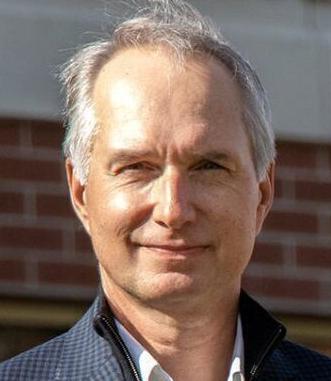
Richard Kyte is director of the D.B. Reinhart Institute for Ethics in Leadership at Viterbo University in La Crosse, Wis., and co-host of "The Ethical Life" podcast.
The Ethical Life is a reflection on the ways that ethical thinking influences our actions, emotions and relationships. Richard Kyte is the director of the D.B. Reinhart Institute for Ethics in Leadership at Viterbo University in La Crosse.
