
If NATO survives the Iran war, it will be a very different alliance from the one now in place.
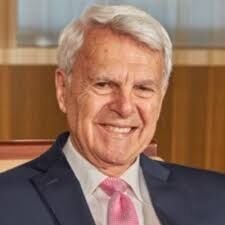
William Owens

Barry Poulson
The United States and Israel launched the Iran war without warning or consulting NATO allies. When these countries refused to participate in the war and the blockade of Iran, President Donald Trump threatened to withdraw from NATO.
The European nations responded by forming a coalition that we refer to as European NATO. It is countries supporting military action to open the Hormuz Strait and protect shipping through it, but only after the Iran war ends. That coalition does not include the United States, which the Europeans identify as a belligerent country, along with Israel and Iran.
The decision by European NATO to mobilize military forces required to protect freedom of shipping in the Hormuz Strait follows the precedent set in 2024. That year, the European Union Naval Force Operation Aspides was organized to protect shipping in the Red Sea, Persian Gulf and Indian Ocean. This military operation was in response to a U.N. Security Council resolution that mandated the cessation of Houthi attacks on shipping.
People are also reading…
Mark Rutte, the secretary general of NATO, explained the rationale in a meeting with President Trump. He stated that NATO has an unhealthy dependence on the United States, and that European countries want to reduce their dependence, most notably by increasing national military expenditures.
Article V of the North Atlantic Treaty Organization states that an armed attack against one NATO member shall be considered an attack on all members, who are then obligated to come to its assistance. The decision to go to war requires a unanimous vote of all NATO members. Article V has been invoked only once, after the terrorist attack against the United States in 2001.
We should expect our European allies in NATO to pursue their own interests and protect their sovereignty. They may decide NATO is no longer in their interests and end the alliance. They will certainly not participate in a NATO alliance in which the U.S. launches war without warning or consultation. If the European countries decide to continue the alliance, it will require a fundamental change to the organization’s governing structure.
Our European allies have already taken a new leadership role in NATO’s command structure. European countries, including NATO’s newest members, play a more important role in the alliance’s command structure. All of the Joint Forces Command, which leads operations in military conflicts, is now led by our European allies.
The U.S. continues to lead all military command structures through its role as Supreme Allied Commander Europe. That position has always been led by an American four-star officer. In a new command structure, that position could rotate among the allied countries.
The Trump administration is likely to resist U.S. cooperation in a new NATO. The administration will argue U.S. participation in a new Europe-U.S. NATO would diminish our ability to respond to military crises and diminish our sovereignty. The U.S. may even choose to withdraw from NATO, as Trump suggested, a move that would require congressional approval.
But such a decision would be a grievous error resulting in a power vacuum and a fundamental restructuring of the international balance of power. The Russians, Chinese and Iranians would be the main beneficiaries of a dissolution of NATO. They would quickly move in to expand their power in the Middle East, just as they did after the Suez crisis.
The U.S. should support a new Europe-U.S. NATO because American interests are best achieved through cooperation with allies.
The alternative now is not business as usual in NATO, as our European allies make clear. Rather, it is a new NATO with or without U.S. participation. NATO has never been more important to the peace and prosperity of the global economy. A new European-U.S. NATO may be the best and only way for the alliance to survive.
Poulson is a professor emeritus at the University of Colorado. Owens is a former vice chairman of the Joint Chiefs of Staff. They are board members for the Prosperity for US Foundation and wrote this for InsideSources.com.