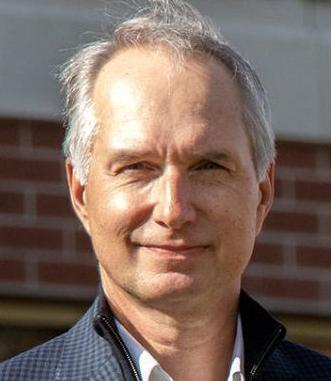
Richard Kyte
When Ray Oldenburg first wrote about third places in 1989, his work already had an air of nostalgia about it. He was writing about appreciating and preserving something that was being lost — not your home (first place), nor work (second place) but the place you go to socialize, a place, like “Cheers,” where everybody knows your name.
The necessity of third places for community cohesion and well-being has become increasingly apparent over the past several years as researchers get better at identifying what it is that allows people in some communities to flourish and those in other areas to languish.
Places that do not encourage the development of third places or which sit idly by while the older places where people once gathered gradually shut down, end up paying the price. A team of researchers at the University of Michigan and Princeton came up with what they call the Index of Deep Disadvantage. Writing about the conditions in central Appalachia, they learned about the devastating effects of drug use in the region, but they also discovered underlying causes that rarely get mentioned.
People are also reading…
Talking to residents of Manchester, Kentucky, they heard about the closing of the local movie theater, of several bars and cafes, of beauty salons, and a park that was destroyed for the sake of a highway project. When asked about the rise of opioid use in the county, people living there bemoaned the fact that there is now “nothing to do but drugs.”
One might suppose that cities could build social gathering spaces by dedicating more resources to public projects, but, except for parks, the places where people actually gather are overwhelmingly private.
An extensive national survey on community life found that most Americans (about 70 percent) live close to some kinds of neighborhood amenities such as public parks, community centers, libraries, gyms, coffee shops or taverns, but the places they tend to visit regularly are overwhelmingly commercial locations such as coffee shops, cafes, bars and restaurants. About a quarter of Americans regularly go to a public park or community garden, while only 3 percent regularly go to libraries or community centers.
That means we should be paying more attention to policies that encourage private development of the sorts of places where people like to hang out.
The benefits are enormous. People who have a regular third place greatly expand their circle of friends; they laugh more often; they are more engaged in their community; they are happier; they live longer. But third places do more than just make individuals more satisfied with their lives, they also benefit entire communities. They serve as gateways so people new to the area can get to know their neighbors; they function as incubators for new ideas; they serve as safety nets for people in crisis; they build social trust; they decrease political polarization.
Yet even in communities that researchers identify as great places to live, social life is not as robust as it could be. If you think about the way our physical spaces affect our relations to one another, you will begin to understand two things: first, why our leisure activities over the past century have changed from mostly active (playing games together) to mostly passive (being entertained); second, why our entertainments, as well as our politics, have become increasingly dark.
Prior to the mid-20th century, most social interaction took place among small circles in which everyone participated in some form of creative activity: playing cards, telling stories, making music, dancing. The places where people gathered for such activities were dance halls, church basements, skating rinks, town halls, public squares — spaces no larger than the human voice could carry without amplification and where everybody’s face could be seen by anyone in attendance. But when movie projectors, screens and sound systems came along, venues like movie theaters, civic centers and sporting arenas proliferated, places that do not require much participation. One just has to show up.
Once entertainment became largely passive, it only took more technological innovation to provide the same thing in homes, just on a smaller scale. Radios and television meant that we could listen to the same entertainers and see the same programs in the privacy of our homes. The important point is this: as entertainment changed, so did people’s orientation to one another — from face-to-face to side-by-side and, finally, to alone in the dark.
When people are face-to-face, they tend to pay attention to one another. When they are seated side-by-side, they tend to interact much less. They might carry on a conversation with the person sitting right next to them, but the group as a whole will not participate in a conversation. When people are on a Zoom call, they interact even less.
Sitting around a campfire or a table, as generations of our ancestors did, primes people for collaboration. Sitting in rows with everyone facing the same direction primes people either for compliance or defiance. Sitting alone in the dark primes people for conspiracy.
If we want to make our communities great places to live, the way to start is by making sure there are plenty of places for people to have conversation. The more time we spend actually getting to know one another, the better off we will be.