

Important decisions are often difficult and complex. The matter of how and when the Jefferson Avenue Tops reopens is fraught with emotion and long-standing issues of inequity.
Many want the supermarket to return “bigger and better” as former Buffalo Common Council member/state senator Antoine Thompson and Henry-Louis Taylor Jr., director of UB’s Center for Urban Studies, stated in a News story Tuesday. Others, as letters to The News confirm, would like to see a new store elsewhere, feeling that the current location is too stigmatized by the tragedy that occurred there May 14.
In the end, this will be determined by the corporation and the community, but the reopening discussion is just one facet of a many-sided picture.
The temporary loss of one supermarket should not cause a devastating lack of food resources in any neighborhood. If a food retailer on Buffalo’s West Side closes, residents have options – though they may not be abundant – and the same holds true for other Buffalo areas. Smaller grocery stores, food co-ops and open-air markets can be found more easily in urban ZIP codes west of Main Street, while in the suburbs, supermarkets proliferate. A 1.5-mile stretch of Niagara Falls Boulevard in Amherst is about to receive its 11th full-service food retailer.
People are also reading…
To its credit, Tops is the only major local chain that has located in the East Side; indeed, it’s Buffalo’s dominant urban supermarket, with seven locations within the city limits. Buffalo’s other major chain, Wegmans, has one Black Rock location.
Many larger stores say they can’t make multiple urban locations work economically, but there are other ways to deliver fresh food. From May through October, open air farmers markets operate in the Elmwood Village, lower West Side, downtown, North Buffalo and South Buffalo. These areas also have two large food co-op locations and several grocery stores that specialize in fresh produce.
East Side neighborhoods have few true grocery stores and no food co-ops, which have experienced a renaissance after their ’70s-era heyday. Even suburban enclaves are picking up on the trend; a co-op opened in East Aurora in 2021 and Williamsville has one in the works. These operations focus on shopper participation, local produce and healthy options not generally provided at corner delis and markets.
It’s therefore encouraging that, in its first round of grants, the Buffalo Together Community Fund has identified – among many other organizations – African Heritage Food Co-op, Buffalo Freedom Gardens, Buffalo Go Green, Feed Buffalo and Rooted in Love, all nonprofits whose focus is to relieve food insecurity.
These organizations go well beyond the bags of nonperishable items that often characterize nutrition philanthropy. Buffalo Go Green trains young people in urban agriculture. African Heritage Food Co-op has a teaching garden, a mobile food market and plans to open a brick-and-mortar store at 238 Carleton.
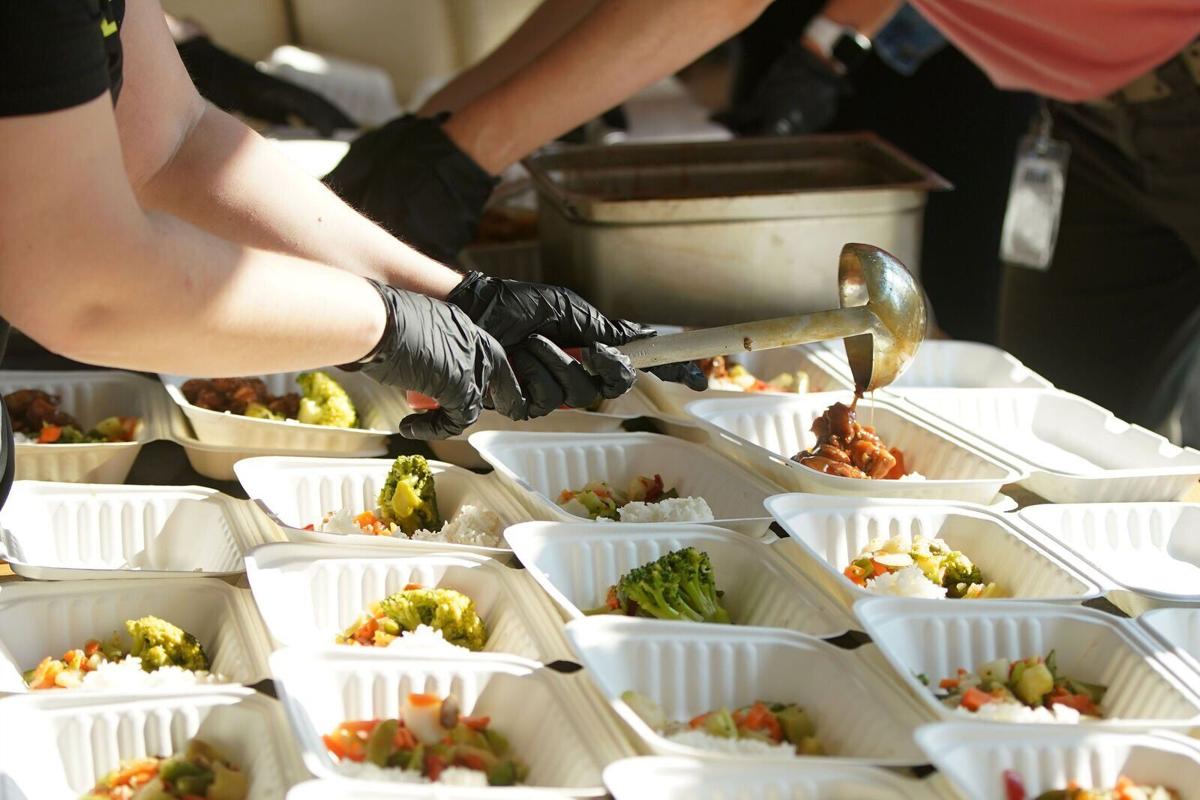
The outpouring of community support for food distributions on the East Side has been heartening and inspirational, but it can’t produce a sustainable food ecosystem. That happens when populations are empowered and enabled. Buffalo Freedom Gardens, founded in 2020, which helps residents start their own vegetable gardens, has a mission of food independence and a motto: “growing food for liberation and resilience.” Its parent organization, Grassroots Gardens, runs 111 community gardens, most of them on Buffalo’s East Side.
Besides food’s obvious role in human survival, it is often the reason communities gather and interact. That’s one of the roles Tops played, for many – it was a place to meet friends and trade news. Food creates such places and there shouldn’t just be one.
By founding and/or supporting fresh food markets, co-ops, urban farms and community gardens, residents take control of their access to healthy, affordable food. These places aren’t just food distribution points; they’re places where food’s central role in the culture of a community is respected and sustained.
• • •
What’s your opinion? Send it to us at lettertoeditor@buffnews.com. Letters should be a maximum of 300 words and must convey an opinion. The column does not print poetry, announcements of community events or thank you letters. A writer or household may appear only once every 30 days. All letters are subject to fact-checking and editing.


