

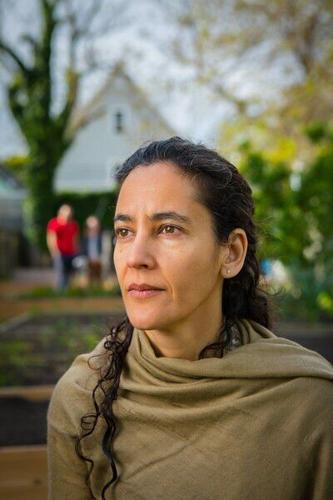
Samina Raja, an internationally known University at Buffalo expert on building sustainable food systems and healthy communities, has spent more than 20 years studying how to help feed people living in neighborhoods without groceries, concentrating on Buffalo's East Side.
The solution, in her estimation, is a classic case of something being simple, but not easy.
“The city’s Black neighborhoods need sustained structural investments, not fly-in, fly-out charity,” she and other UB Food Lab researchers said in an op-ed published at CivilEats.com.
The dilemma got a burst of attention in the days after a murderer took the lives of 10 people at Tops Markets on Jefferson Avenue and suddenly, violently, took away the place where residents could get their groceries.
But community leaders have been paying attention for a lot longer than that, as evidenced by three examples.
People are also reading…
Bailey Green Wellness Center
In 2014, Allison DeHonney started Urban Fruits and Veggies and Buffalo Go Green, its not-for-profit arm. Urban Fruits is an urban farm providing fresh vegetables and gardening lessons to DeHonney's neighbors, three blocks from the Jefferson Tops.
Since 2018, she’s been working on developing a multipurpose Wellness Center as part of the Bailey Green revitalization and sustainability project. The $7.9 million project includes six hydroponic greenhouses to keep the farm’s output going year-round.
The project has been supported with $50,000 in seed money from the Dedrick Foundation, but the search for funding continues, DeHonney said.
A holistic wellness center won’t duplicate clinical services, but in partnership with a federally funded clinic, folks can get physical therapy, have their blood pressure tested and get a referral to a physician.
The basement will be dedicated to cold storage for fruits and vegetables, allowing the market to work with Erie County farmers directly. Numerous Erie County farmers have said they would like to provide fresh vegetables to the East Side, but they need infrastructure, DeHonney said.
After a Covid-19-related pause in development work, DeHonney is waiting to hear back from city officials about buying seven vacant lots on Zenner Street, two blocks west of Bailey Avenue.
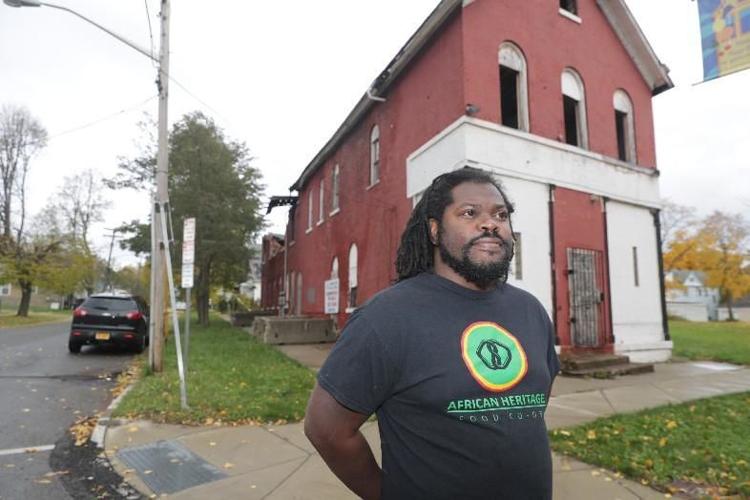
African Heritage Food Co-op
Alex Wright grew up on the East Side and started developing a food co-op six years ago. In the Fruit Belt, a neighborhood without grocery store coverage that is 1.8 miles from the Jefferson Tops, he’s working on a grocery store and community center.
To support the effort, a Black woman who asked for anonymity bought a building at 238 Carlton St. for $44,000 and donated it to the effort. The Buffalo Bills foundation provided $50,000 to fund studies and startup costs. There’s about $3 million left to raise before the African Heritage Food Co-op has a chance of becoming reality.
Throughout Covid-19, Wright’s organization focused on delivering food to shut-ins and people who couldn’t get to stores. If he can find funding, the plan is for a grocery store supplying daily needs to customers who stop by, and more who need groceries delivered.
“Since the co-op started, we've delivered for free to anyone over 55, and anyone who's physically disabled, and we don't plan to stop doing that,” Wright said. “But you add to that folks that just have PTSD from even going into a grocery store now.”
The plan is for the Carlton Street building to have community space upstairs, with wifi, for meetings, or children doing homework after school. On-site daycare for workers is part of the plan, too. Businesses will have a chance to set up tables and look for support, Wright said.
If it blossoms, the effort could create jobs for an estimated 60 people, including drivers and the groundskeeping crew, Wright said.
The business plan calls for a $2 million investment in building and equipment and another $1 million to get the business going and bankroll its startup.
Freedom Gardens
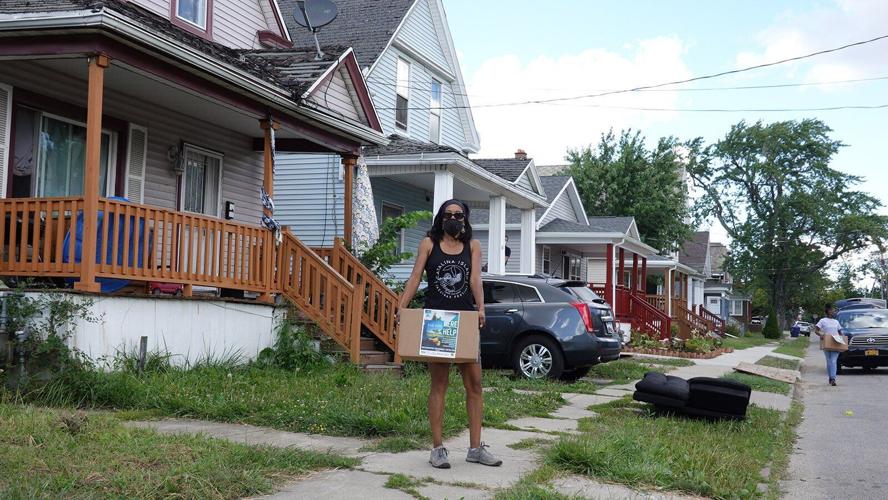
Coppertown Block Club president Gail Wells worked with Seedling Resilience, a community-led coalition that’s seeking to strengthen the local food system in response to Covid-19, to help people figure out how to grow vegetables in their yard. In 2020, her group helped 50 Buffalo households start raised-bed or container gardens, subsidizing material costs so it didn’t cost homeowners. In 2021, it helped another 34 get started working toward food sovereignty, growing their own food.
“I have over 600 names of individuals who live in the most desperate, food-insecure places in the city. It includes the lower West Side, and mostly all of the East Side, except for 14214,” Wells said.
If given, say, $50,000 more to work with, the group could help 50 more families start gardens, planting the seeds to help them toward food security. Her all-volunteer crew works with what they can get, Wells said.
“Now there's a shortage of soil and compost, so my costs keep going up," she said. "But if I had what I really needed, which is a truck and some of the other things that would make it so I could do my deliveries not being so dependent on who's available that weekend.”
These three examples are far from the only efforts underway. The East Side has “people who have been working on things for a very long time,” Raja said.
They may not be able to replicate the convenience or the sheer size of a grocery store, but they might end up doing something more important: growing the community.
Send restaurant tips to agalarneau@buffnews.com and follow @BuffaloFood on Instagram and Twitter.
In this Series
Complete coverage: 10 killed, 3 wounded in mass shooting at Buffalo supermarket
-
Updated
Hochul pledges pursuit of justice after shooting, calls on sites to crack down on white supremacist content
-
Updated
Sean Kirst: In Buffalo, hearing the song of a grieving child who 'could not weep anymore'
-
Updated
Recently retired police officer, mother of former fire commissioner both killed in Tops shooting
- 307 updates


