

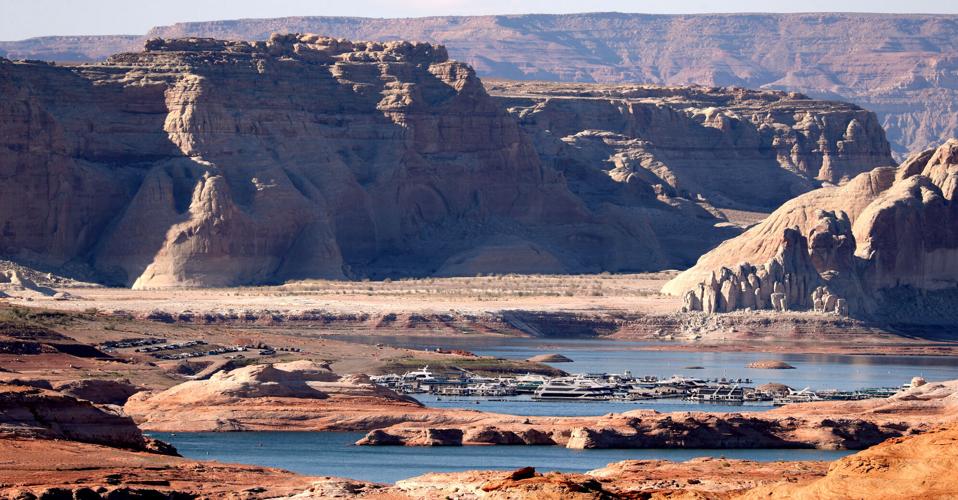
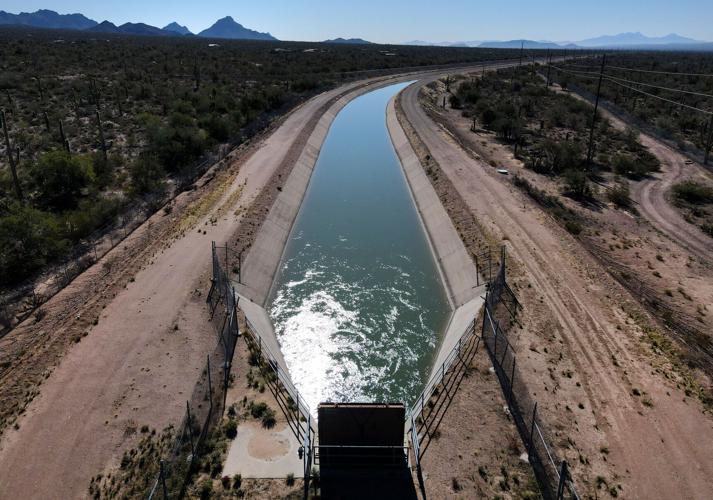
Tucson and the rest of the Southwest are dealing with a water crisis. How do you think the crisis will affect Tucsonans? What steps should the City of Tucson take to deal with it?
Question to candidates: Tucson and the rest of the Southwest is dealing with a water crisis. How do you think the crisis will affect Tucsonans? What steps should the City of Tucson take to deal with it?
Mayor
Arthur Kerschen
Tucson can encourage conservation without subsidies.
Regina Romero
As a desert city, Tucson had to adjust its water management practices. We went from being one of the largest cities in the U.S. fully dependent on groundwater to a city with a diverse water portfolio.
People are also reading…
As a Council Member, I worked to create a Water Service Area Policy to establish a defined water service boundary, recognizing that our water resources are finite and making it possible for Tucson to plan for a sustainable future.
The steps that the City of Tucson has already taken, such as investing in water conservation, infrastructure, and management, have helped reduce per-person water use and allowed the city to store a significant portion of its Colorado River water allocation for the future. The city's recycling of wastewater for non-potable uses, its rainwater and stormwater harvesting programs, and its robust Water Conservation Program are also noteworthy, as they provide tangible benefits to residents and businesses while conserving water resources.
Thanks to our diverse water portfolio and strong commitment to conservation, Tucson is recognized as one of the most water-resilient cities in the nation. Tucsonans will likely be able to weather the impacts of the water crisis better than many other cities in the Southwest.
However, with a deepening drought and increasing threats of climate change, we should not let our guard down. We have enough water to thrive but not to waste.
To continue being good stewards of our water resources, the City of Tucson should consider additional steps such as:
- Expanding diversification of water sources: While Tucson has already diversified its water portfolio, it may be worthwhile to explore additional sources such as desalination and expanding the wastewater network.
- Water conservation policies: While the city has made significant progress in reducing per-person water use, we should continue to discourage wasteful water use to further reduce consumption in the face of ongoing population growth and climate change.
- Promoting rainwater harvesting: While the city already offers rebates for rainwater harvesting, increased promotion and education around this practice and streamlining the rebate application process could help further reduce demand for potable water.
- Infrastructure improvements: While the city continues to invest in its infrastructure, ongoing upgrades for water infrastructure systems are needed, including pipes, pumps, and treatment plants, to improve efficiency, quality and reduce water loss.
- Cooperation: Continue to collaborate with other cities, government agencies, and stakeholders to develop a regional approach to water management and conservation.
Overall, the City of Tucson needs to continue to take a proactive approach to address the water crisis and ensure that its citizens have access to clean, safe, and reliable water resources for years to come.
Janet "JL" Wittenbraker
Water conservation is the most important issue for all Tucsonans, Americans and Worldwide. I believe we must take immediate action to protect this valuable resource and work for common solutions, e.g., conservation and reclamation. I am undecided on water harvesting because I am uninformed of the impact on the ecology. I do not believe conservation through penalties, e.g., high water bill, is a successful deterrent nor do I believe it is fair to low economic and/or multi-person households. Rather, I would suggest a discounted rate based on one’s conservation, e.g., a household using 10% less water is rewarded with a lower water bill and discounted per unit rate of #%. Again, I must defer this question to a later date when I’ve had the opportunity to review all City initiatives and speak with department leadership, employees, constituents, and subject matter experts.
Ed Ackerley
EFFICIENCY. One of the good things about Tucson is the good water management that has taken place over the years. The basin in Tucson and Avra Valley has enough water to sustain Tucson for well over 50 years, considering population growth, new housing, and industrial use. Beat the Peak was a successful campaign to limit water usage, convert lawns, and prepare the community for dwindling water resources in the future. City of Tucson needs to enhance its relationship with the University of Arizona, recognized around the world a one of the most knowledgeable water resource programs. The City of Tucson should take advantage of that resource.
Ward 1
Victoria Lem
Victoria Lem did not respond to our questionnaire.
Miguel Ortega
We are indeed dealing with a water crisis here in Tucson and the rest of the Southwest, and we should act accordingly. The City should be very intentional about requiring development to implement stronger water conservation measures into their new communities, including gray water and water harvesting. While it should involve all of our efforts to conserve, the larger burden should be placed on big companies and development as they are using larger amounts of water. We should also build partnerships with state and federal campaigns to conserve water.
Lane Santa Cruz
The City of Tucson has led water conservation efforts for decades. The drought crisis we have been experiencing for over 22 years comes from decades of poor planning from regional partners, and Tucsonans will need to continue water conservation efforts.
The City of Tucson has taken important steps to create water policies that will support a safe and secure water supply into our future. Water conservation is key. Tucson already has policies in place, such as recycling wastewater for non-potable uses, developing rainwater and stormwater harvesting programs.
Expanding our local recharging efforts, such as the Santa Cruz River Heritage Project, contribute to these efforts.
Ward 2
Paul Cunningham
The City of Tucson has been actively preparing for this water crisis for the last 20 years, and we are in better shape than any other large municipality in terms of our wet water storage, our CAP allocation, our reclaimed water partnership with Pima County and our gallons per capita per day usage (gpcd). This puts us in an ideal situation to pursue next-level water strategies like leaving water in Lake Mead to benefit the whole region as well as our managed recharge and green stormwater infrastructure programs like the Santa Cruz Heritage Project, that provide quality of life enhancements as well as water table recharge for our community. Tucson Water also continues to develop its cutting-edge rebate and education programs funded by the Conservation Fund (which I have consistently supported).
That is not to say that we don't have significant water challenges in our community. We are still a desert community and a large percentage of our aquifers are contaminated. We need to continue to innovate to ensure that our children and grandchildren can enjoy Tucson as we have. My office is active in discussions of new conservation programs and in the development of OneWater 2100, Tucson Water’s Master Plan for water in the 21st century. I have also consistently supported any and all efforts to accelerate cleanup of our aquifers.
In Ward 2, I will continue to work with well owners to turn off wells, particularly in shallow groundwater areas to enhance recharge of the aquifer. More than a dozen Ward 2 wells have been shut off since my time in office, and my office is currently working with several well owners to discuss bringing them onto the City’s renewable water supply.
Lisa Nutt
Water is life, and the water crisis is the single most important issue facing our city and our state. The impact on every part of our lives from our economy to our homes to our very future as a city. Tucson has done a much better job of conserving water than any other municipality in Arizona. Our community has been storing excess CAP water underground for years, which positions us to serve our current and immediate future needs. Tucson's culture of conservation is a strength-based approach we can continue to build upon and use in shaping policy and managing this precious finite resource. In addition, as a city council member, I want to push for Tucson to offer greater financial incentives for people and businesses to implement broader rainwater harvesting, cisterns, switching to either desert landscaping, artificial turf and other water-saving devices (like drip irrigation for agriculture) that can go a long way to additional water preservation.
Ernie Shack
Ernie Shack echoed Wittenbraker’s responses
Pendleton Spicer
I am skeptical that our water shortage is as dire as sometimes described and believe that all sides of the issue need to be thoroughly researched and decisions made based on that investigation. That being said, regardless of the degree of shortage, Tucsonans should be encouraged to value water and use it judiciously, given the fact that we live in a desert environment. Caution needs to be exercised in maintaining the quality of water, as well as the quantity so that we don't repeat the destructive situations Tucson has experienced with water quality in the past. Tucson can help to maintain local control of CAP water with the states that receive the water while discouraging the interference of federal intervention. Research into the city/county issues over water allocation and control is something I must do.
Ward 4
Ross Kaplowitch
Water conservation is incredibly important, and I want to talk to both the community and city and county leadership before I devise a proposal.
Nikki Lee
As a City Council Member and a Tucsonan, I am deeply concerned about the ongoing water crisis that our city and the Southwest region is facing. Years of drought conditions undoubtedly have a significant impact on the ~40 million people who rely on the Colorado River for water, affecting not only their daily lives but also our environment, economy, and infrastructure.
Tucson has been a leader in great water policy and aggressive water conservation efforts for decades. While we all need to focus on water conservation in our homes and businesses, we can be proud of ourselves as Tucsonans for the mindset we share around water conservation. As city leaders, we must manage and secure our water resources and infrastructure, ensuring we have safe and clean water to efficiently supply to Tucsonans for generations to come.
In 2022, Tucson Water installed approximately 20,000 linear feet of transmission mains and drilled 4 production wells to keep Tucson’s water flowing safely and securely. We helped Tucson prepare for the future by upgrading 27 million gallons of groundwater storage. We encouraged Tucson Water customers to purchase water-saving appliances and provided 4,128 rebates to customers for those purchases. Because of the rebate program and the initiative of Tucsonans, we collectively conserved 30.7 million gallons of water through the replacement of appliances.
To continue making progress in this critical area, and after months of community engagement, Tucson Water has begun drafting the One Water 2100 Master Plan. The goal for this plan is to ensure a sustainable, high-quality water supply into the future. To learn more about this plan and engage in this effort, you can visit https://tucsononewater.com/.