

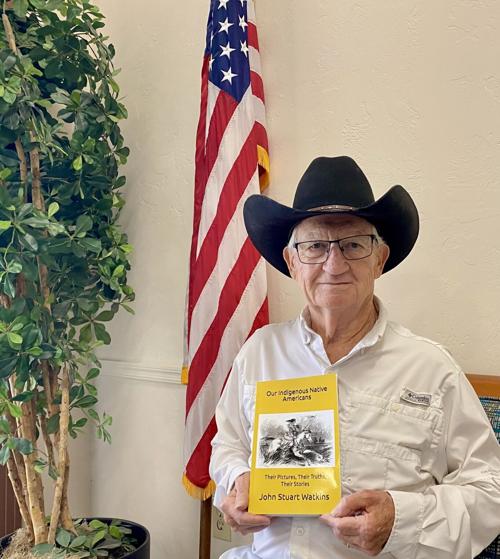
History is often shaped by the stories we choose to tell, and just as importantly, by the stories that were left untold. In "Our Indigenous Native Americans", Booky Award-winning author John Stuart Watkins invites readers to look beyond familiar narratives and examine the history of Indigenous peoples through documented accounts, historical records, and Native voices. His research challenged many assumptions he once held and ultimately inspired him to write a book that encourages readers to question long-standing misconceptions.
In my interview, I asked Stuart questions about what inspired his work, the discoveries that surprised him most and why understanding Indigenous history remains essential today. So, let me share some of his thoughtful responses with you.
One of the driving forces behind the book was Stuart's curiosity after hearing discussions about "stolen lands" claimed by several Native American tribes.
"When I started hearing about 'stolen lands' that some tribes were claiming, I decided to do some research," he explained. "The Smithsonian Institution has a history site where I found a 64-page treaty between five Nations and the United States government. Although it was too long to reproduce in the book, it opened the door to much deeper research."
That initial discovery led him to explore additional historical sources, including the Texas Historical Society, online archives in Wikipedia and through Google Search, and other reference materials.
"The more I researched," he said, "the more interested I became in writing a book about Indigenous Native Americans."
As his research progressed, Stuart encountered information that challenged commonly accepted versions of American history. Among the discoveries that surprised him most was the long-standing dispute over the Black Hills, the sacred land surrounding Mount Rushmore.
"One of the surprises I found is that the lands and mountains surrounding Mount Rushmore may well be on stolen land," he said. "The Native peoples claiming ownership never accepted several offers the government made to purchase the land."
For Stuart, understanding historical disputes such as these is not about assigning blame but about recognizing that many chapters of American history deserve closer examination.
Another major goal of the book is to confront stereotypes that have shaped public perceptions of Indigenous peoples for generations.
"Some common misconceptions were that Native Americans were unintelligent, were savages, fought constantly and had no civilized communities," Stuart explained. "Yes, there were conflicts among tribes when hunting grounds were threatened, but many Indigenous Nations had occupied their territories for thousands of years."
His research revealed societies with sophisticated political structures, deep environmental knowledge and strong cultural traditions.
"Our Indigenous Natives were well educated in how to preserve the lands and animals they depended upon for survival," he said. "Many chiefs met with government leaders and delivered eloquent speeches expressing their viewpoints."


