In exchange for peace in 1872, the Chiricahua Apaches were promised more than 2.7 million acres in southeastern Arizona, only to have it ripped away from them by President Ulysses S. Grant just four years later.
Now a small piece of that land is back in the hands of the Apaches.
The Oklahoma-based Fort Sill Apache Tribe recently purchased 55 acres in the Dragoon Mountains, a historic refuge for Chief Cochise and the Chiricahua people about 85 miles southeast of Tucson.
The federally recognized tribe includes the descendants of the Chiricahua and Warm Springs Apaches, who lived throughout southeastern Arizona, southwestern New Mexico and northern Mexico before the U.S. government forcibly removed them from their ancestral homelands and held them as prisoners of war at Fort Sill for almost 30 years.
People are also reading…

The Fort Sill Apache Tribe, descendants of Chiricahua and Warm Springs Apaches who were removed in the 19th century, have acquired a 55-acre parcel in Cochise Stronghold with help from the Trust for Public Land.
The tribe’s newly acquired parcel in Arizona is located in an area known as Cochise Stronghold, about five miles from the spot where the Chiricahua chief met with U.S. Army Gen. Oliver O. Howard to negotiate a peace agreement 154 years ago.
"The Dragoon Mountains have always been part of who we are,” said Fort Sill Apache Chairwoman Jennifer Heminokeky. “Returning even a small part of our ancestral homeland is a powerful step toward honoring our ancestors, preserving our culture and ensuring that future generations can maintain their connection to this sacred place."

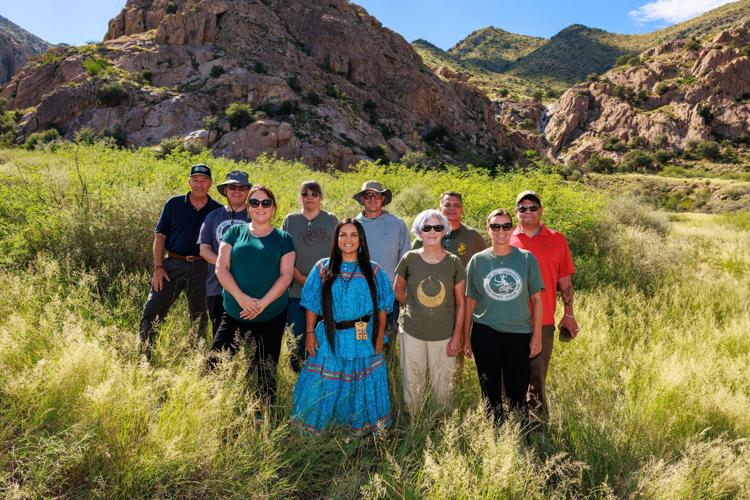
Members of the Fort Sill Apache Tribe and Trust for Public Land officials pose at the Dragoon Mountains parcel that was conveyed to the tribe, including Chairwoman Jennifer Heminokeky (left, front row) and Fort Sill Cultural Coordinator Naomi Hartford (in camp dress).
The acquisition was brokered by the Trust for Public Land, a San Francisco-based nonprofit that works to preserve conservation-worthy properties nationwide.
Much of the trust’s work involves buying up so-called private inholdings in national parks or other treasured places and converting them to public land. But the group also has an active, decades-old tribal lands program that has helped some 70 tribes protect roughly 200,000 acres of ancestral land.
This marks the trust’s first tribal land conveyance in Arizona and the first time the nonprofit has worked with an Apache tribe.
Prisoners of war
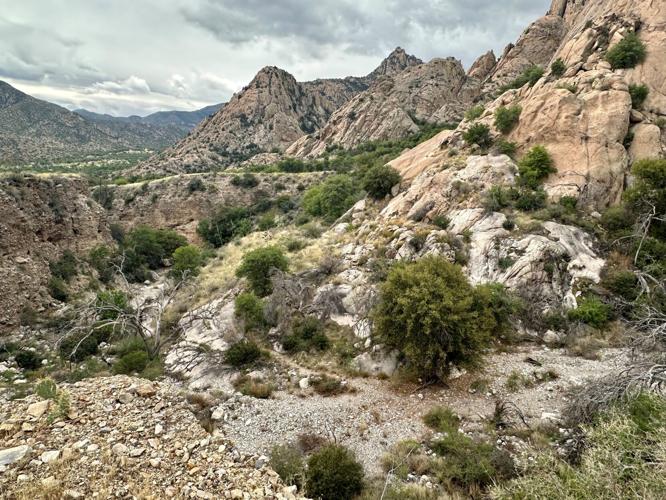
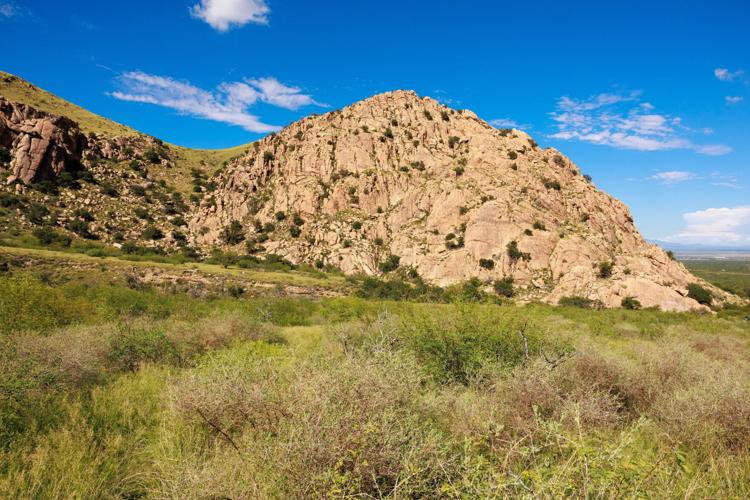
Michael Patrick helped shepherd the deal as a senior project manager for the trust. He said the land is nestled among 200-foot granite cliffs and lush green ridgelines and offers sweeping views across the Sulphur Springs Valley to the Chiricahua and Dos Cabezas mountains. When conditions are right, a seasonal waterfall spills into a large arroyo lined with oak trees.
“It's got a lot going on on it,” Patrick said. “You've got a lot of topography and a lot of variety, which is really quite remarkable.”

"The Dragoon Mountains have always been part of who we are,” said Fort Sill Apache Chairwoman Jennifer Heminokeky. “Returning even a small part of our ancestral homeland is a powerful step toward honoring our ancestors, preserving our culture and ensuring that future generations can maintain their connection to this sacred place."
As an added bonus, it is surrounded on three sides by the Coronado National Forest and located within two miles of a 4-acre property already owned by the tribe.
Fort Sill has a 10-acre headquarters in Oklahoma and about 120 acres of scattered residences and farmland surrounding it, but no formal reservation for its roughly 800 enrolled members. In 2011, the tribe won the right to establish a reservation in New Mexico and now owns 30 acres near the city of Deming.
By contrast, the Chiricahua Indian Reservation at the southeastern corner of the Arizona Territory covered some 4,275 square miles — an area almost as large as the present-day Tohono O’odham Nation west of Tucson — when President Grant established it by executive order on Dec. 14, 1872.
Chief Cochise died there of natural causes about two years later, and Grant abolished the reservation and returned the land to the public domain in 1876. The approximately 1,000 Chiricahua Apaches living there at the time were forced to resettle at what is now the San Carlos Apache Indian Reservation east of Globe, though some later escaped to return to their homeland.
The renegades, led by famed warrior Geronimo and Cochise’s son, Naiche, the last hereditary chief of the Chiricahua, were pursued by soldiers in the U.S. and Mexico until the last of them surrendered at Fort Bowie in 1886.
They were held as prisoners of war in Florida, Alabama, and finally Oklahoma until 1913, when the government allowed about two-thirds of the population to join the Mescalero Apache Reservation in south-central New Mexico.
The remaining 80 or so Indigenous prisoners at Fort Sill were freed the following year to settle on small farm allotments in the area. Their kin eventually became the Fort Sill Apache Tribe, which finally won federal recognition in 1976.
A place to return
Since 1980, the Trust for Public Land has completed 77 projects and conserved more than 300,000 acres in Arizona alone.
Nationwide, the group has protected over 4 million acres and raised over $112 billion in public funding for conservation, while helping to create more than 5,500 parks, trails, schoolyards and other outdoor spaces.
Patrick said he was looking for property in Arizona or New Mexico that might be meaningful to the descendants of the Chiricahua Apaches when he came across a real estate listing for the land in the Dragoons.
That was in December, and by January he had entered into a signed option agreement with the sellers.
“It moved very quickly for a conservation project, which tend to move rather slowly,” he said.
The property was jointly owned by a couple in Green Valley and a widower in Phoenix, who went in on it together about 20 years ago. Patrick said they spent a lot of time camping there but never got around to building houses on the land like they planned.
“It's pretty pristine,” he said. “They were very supportive of not just selling the land for conservation but also the idea of the tribe coming into ownership of it.”

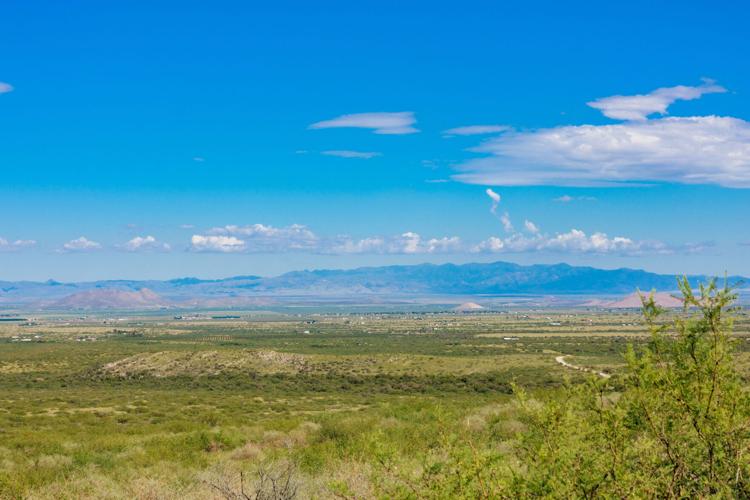
The Dragoon Mountains parcel offers sweeping views across the Sulphur Springs Valley to the Chiricahua and Dos Cabezas mountains.
The timing was perfect, he said, because tribal leaders told him they had just laid out a vision a few months earlier of trying to reacquire some of their ancestral lands in the Southwest.
After an appraisal process and an environmental assessment, the Trust purchased the property for $550,000, then sold it to the tribe for the same amount.
The transaction closed on Sept. 10, when all six members of the tribe’s governing Business Committee and two staff members met with the trust in Sierra Vista to sign the final documents. Then they drove around to the east side of the Dragoons to tour the property and take pictures.
The Fort Sill Apache plan to use the parcel as a gathering place, where members can harvest native plants, reconnect with their history, teach younger generations and steward the land according to Apache cultural values and traditions.
“The chairwoman told me that 80% of the members of the tribe are not in Oklahoma. They're sort of scattered around the country,” Patrick said. “So one hope for recovering, or getting back into ownership, some of these ancestral lands is that they'll have a place to all come back to and meet and have ceremonies and things like that.”



 Flush with cash, CBP plans more Border Patrol stations, expanded checkpoints in AZ