

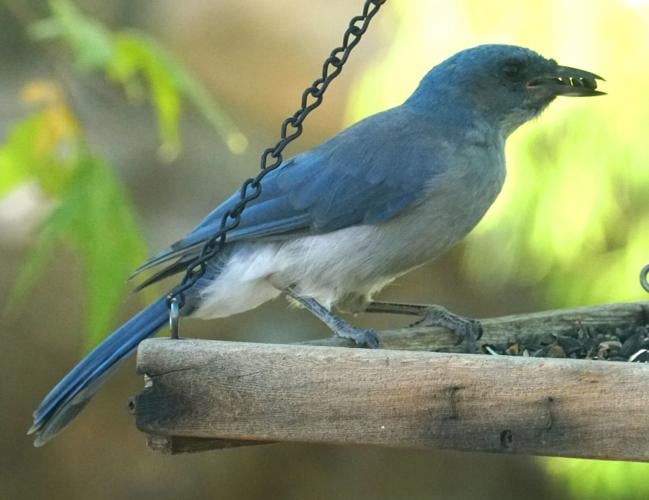
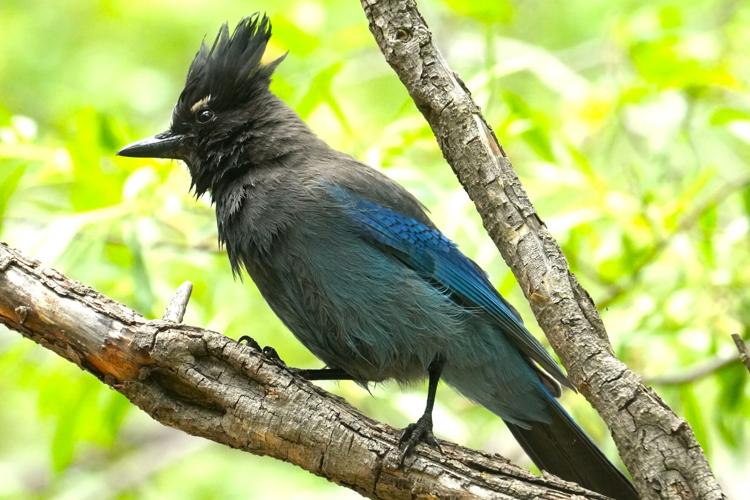
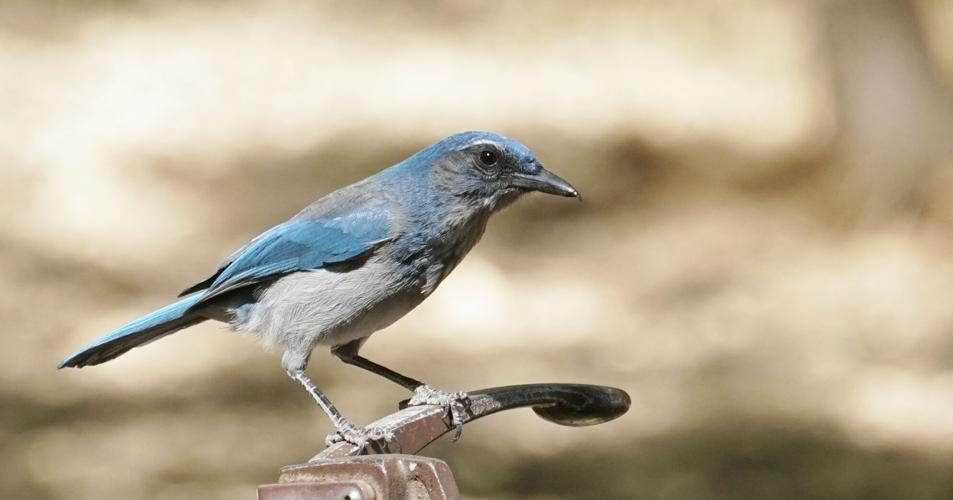
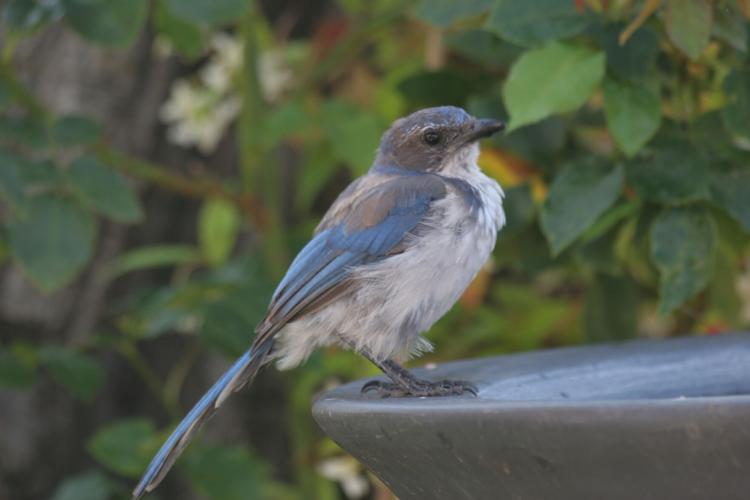

In the past few weeks, Mt. Lemmon Jays have been wandering off Mt. Lemmon and appearing in a wide number of nearby lower elevations. This phenomenon is most likely caused by an abnormally dry winter on the mountain as well as a poor monsoon season. Shrinking food supply on Mt. Lemmon, including seeds, nuts and insects, has apparently driven all three of the mountain’s jays to seek alternative food sources in lower elevations, where there are more water features, bird feeders and more abundant insect populations. This influx of jays into suburban Tucson locations includes Woodhouse’s Scrub-Jays, Steller’s Jays and even Mexican Jays, all of which we have seen recently in SaddleBrooke and other nearby locations. World-wide, there are approximately 40 species of jays, which are noisy, colorful and intelligent members of the Corvid family, which includes crows, ravens, jackdaws, rooks and magpies, all of which tend to be larger and which sport darker plumage. Jays are found throughout the world, with two continental exceptions, Australia and Antarctica. Eleven of these species are found in North America, while just one of those species, the Green Jay (Cyanocorax yncas) is found in five adjacent South American countries, Venezuela, Colombia, Ecuador, Peru and Bolivia. Jays are omnivorous, eating everything from insects to seeds to nuts to other bird’s eggs as well as young nestlings. If you suspect you live near jays, place some whole peanuts on a deck railing. If they’re around, they’ll find your peanuts in a surprisingly short time.
It isn’t necessary to travel to Mt. Lemmon to find the three jay species that live there. Woodhouse’s Scrub-Jays are found year-round in Oracle State Park and Mexican Jays are found year-round in the Peppersauce Campground. Steller’s Jays are less common in these lower elevations but sometimes are found in both locations as well. Mexican Jays live complicated family lives, where several pairs often have active nests in a single group territory. Once the young jays fledge from their nests, they are fed by all the adults in the group. Consequently, you rarely find solitary Mexican Jays, and when you hear Mexican Jays in Peppersauce, for example, you will more typically see a dozen or more fly through your area at a time. The other two species of jay we have in Arizona are Pinyon Jay and Canada Jay. Pinyon Jays are found in the mountains of northern Arizona and are closely associated with the pinyon pines you find in that area.
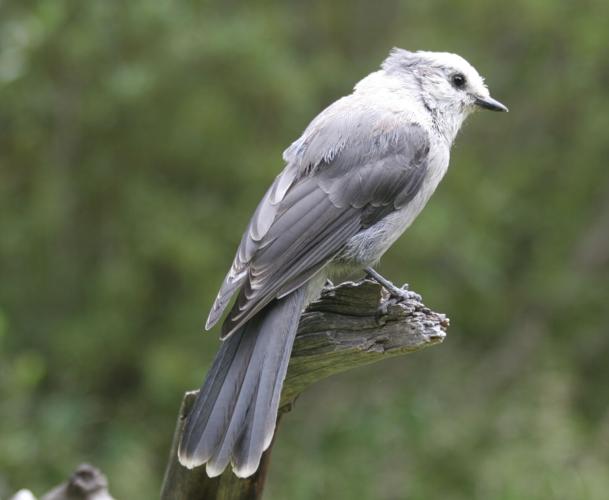
Canada Jays are a limited population in Arizona, primarily because they are spruce-loving birds, and our state’s population of spruce trees is not nearly as common as other trees. You may be more familiar with their long-term name, Gray Jay. Actually, they were originally named Canada Jay, then changed to Gray Jay and then more recently switched back to Canada Jay. Canada Jays live year-round in high elevations which experience some of the coldest conditions with the heaviest snowfalls. Canada Jays are inquisitive, curious birds that will take hand-offered food, and which, in fact, are known as camp robbers. They survive well throughout the coldest winters by spending much of their summers stashing nuts and other food high in conifers above the heaviest snow. Another name for Canada Jay is ‘Whiskey Jack’. This unusual name has nothing to do with liquor. Instead, ‘Whiskey Jack’ is an Anglicized version of ‘wiskedjak’, a creature from Algonquian mythology known, appropriately, for his mischievous pranks. So, not to worry. These camp robbers might steal your sandwich and chips, but they won’t touch your Jack Daniels.
If you have questions or comments about SaddleBrooke’s birds, or to receive emailed information about bird walks led by Bob and Prudy, call (520) 330-0366 or send an email to bobandpru@gmail.com. Previously published articles can be found at birdingthebrookeandbeyond.com.
 U of A’s fall enrollment down more than 20%, sources say


