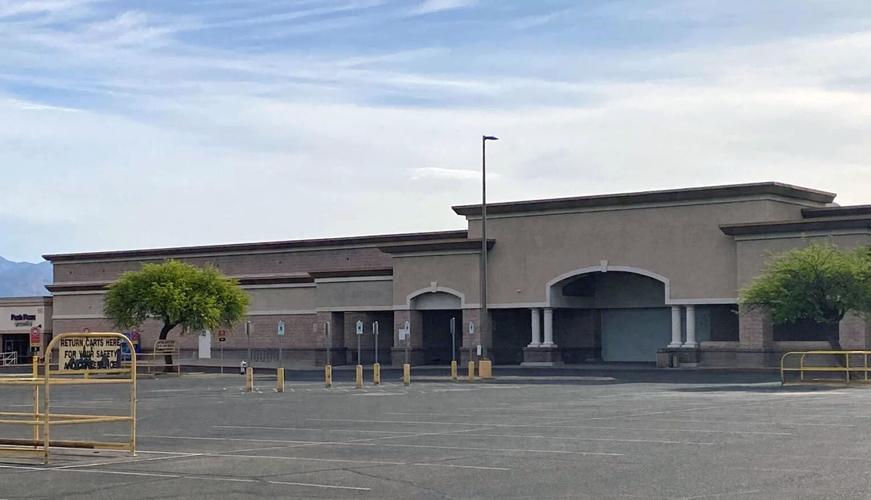
Empty grocery stores and former big box retail spots could become six-story apartments with drive-thru restaurants and coffee shops dotting the parking lots, as landlords rethink new tenants for vacant space around Tucson.
Interest in encouraging the development of new housing by both the state and city has created a new opportunity for owners of shopping centers as national retailers scale back.
“If you own a retail building in Tucson’s urban core, you may be sitting on more value than you realize,” Rob Tomlinson, a retail specialist with commercial brokerage firm Picor, notes in his Trend Report. “Two converging forces — skyrocketing construction costs and sweeping new zoning flexibility — are quietly setting the stage for a dramatic revaluation of existing retail properties over the next decade.
“The window of opportunity is open right now.”
People are also reading…
He said the current retail rent of about $20 per square foot is about half of what is needed to underwrite new ground-up construction, and developers are not building spec spaces to market to retailers.
“This is the core of what economists call the ‘replacement cost floor,’” Tomlinson says. “When existing buildings can’t be economically replaced, they become increasingly scarce and valuable.”
Tucson’s retail vacancy is below 6%, and he says there is “no meaningful pipeline of new supply.”
Most vacancies in the Tucson market of spaces over 10,000 square feet are a result of national retailers condensing space or filing bankruptcies, Nancy McClure, first vice president at CBRE says in her annual Big Box Report.
In the past year, the city saw the exit of stores such as Big Lots, Party City, Forever 21 and more Walgreens locations.
Albertsons has also started closing some stores, beginning earlier this year with its location on the fast-growing southeast side, at Harrison Road and Broadway.
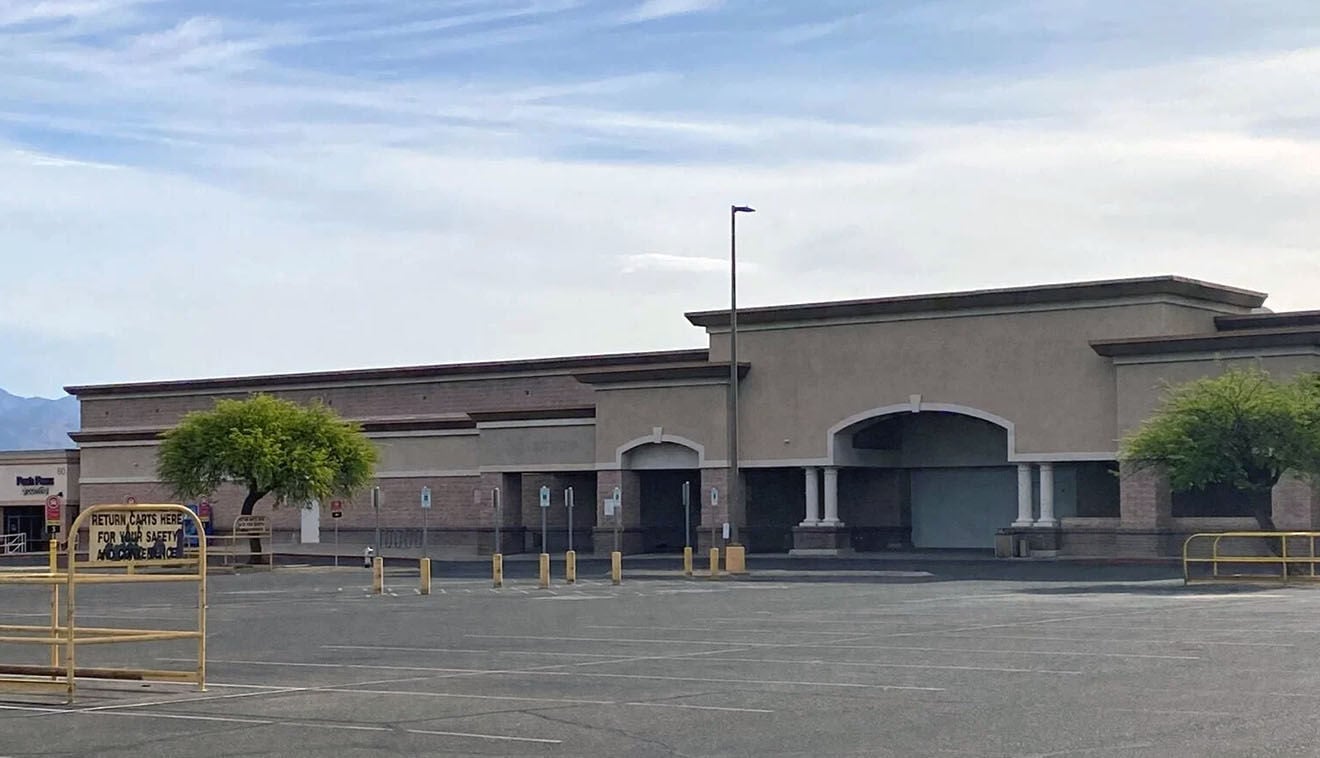
Under new city and state rules, vacant grocery stores such as the recently closed Albertsons on Broadway and Harrison Road, could be redeveloped with housing.
McClure agrees that mixed-use development will help center owners attract new investment.
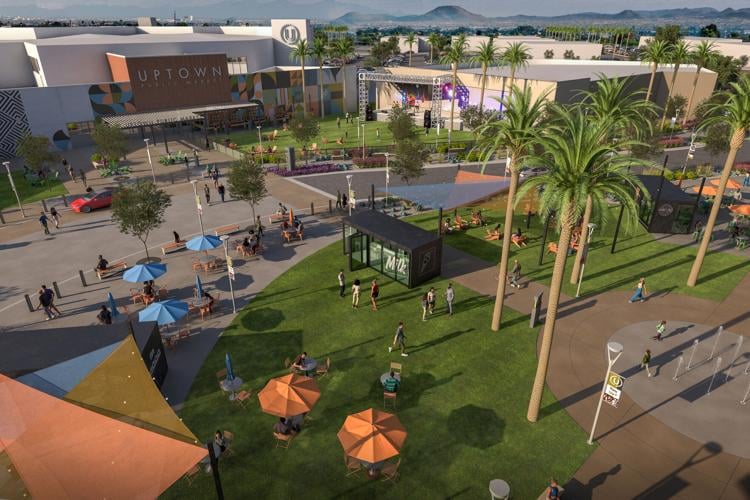
“Some retails boxes will likely be demolished to make way for new concepts with specific needs, or for re-imagined overall development with mixed use as we see with the former Foothills Mall being transformed into Uptown on Ina Road and La Cholla Boulevard,” McClure says.
Uptown, by local developer Bourn Cos., is transforming the former enclosed mall into an “urban village” with apartments, hotels, entertainment and shopping.

The new development, Uptown, will include shops, restaurants that spill out onto patios, an entertainment stage, event lawn and splash pad, video screens, a public market, apartments and hotels.
Tomlinson says the city’s new Community Corridors Tool initiative, adopted last year, will encourage active ground floors with up to six stories for residents, buildings that are closer to the street and reduced parking requirements.
The state also mandated “middle housing,” defined as duplexes, triplexes, fourplexes and townhomes, be allowed in cities without excessive regulation, and the city has relaxed its rules for homeowners to add accessory dwelling units, also known as guest houses or casitas, to their property.
“For retail property owners, this is not just a housing story, it is a land value story,” Tomlinson says. “A one-story strip center on a major corridor is no longer just a retail asset … the underlying land is worth more, the property’s redevelopment is dramatically higher, and the range of buyers and investors interested in the asset has expanded significantly.”
The adage that retail follows rooftops applies.
“More household per block means more foot traffic, more daily spending, and more pressure on existing retail supply,” Tomlinson says. “A neighborhood that transforms from single-family home to a mix of duplexes, triplexes and townhomes can see its daytime and evening population double or triple over time.”



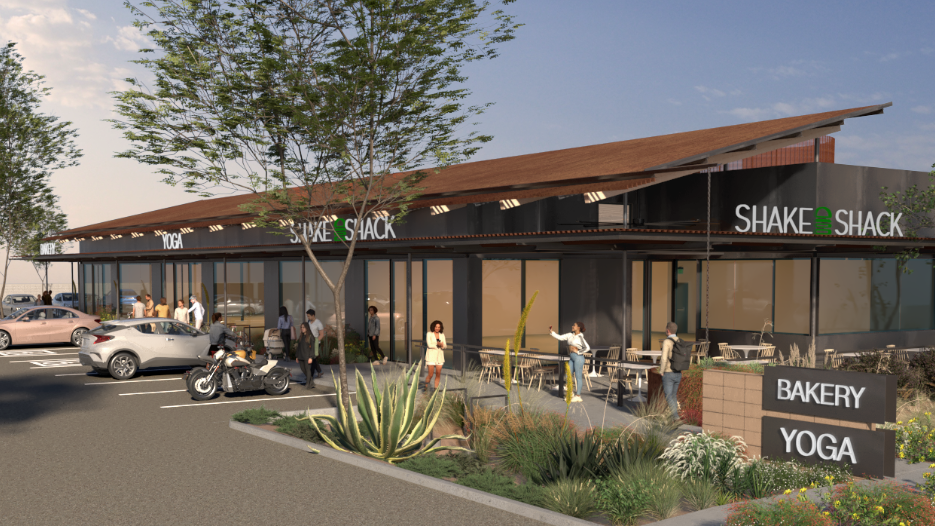
 Tucson's newest Shake Shack gets neighbors