
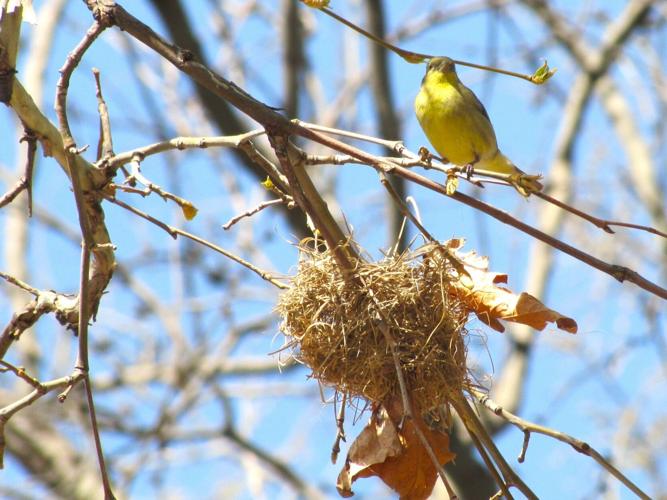
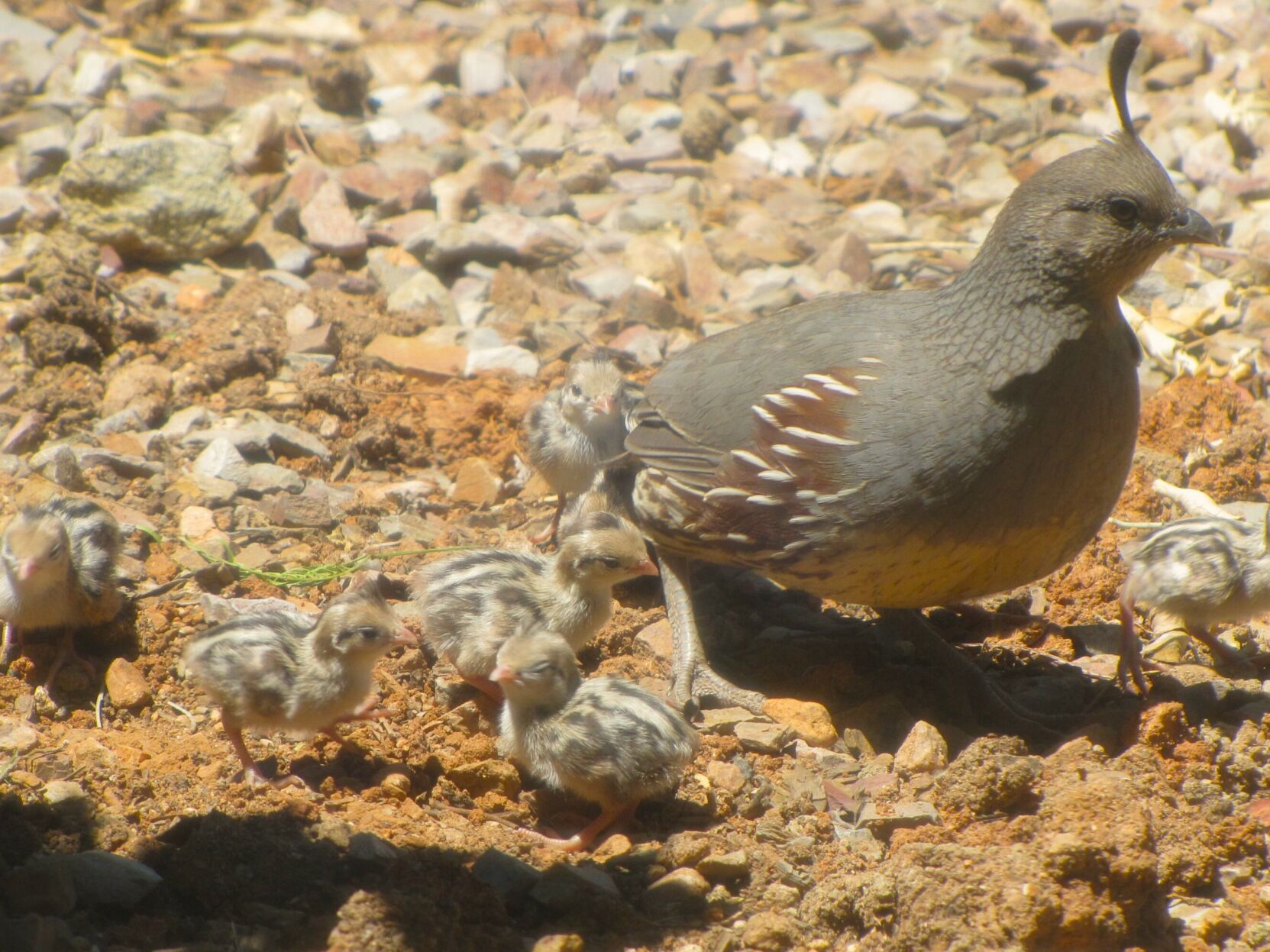
Every spring in Tucson, the desert wakes up like it just had a strong cup of coffee. The palo verde trees bloom, the bougainvillea goes into overdrive, and suddenly every shrub, cactus, and slightly neglected corner of your yard becomes prime real estate—for birds. Hummingbirds zip around like tiny, irritable drones, cardinals add flashes of red drama, mockingbirds rehearse their entire Spotify playlist at 5 a.m., and doves… well, doves mostly sit there looking mildly confused. It’s charming—until landscaping day collides with federal law.
Enter the Migratory Bird Treaty Act (MBTA), a century-old law that, among other things, makes it illegal to disturb or destroy active nests of protected migratory birds. “Protected,” in this case, includes most of the feathered tenants currently raising families in Tucson backyards. So while you may think you’re just trimming a hedge, the MBTA sees it differently. At its core, the MBTA makes it illegal to “take” (that is, harm, kill, or disturb) migratory birds, their nests, or their eggs without a permit. That sounds noble, and it is. But in springtime Tucson, it also means that trimming your greenery can feel less like yard work and more like a criminal undertaking.
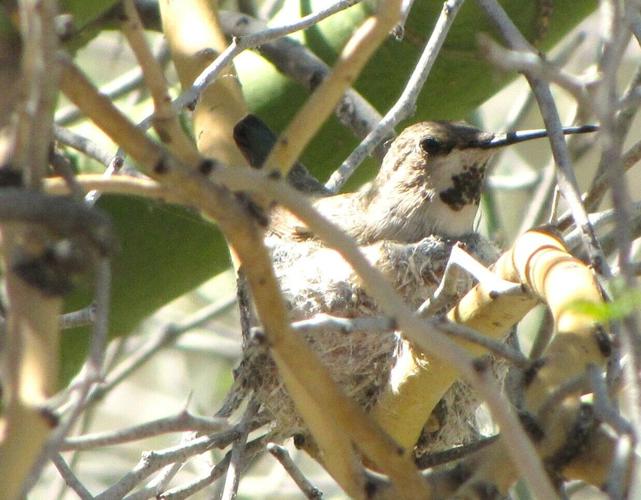
Imagine you’re a homeowner who has bravely decided to tame the wilderness formerly known as your backyard. You step outside with pruning shears, coffee in hand, full of optimism. Then you hear it: the rapid-fire buzz of a hummingbird, hovering like a tiny helicopter with a caffeine addiction. Congratulations. You are now cohabitating with a federally protected tenant who pays rent in iridescence and attitude.
For homeowners, this creates a seasonal dilemma: your yard either starts to resemble a nature preserve or you risk inadvertently committing a federal offense while wielding hedge clippers. That overgrown mesquite? It might contain a meticulously hidden nest. That sagging wreath on your front door? Congratulations, a dove has claimed it and is now raising two chicks with the structural integrity of a paper plate and the confidence of a seasoned architect.
Landscapers and yard workers, meanwhile, become accidental wildlife detectives. Springtime jobs are no longer just about aesthetics, they’re about reconnaissance. Before trimming, cutting, or clearing, workers often must inspect plants for signs of nesting: chirping, fluttering, or the unmistakable “please don’t touch my house” stare from a
protective bird. It turns routine yard maintenance into something like a low-stakes safari, minus the khakis.
This can slow things down considerably. What was once a quick “trim and go” job becomes a cautious, step-by-step process. Crews may have to skip certain areas entirely, returning weeks later when the chicks have fledged. For homeowners eager to tidy up before summer heat sets in, this delay can be frustrating. But for the birds, it’s the difference between raising a family and… not.
There’s also a communication gap that sometimes leads to awkward moments. A homeowner might say, “Can you cut back that bush? It’s out of control.” The landscaper, having spotted a nest, responds, “Legally, no.” This is not the kind of answer people expect when they’re paying for yard work. It can feel oddly dramatic—like your bougainvillea has diplomatic immunity.
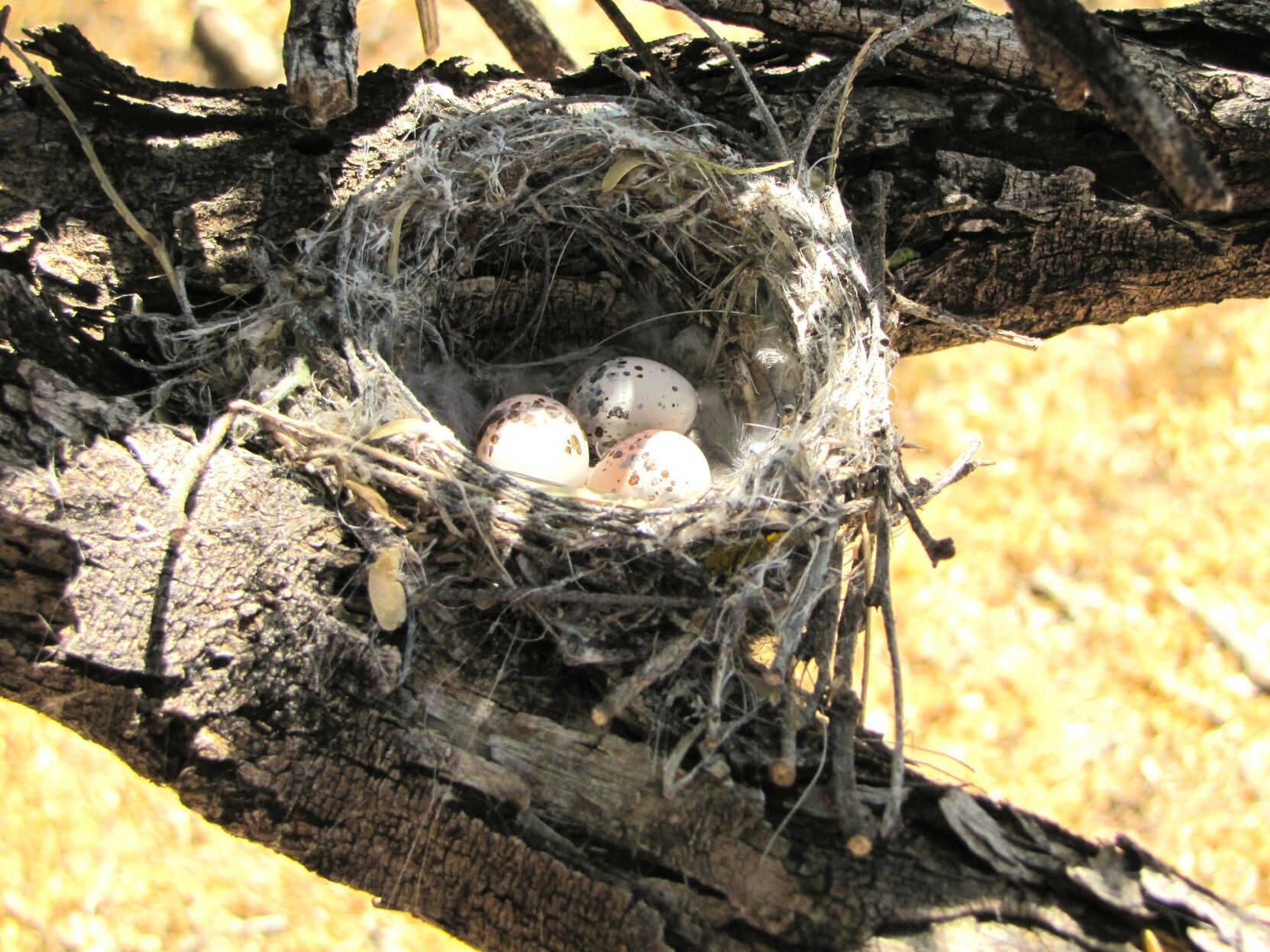
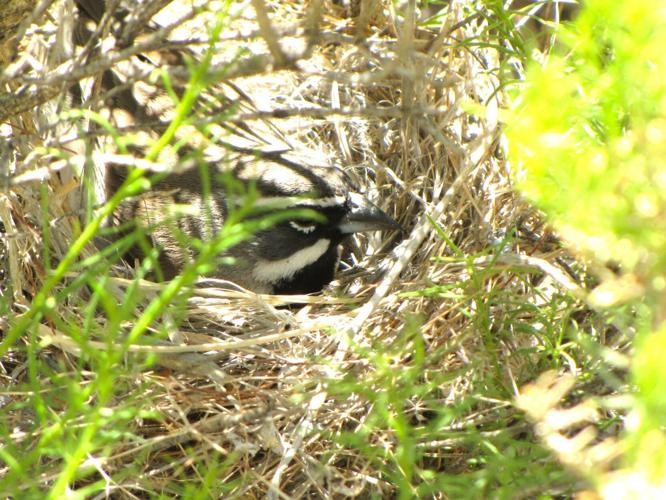
Our interest in this subject was spurred by an unfortunate event last month. Our gardener, while pruning a small palm, inadvertently cut a branch that supported an Abert’s Towhee nest. He told us about the accident and did his best to attach the nest to a nearby branch, but unfortunately the nest sat at an awkward angle and the couple abandoned the nest and its 3 eggs two days later. We still see the towhees in our yard, however, so we’re hoping they re-nested somewhere close by.
The good news is that with a bit of planning, homeowners and landscapers can coexist peacefully with their seasonal guests. Major pruning and clearing can be scheduled for late fall or winter, when nesting activity is minimal. In spring, a lighter touch—selective trimming, visual inspections, and a willingness to let certain areas grow wild for a few weeks—goes a long way.
And honestly, there are perks. A yard buzzing with bird activity is never boring. Hummingbirds provide aerial acrobatics, mockingbirds deliver daily concerts, and even the doves, in their endearingly clumsy way, add character. Plus, there’s something satisfying about knowing your slightly unruly hedge is doubling as a nursery.
So yes, the Migratory Bird Treaty Act may complicate your spring landscaping plans. It may delay your quest for the perfectly manicured yard. It may even force you into a temporary truce with that one shrub you’ve been meaning to deal with for months. But in exchange, you get a front-row seat to one of nature’s busiest seasons—and a reminder that sometimes, it’s okay to let the yard go a little bit wild.
 Tucson's iconic Arizona Inn to add rental homes to its property


