


I
In southeastern Arizona, birdwatchers are spoiled in the most delightful way. Step into a mesquite bosque at dawn, pause beside a prickly pear thicket or simply glance toward the bird feeder while your coffee is still steaming, and you may encounter two feathered celebrities sharing the same stage: the vivid Northern Cardinal and the wonderfully eccentric Pyrrhuloxia. They are cousins, rivals, neighbors and occasionally the avian equivalent of two siblings who borrowed the same wardrobe but interpreted the assignment very differently. The only other species in this genus is the Vermilion Cardinal, found in Colombia and Venezuela.
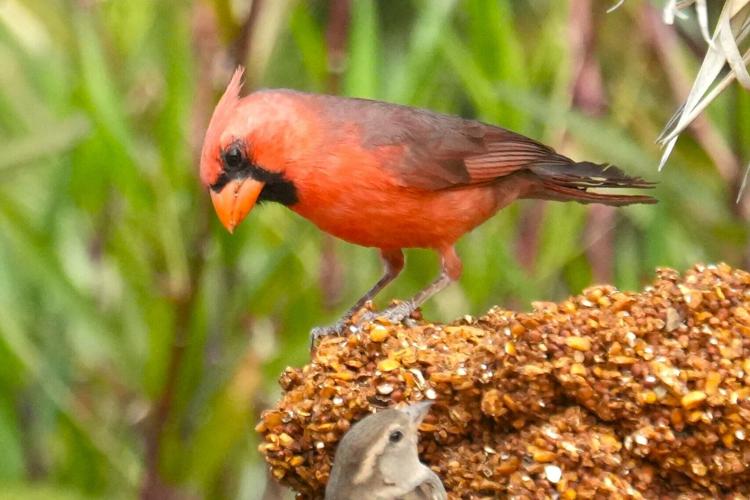
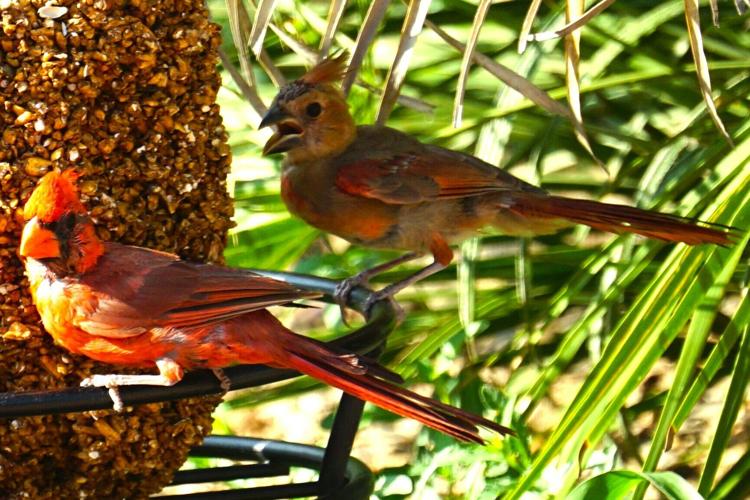
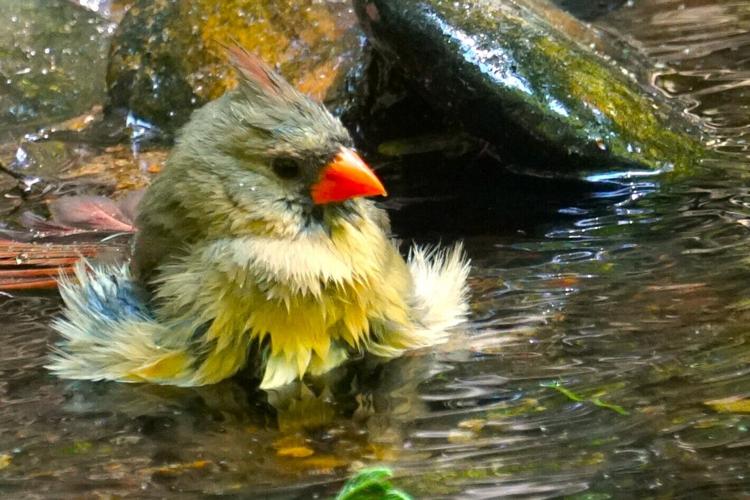
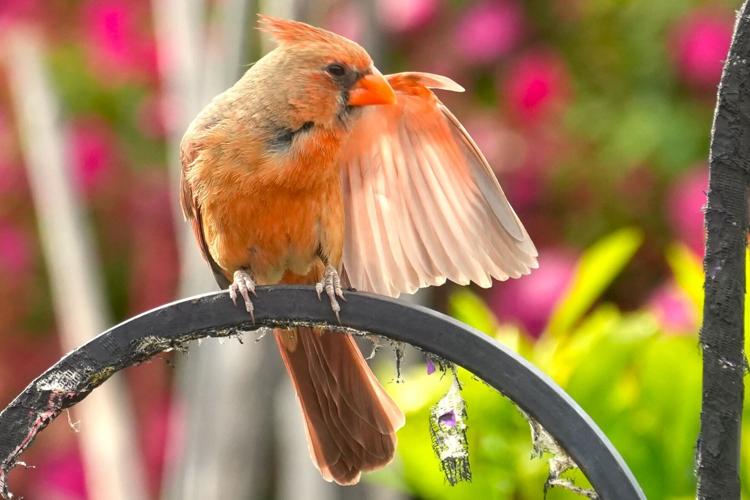
The Northern Cardinal is among North America’s most recognizable birds. The male is dressed in brilliant crimson from crest to tail, with a black mask around the beak that makes him look faintly like a tiny opera singer preparing for a dramatic aria. Females wear softer shades of tan and warm reddish accents, proving once again that nature understands tasteful understatement. Cardinals are common across the eastern United States, but southeastern Arizona marks the western frontier of their range. Here, they favor riparian habitats, dense shrubs, suburban gardens and places with dependable water. In Arizona’s desert landscape, reliable water is basically the equivalent of beachfront property.
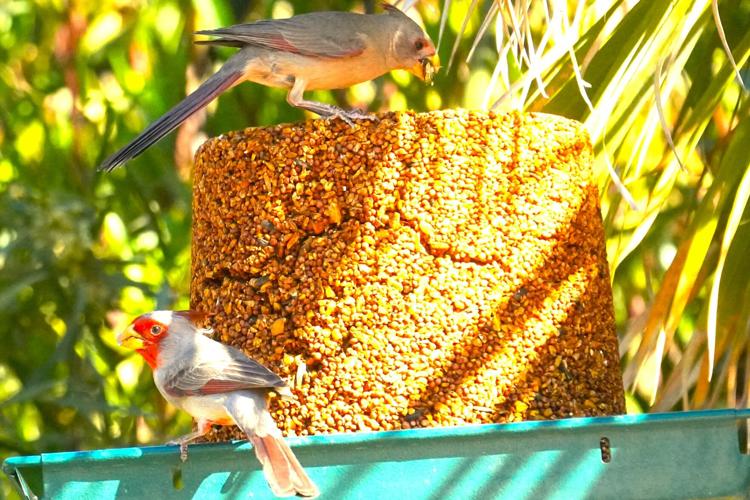
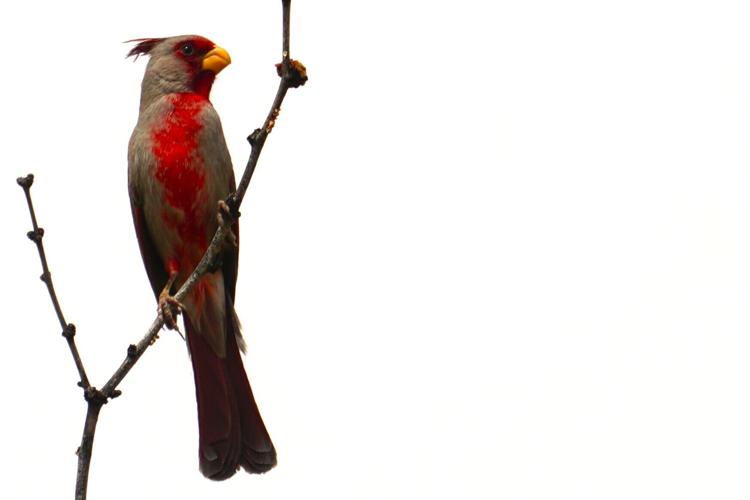
Then there is the Pyrrhuloxia, often called the “desert cardinal.” If the Northern Cardinal resembles a polished symphony conductor, the Pyrrhuloxia looks like the conductor after a three-day camping trip in Organ Pipe country. Its feathers are mostly soft gray with splashes of red on the face, crest, wings and tail. The bird appears as though someone washed a cardinal with a pair of blue jeans and a desert dust storm. Yet, the Pyrrhuloxia possesses its own rugged elegance, perfectly suited for the harsh Sonoran environment.
The most obvious difference between the two birds is the beak. Northern Cardinals have stout, cone-shaped red-orange beaks designed for cracking seeds with cheerful efficiency. Pyrrhuloxias, however, sport curved yellow beaks that look parrot-like. Note that juvenile birds of both species have distinctive black beaks. That unusual shape allows them to tackle tougher desert seeds and forage among thorny plants. In the Sonoran Desert, where many plants seem personally offended by the idea of being touched, a specialized beak is an excellent survival tool. Note that juvenile birds of both species have distinctive black beaks.
Behaviorally, the birds share many similarities. Both species are year-round residents in southeastern Arizona. Both enjoy seeds, berries and insects. Both males are territorial during breeding season and are enthusiastic singers. Cardinals deliver rich, whistled songs that sound polished and musical, while Pyrrhuloxias produce a somewhat scratchier tune. If the cardinal performs like a trained vocalist at the Tucson Symphony, the Pyrrhuloxia sounds more like a gifted street musician who learned jazz improvisation behind a cactus.
Their nesting habits also reveal their adaptation to Arizona’s environment. Cardinals prefer dense shrubs and trees near watercourses. Pyrrhuloxias are more comfortable in arid scrubland filled with mesquite, cholla and acacia. In southeastern Arizona, especially around Tucson, Patagonia, and the San Pedro River valley, birders are lucky enough to encounter both species within relatively short distances. Few places in America offer such an entertaining side-by-side comparison of ecological adaptation.
One fascinating aspect of these cousins is that they occasionally hybridize. Scientists have documented birds showing characteristics of both species, especially where their ranges overlap in Arizona and Texas. Imagine a bird wearing the cardinal’s bright red tuxedo but carrying the Pyrrhuloxia’s curved beak, as though evolution briefly decided to experiment during happy hour.
Climate and habitat also play a role in their fortunes. Northern Cardinals have expanded westward over the past century, partly due to suburban landscaping and backyard feeders. Humans, by planting trees and providing water, accidentally created cardinal-friendly neighborhoods in places that once looked too dry. The Pyrrhuloxia, meanwhile, remains more tied to traditional desert habitat and appears perfectly content with thorny wilderness that would make most gardeners cry softly into their potting soil.
Both birds provide an important reminder that southeastern Arizona is one of North America’s great biological crossroads. Here, desert species mingle with birds more commonly associated with eastern forests or tropical Mexico. A single backyard can host hummingbirds, quail, cactus wrens, and, occasionally, a cardinal glaring dramatically from a palo verde branch like a tiny red emperor.
Ultimately, the Northern Cardinal and the Pyrrhuloxia represent two successful answers to the same environmental puzzle. One embraced lush color and suburban opportunity; the other mastered the art of desert resilience. Together, they bring life, music, and personality to Arizona’s landscapes. They also provide birdwatchers with an endless excuse to stand in the yard holding binoculars while pretending they are conducting serious scientific research. There is one dramatic difference between these cousins, however. In 1926, the Northern Cardinal was named as the first state bird in Kentucky. You might think that each state would name a unique bird as their own, but in fact the cardinal is the most popular of all state birds, having been named by a total of seven states. Furthermore, five of those other six states border directly on Kentucky and the sixth, North Carolina, is only 300 miles away. The Pyrrhuloxia, on the other hand, was never named a state bird.
 For sale: Tucson's Park Place mall


